
Abstract:
A research team from the University of Arkansas in the United States recently demonstrated an important technological breakthrough for future lunar settlement. Researchers have successfully used simulated lunar soil to directly create building block-like building modules that can be spliced together without adding additional binders or other materials. This means that when building bases on the moon in the future, astronauts may be able to make extensive use of local resources and reduce the need to transport construction materials from Earth.
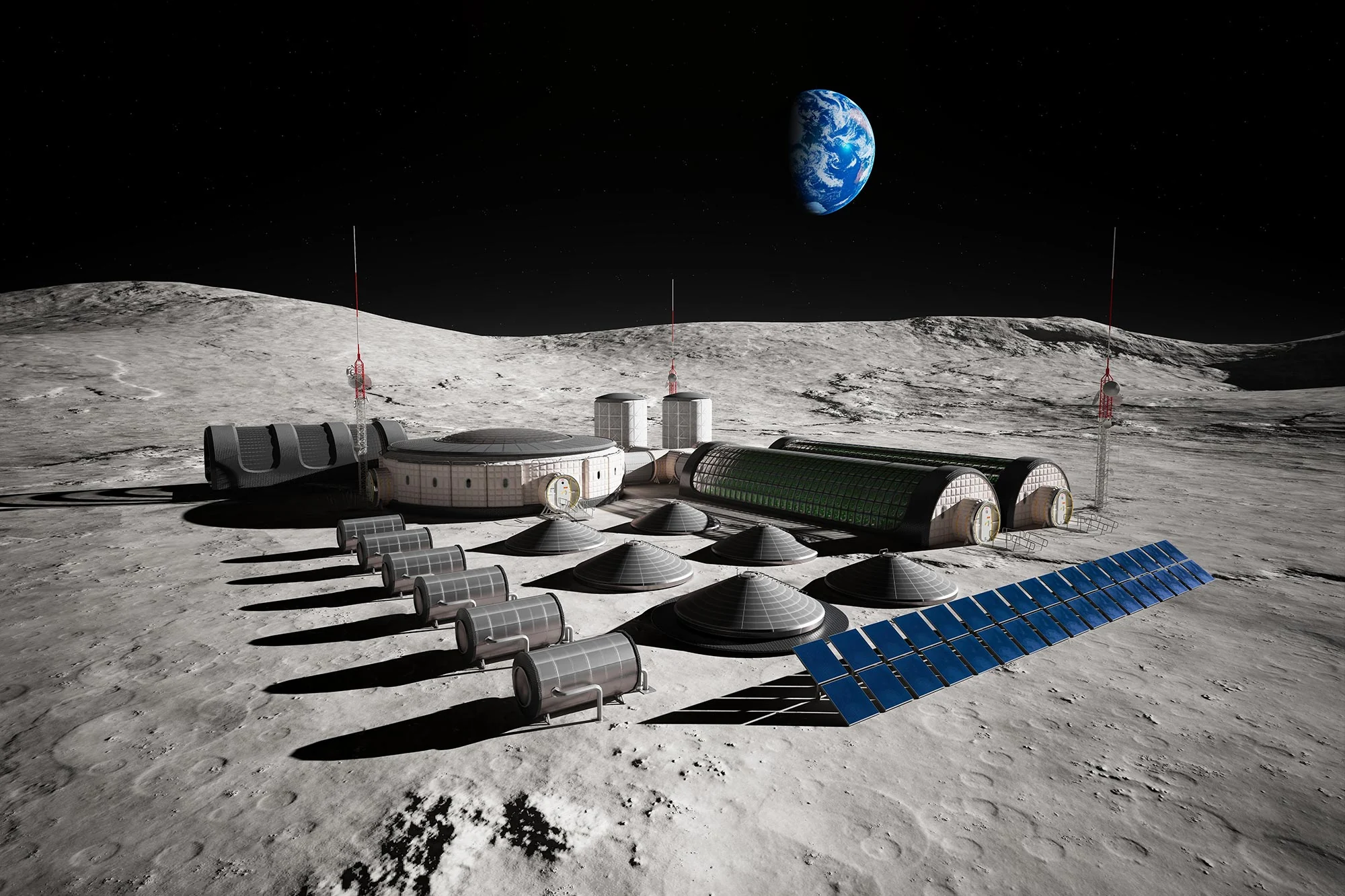
Researchers liken the idea to building giant Lego models. The difference is that the building materials are no longer plastic building blocks, but interlocking modules made of lunar soil that is spread across the lunar surface. These modules can be spliced and combined into larger structures, providing new possibilities for the construction of permanent lunar bases in the future.
This research used a commercial simulated lunar soil material called LHS-1, which was developed based on the characteristics of lunar samples brought back by the Apollo lunar landing mission. Unlike Earth's soil, lunar soil does not contain organic matter. Instead, it is composed of sharp particles formed after billions of years of asteroids, micrometeorites, and various space debris impacting the moon.
The research results were published in the journal "NPJ Advanced Manufacturing". The first author of the paper is Cole McCallum, an undergraduate student at the University of Arkansas, and the corresponding author is Wan Shou, assistant professor of mechanical engineering.
During the experiment, the team used a 3D printing technology called "laser powder bed fusion". The process begins by laying down a thin layer of powder on a platform and then using a high-energy light source to heat specific areas, causing the particles to bond to each other through sintering. The platform is then lowered, a new layer of powder is laid down and the process is repeated, ultimately building up the three-dimensional object layer by layer.
Research teams have previously achieved 3D printing of lunar soil, but it usually required the addition of additional binders to enhance structural strength. However, if these materials are used for lunar construction in the future, they will still need to be transported from the earth, increasing the cost and complexity of the mission.
This time, the University of Arkansas team demonstrated for the first time that simulated lunar soil can be directly sintered into reconfigurable building modules without using any binders, relying only on a relatively low-power light source. As the researchers explain, the lunar soil particles are self-bonding rather than relying on external materials to complete the connections.
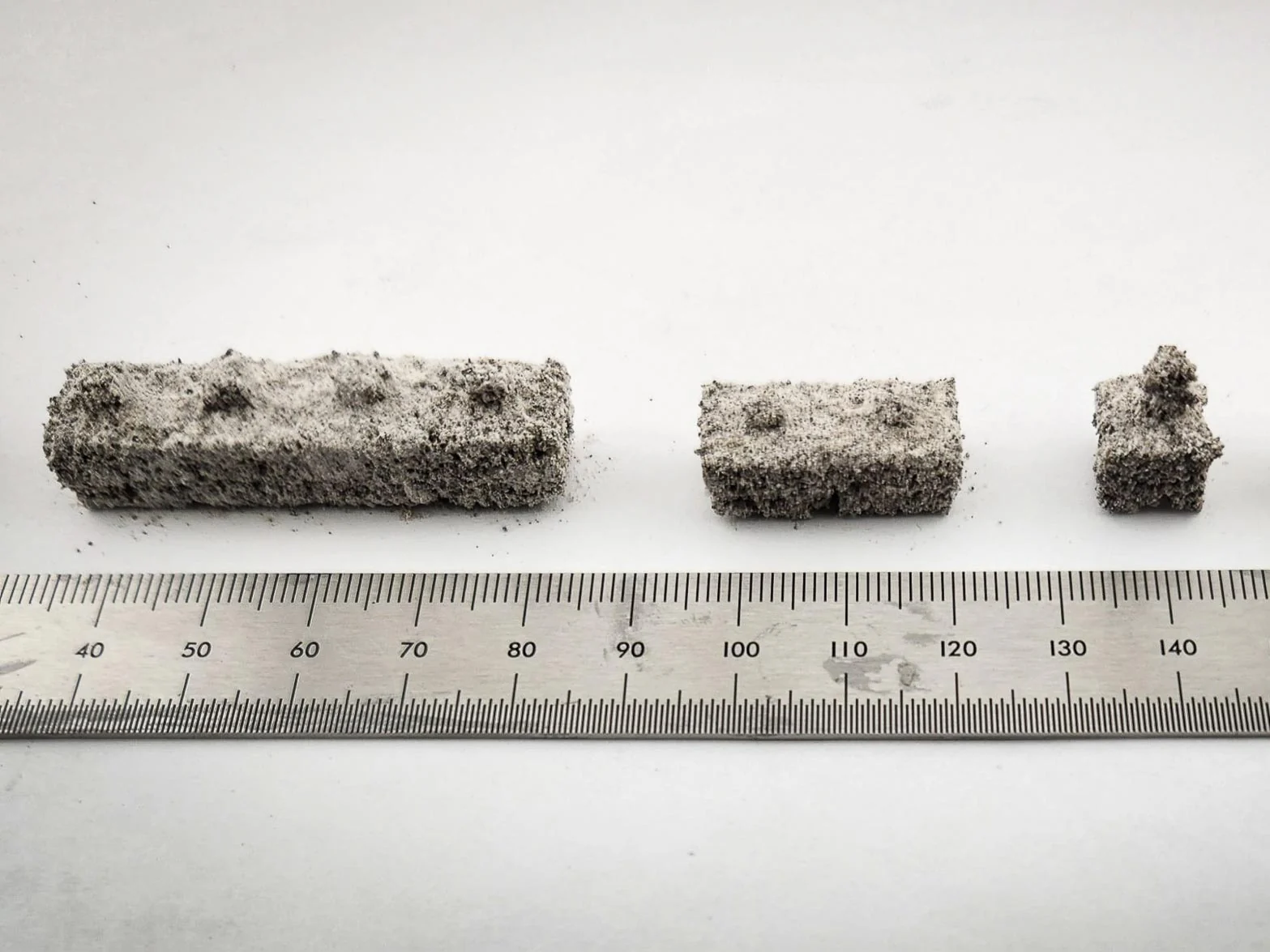
The size of the modules produced in the experiment is about several centimeters, and the shapes include cross-shaped and "H"-shaped structures. These modules can snap together like Lego blocks to form a larger building system.
However, researchers also pointed out that this technology is still some distance away from being actually used in lunar engineering. Test results show that the internal porosity of modules made of pure simulated lunar soil is high, and the structural strength is still weaker than similar products made with binders.
McCallum said that the structure currently manufactured is already self-supporting, but at this stage there is no guarantee that it will be able to bear higher loads, so it is not yet suitable for direct use as a load-bearing building material.
In addition, the team needs to further verify the performance of this technology in a real lunar environment. The researchers pointed out that the low gravity and vacuum conditions of the moon may have an impact on the printing process, so more experiments are needed to understand the feasibility of the technology in actual lunar surface environments. At the same time, the research team also plans to improve the material properties to increase its mechanical strength and durability.
Despite this, Professor Shouwan remains optimistic about the future of technology. He believes that this manufacturing method that does not require additional materials is expected to become an important basic technology for the construction of long-term settlements on the moon in the future, providing efficient solutions for the production of building components and infrastructure on the moon.
For the first author McCallum, this study also became an important starting point for his scientific research career. Originally from Little Rock, Arkansas, USA, he joined the laboratory to participate in scientific research as an undergraduate, and was encouraged by his professors to conduct in-depth research on additive manufacturing.
In May of this year, McCallum graduated with a double major in mechanical engineering and physics and won the first "Lafayette Scholarship." This program was established to commemorate the 250th anniversary of the founding of the United States. Only 30 students were selected from more than 3,400 applicants to study for a master's degree in France.
Currently, he is studying aerospace engineering at the Ecole Supérieure de l'Aerospace in Toulouse, France. Although his research direction has shifted from additive manufacturing to the aerospace field, he said that his experience in participating in the lunar soil building module project helped him accumulate scientific research experience in advance, and also made him more calm when facing experimental failures and research challenges.
The research team believes that as the manufacturing process and material performance are further improved, the idea of using local resources on the moon to directly produce building components is expected to move from the laboratory to reality, paving the way for humans to establish a permanent lunar base in the future.
Comments