
Abstract:
Researchers have developed a new method of manufacturing touch interfaces at low cost. They only need ordinary laser printers, toner and PVC plastic film to quickly produce interactive interfaces with touch functions. This technology is expected to significantly reduce the development costs of smart devices, human-computer interaction systems and customized control panels.
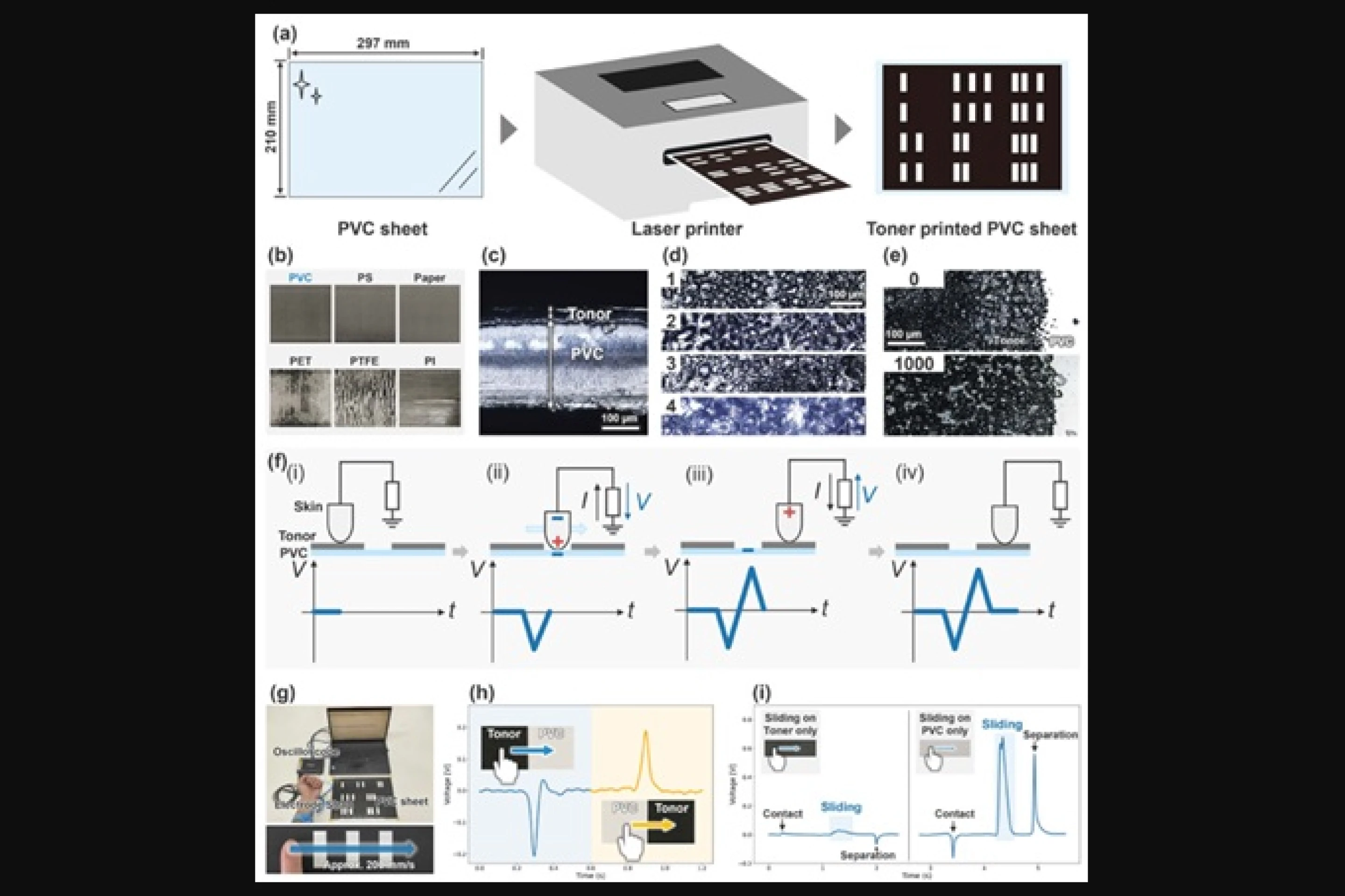
Traditional touch interfaces usually require dedicated sensors, complex electronic circuits and customized production processes, so manufacturing costs are high and are not conducive to rapid prototyping and personalized design. The latest research proposes a simpler and more direct solution, using the conductive toner that already exists in laser printers to form a touch-sensitive structure on the surface of flexible PVC materials.
The research team found that the toner used in laser printers contains materials that can conduct electricity. When these toners are printed onto PVC film in specific patterns, they can form the conductive network required for touch sensors. Then, with simple electronic components and control systems, the touch detection function can be realized.
The biggest feature of this process is that the manufacturing threshold is extremely low. Researchers do not require specialized electronics manufacturing equipment or a clean room environment. Instead, they use laser printers commonly found in offices to create the sensors. The entire production process takes only a few minutes, making it both fast and easy to replicate on a large scale.
The prototype devices demonstrated by the research team include touch buttons, sliding controllers and various customized interactive panels. These interfaces can be freely designed in shape and layout as needed, and printed on PVC materials of different sizes and shapes.
Test results show that this printed touch interface can accurately identify the user's finger contact position and stably complete basic interaction tasks. Whether it is a simple switch control or a more complex input operation, the system shows good responsiveness.
In addition to being low-cost, the technology is also highly flexible. Because the conductive structures are printed directly on the surface of the flexible film, the interface can adapt to curved, curled, or even shaped surfaces. In the future, it is expected to be used in smart packaging, wearable devices, educational tools and various customized control systems.
The researchers believe this approach is particularly suitable for rapid prototyping. Designers can complete interactive interface conception, printing and testing in a short time without going through the long development cycle of traditional electronic products. For scientific research laboratories, maker groups, and small businesses, this will significantly reduce the cost of innovation.
In the field of education, students and researchers may be able to directly use existing office equipment to create experimental touch devices in the future, making it more convenient to conduct human-computer interaction research and electronic design practice.
The research team also pointed out that this technology will not be limited to PVC materials in the future. As the process continues to be optimized, similar methods are expected to be extended to more flexible substrates, further expanding the scope of applications.
Currently, researchers are exploring higher-precision printing structures and more complex interactive functions, hoping to make this simple manufacturing method support multi-touch, pressure sensing, and richer user input forms.
This achievement demonstrates a development idea that is different from traditional electronic manufacturing. Instead of constantly pursuing more expensive and complex production equipment, it is better to make full use of existing office hardware resources to create new functions. By turning ordinary laser printers into touch sensor manufacturing tools, this technology promises to make the development of interactive interfaces as easy as printing a document.
Comments