
Abstract:
Researchers at the University of Massachusetts Amherst have developed an ultra-thin, flexible electronic mesh device that integrates with living human heart muscle cells and converts the mechanical movement generated by cell contraction into electrical energy. This new device, called "Biohybrid Mesh Harvester", is expected to provide a new power supply method for low-power medical implantable devices such as pacemakers, heart monitoring equipment, and neurostimulators, reducing the size, weight, and replacement surgery problems caused by traditional batteries.
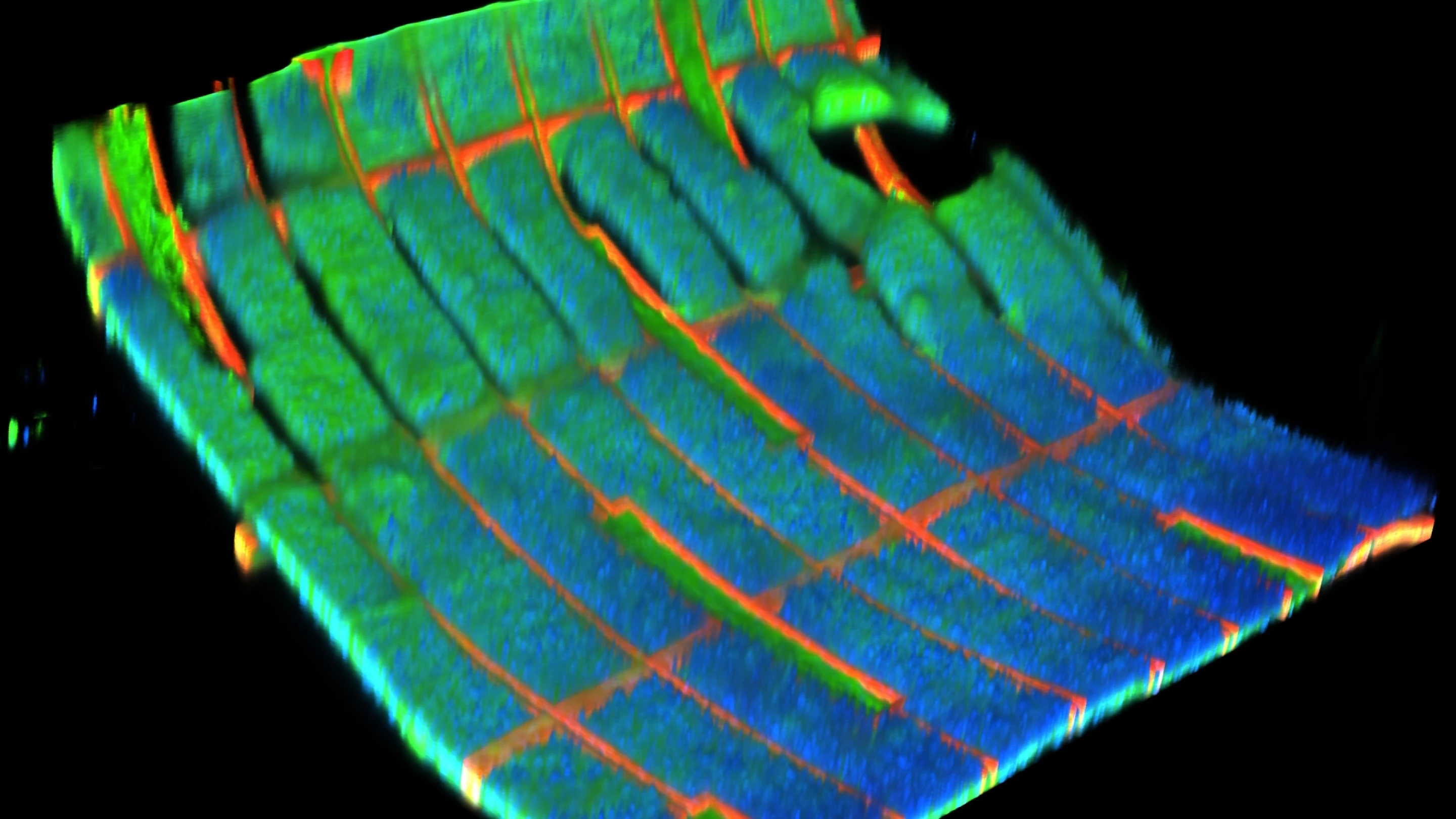
This research result was published in the journal "Science Advances" on October 7, 2026, and has recently attracted attention from the technology media. The researchers say the new system's effective energy density is more than ten times higher than traditional centralized energy harvesting devices. However, the current results are still in the laboratory research stage and have not been verified in living animals or humans, nor have they been proven to independently drive an actual medical implant device.
Modern medical electronic equipment plays an increasingly important role in improving patients' quality of life. Cochlear implants, neurostimulators, cardiac implants, and some diabetes management devices all require a constant and stable power supply. Wearable devices such as smart watches and smart rings also rely on batteries to run. Although batteries are mature and reliable, there is a contradiction between size, weight and energy storage capacity: shrinking the battery can make the device thinner and lighter, but the energy stored will also be reduced.
Battery issues are particularly acute for medical devices implanted in the human body. After an ordinary smart watch runs out of power, it can be resumed by just placing it on the charger; however, if the battery of some medical implant devices needs to be replaced, the patient may have to undergo surgery again, bearing additional costs and medical risks. Therefore, scientists have been exploring ways to use the body's own energy to power electronic devices.
There are many sources of energy available within the human body. For example, the temperature difference between the body and the outside world can be used to generate thermoelectricity, while muscle contraction, heart beating and breathing movements can provide mechanical energy. Piezoelectric materials can convert mechanical deformation generated when they are squeezed or stretched into electrical charges, and are therefore considered a potential technology route for powering implantable electronic devices.
However, traditional piezoelectric energy harvesters are typically installed as stand-alone devices on tissue surfaces. There may be significant mechanical differences between such centralized designs and human tissue: electronics are relatively stiff, while biological tissues such as heart muscle are soft and constantly in motion. The mechanical mismatch between the two may not only limit the energy collection efficiency, but also increase the design difficulty when the device is in long-term contact with tissue.
The research team at the University of Massachusetts therefore changed the design idea. Instead of fixing a large power generation device on the surface of the tissue, many micro power generation units are dispersed and arranged in a flexible mesh structure, allowing living cells to grow into and around the electronic device, so that the two form a closer structural combination.
The researchers first prepared a large number of tiny ribbon structures made of lead zirconate titanate (PZT). This is a piezoelectric ceramic material commonly used in sensors and actuators that generates an electrical charge when mechanically deformed. The team then integrated these tiny piezoelectric units into a layer of ultra-thin, flexible polymer mesh to form an interconnected energy-harvesting network.
Unlike a continuous, closed substrate, the grid structure leaves plenty of open space, allowing living cells to pass through and grow inside the device. The researchers seeded human cardiomyocytes onto this platform. As the cells gradually grew, the cell clusters formed a tight combination with the grid structure. The resulting biohybrid structure both moves with the heart muscle tissue and deforms the embedded piezoelectric material as the cells contract.
When cardiomyocytes contract, the PZT ribbon structures distributed throughout the grid are squeezed or stretched, thereby generating electrical energy through the piezoelectric effect. Because the power-generating units are no longer concentrated at one location on the tissue surface, but are distributed throughout the network, the system is able to harvest mechanical energy from a wider area of contact between cells and electronic structures.
The research team believes that this distributed architecture is the most important innovation of this technology. Traditional devices usually rely on a relatively concentrated energy collector, while new solutions integrate many micro-units into biological tissue structures, allowing electronic devices to move closer to cells while maintaining sufficient flexibility.
Experimental results show that the effective energy density of the new system exceeds ten times that of existing centralized energy harvesting solutions. The key metric here is effective energy density, which is the level of energy that can be harvested within the effective volume occupied by the device. The researchers believe that this improvement comes from closer mechanical coupling between multiple micro-power generating units and cellular tissue, rather than simply relying on increasing the size of the device.
Another potential advantage is that the structure can be expanded. Since the mesh film is very light and thin, the researchers proposed that multiple layers of mesh can be stacked to increase the total number of power generation units, thereby increasing the overall power generation capacity while trying to avoid a significant increase in the volume of the device. In the future, engineers may be able to adjust the number of grid layers and the distribution of power generation units based on the power consumption needs of different implanted devices.
The most immediate potential application of this technology is to provide auxiliary power for pacemakers, heart monitoring systems, neurostimulators and other low-power bioelectronic devices. Being able to continuously and reliably harvest energy from the natural movement of the heart or other tissue would have the opportunity to extend the operating time of implanted devices, reduce the frequency of battery replacement, and reduce the need for patients to undergo re-operation.
The technology may also provide new design ideas for wearable sensors. Future flexible electronic devices may reduce their reliance on traditional batteries if they can integrate more closely with human tissue and use body movement to obtain some of their power. However, these applications are still research concepts and have not yet reached the stage where they can be directly used in clinical products.
Yao Jun, the senior author of the research paper and associate professor at the School of Engineering at the University of Massachusetts Amherst, said that human tissue may reject electronic devices that are larger and have mismatched mechanical properties. Making the device close to the cellular scale is expected to improve its compatibility with biological tissues. He believes the potential of such systems lies in enabling tighter bioelectronic integration in smaller structures.
However, there are still several key issues that need to be resolved with this technology. First, the current study has only been done in laboratory-grown heart muscle tissue, and the researchers have not proven that it can operate long-term in a living environment. Secondly, the actual output power, whether it can stably meet the power consumption requirements of different implanted devices, and whether long-term mechanical movement will cause material fatigue or performance degradation, all need to be further tested.
Material safety is also an important challenge. The lead zirconate titanate used in the device contains lead. If it is used inside the human body, it must be ensured that the material is reliably encapsulated to avoid harmful substances leaking and affecting surrounding tissues. Researchers will also need to evaluate long-term biocompatibility, immune response, encapsulation durability, and device stability in real physiological environments.
Therefore, the so-called increase in energy density by more than ten times does not mean that this device can completely replace the battery of implanted medical equipment, nor does it mean that all related equipment can immediately operate without charging. The relative performance improvement in the experiment is only a preliminary proof of the technology's potential. Whether it can ultimately be used in clinical trials also depends on the actual output power, safety and long-term reliability.
Overall, the significance of this research lies in transforming energy harvesters from independent devices attached to the surface of biological tissue to a distributed electronic network that can grow with living cells and move with the tissue. It provides new engineering solutions for establishing a closer connection between the energy of human movement and electronic devices. If follow-up research can address issues such as material safety, long-term stability and actual power supply capabilities, this biohybrid grid is expected to become an important technical direction for the next generation of low-power medical implantable devices.
Comments