
Abstract:
The U.S. National Highway Traffic Safety Administration (NHTSA) is reviewing a complaint against Tesla’s Robotaxi self-driving taxis. The complaint alleges that some Tesla vehicles with the Autopilot system enabled were still traveling at excessive speeds while speed limits in school zones were in effect. This review involves the 2026 Tesla Model Y Robotaxi and the newly launched Cybercab driverless taxi, which may further increase the regulatory pressure faced by Tesla to expand its self-driving taxi business.
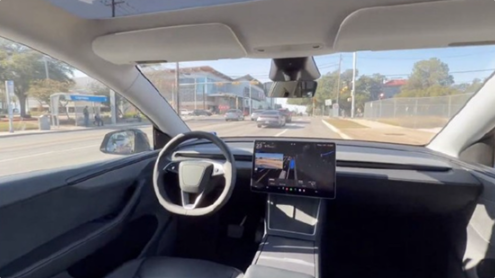
According to information released by NHTSA, the agency’s Defect Investigation Office received a request to initiate an investigation on September 23, 2026. The applicant alleges that while the Tesla Autonomous Driving System (ADS) was operating, the vehicle failed to comply with the school zone speed limit in effect. Around schools, there are often situations such as children going to and from school, pedestrians crossing the road, and vehicles temporarily stopping, so speed limit measures have special safety significance. The autonomous driving system not only needs to recognize road signs, but also must accurately determine when speed limits take effect and adjust the vehicle speed in a timely manner based on the surrounding environment.
At present, this review focuses on the safety issues raised in the complaint. It does not mean that regulators have determined that Tesla vehicles are defective, nor does it mean that NHTSA has decided to launch a comprehensive investigation. Regulators will need to further evaluate the available materials to determine whether the relevant allegations are sufficient to support subsequent investigations and other regulatory actions.
This incident involves Tesla’s Robotaxi business, which is still limited in scale. According to related reports, NHTSA estimates that about 1,000 vehicles may be affected by this review. These vehicles include self-driving taxis based on the Model Y and Tesla's dedicated driverless model Cybercab.
Cybercab was launched in early 2026, but its design has already attracted regulatory attention. Unlike traditional cars, this model eliminates traditional driving controls such as side mirrors, pedals and steering wheels. NHTSA has previously launched another investigation into its design that lacks these devices, involving whether the vehicle meets relevant U.S. safety standards.
Tesla’s self-driving technology also faces other regulatory scrutiny. NHTSA has previously launched an investigation into Tesla's Full Self-Driving (FSD) system, focusing on possible traffic violations during actual road driving, including running red lights and driving into the wrong direction lane. These incidents show that the safety assessment of autonomous driving systems not only involves whether the vehicle can complete route planning and identify obstacles, but also involves whether it can stably comply with traffic regulations and make reasonable decisions in complex environments.
Allegations of speeding in school zones are of particular concern because such road environments impose stricter requirements on autonomous driving systems. Vehicles need to comprehensively recognize speed limit signs, road markings, the surrounding environment of schools and the behavior of traffic participants, and respond in a timely manner when the speed limit changes. If the system cannot accurately identify the effective conditions for the school speed limit, even if the vehicle can drive normally on ordinary roads, it may cause safety risks in specific scenarios.
At the same time, safety issues in the self-driving taxi industry are not unique to Tesla. Waymo, another self-driving taxi operator, also faces regulatory scrutiny of the behavior of its vehicles. Related incidents include a self-driving vehicle allegedly illegally passing a school bus and a Waymo vehicle hitting a child near an elementary school in California. These incidents have prompted further attention from the outside world on the performance of autonomous vehicles in schools, dense pedestrian areas, and other complex road environments.
However, the specific events, vehicle systems and regulatory procedures involved by different companies are not exactly the same, and these cases cannot simply be regarded as the same technical defect. For the autonomous driving industry, the key question is whether the system can continue to comply with traffic rules in a real road environment, and whether companies can promptly discover and resolve safety hazards through reliable data recording, accident investigation and software improvement mechanisms.
For Tesla, the Robotaxi business is an important part of its drive to commercialize autonomous driving technology. Unlike assisted driving systems that require continuous control by a human driver, truly driverless taxis must be able to complete driving tasks independently under approved operating conditions, and their safety responsibilities and regulatory requirements are therefore more stringent. Whether the vehicle can recognize school speed limits, obey traffic signals, respond to pedestrians correctly, and avoid dangerous driving behaviors will directly affect the public's trust in driverless services.
Whether this review will ultimately be upgraded to a formal defect investigation remains to be determined by NHTSA. The allegation that Tesla Robotaxi was speeding in a school zone remains an allegation that needs to be verified before the regulatory conclusion is announced. However, as self-driving taxis gradually enter public roads, regulatory agencies are paying more and more attention to the actual performance of vehicles in specific traffic scenarios, rather than just companies' publicity about the capabilities of self-driving technology.
Comments