
Abstract:
Tesla recently released an interest survey form for companies on its official website, soliciting companies interested in purchasing a Cybercab fleet or providing infrastructure for its operating network. This move indicates that Tesla’s plan for this golden self-driving car may no longer be limited to operating self-driving taxis personally, but hopes to expand the scale of its business with the help of external companies. However, this investigation does not prove that Tesla has decided to sell self-driving cars to third parties.
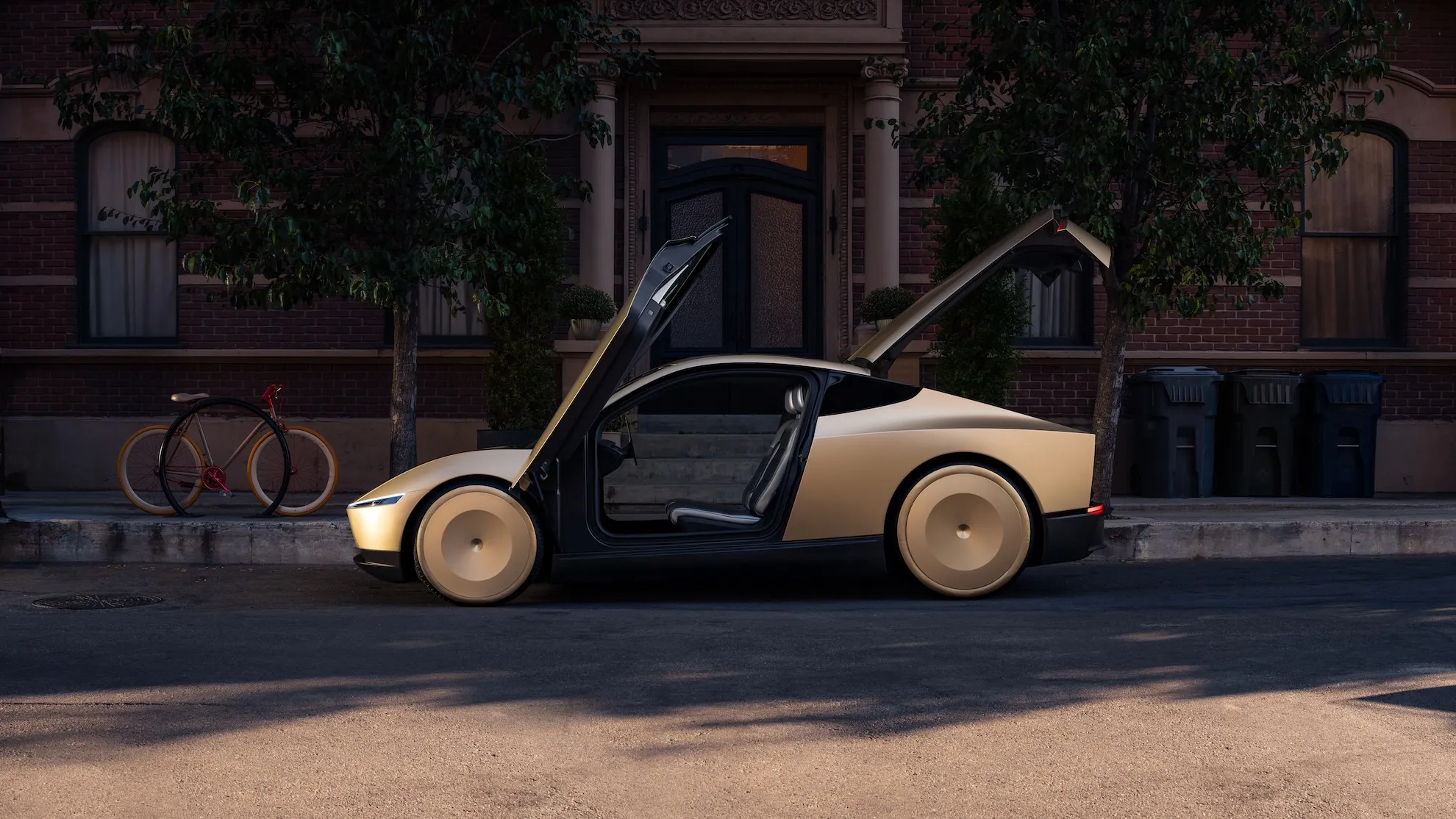
This survey was released ahead of Tesla’s upcoming Cybercab event in Austin, Texas. In the form, the company asks companies if they are interested in buying a Cybercab fleet or participating in building its self-driving taxi network. Tesla hopes to speed up the rollout of its self-driving taxi business by expanding the scope of cooperation, rather than relying entirely on its own efforts to complete expansion.
Tesla CEO Elon Musk has been talking about building a large, affordable fleet of self-driving taxis for years. As early as 2016, he imagined that in the future, Tesla owners could rent out their cars and earn income through vehicles equipped with self-driving software. At Tesla's Autonomous Driving Day in 2019, Musk also said that car owners can add their own autonomous vehicles to Tesla's online ride-hailing application, which operates similar to Uber. In 2020, he confidently predicted that Tesla would launch self-driving taxis next year, but not all regions would be able to achieve it simultaneously because regulatory approvals would not be obtained in all places at the same time.
However, this vision was never truly realized. Tesla later switched to testing and operating its own fleet of self-driving taxis, initially using the Model Y and then the Cybercab, which was specifically built for self-driving taxis. Until now, Tesla has seemed inclined to take its self-driving taxi business into its own hands, and the survey released this time suggests that the company may be reconsidering this strategy.
The questionnaire clearly states that this information will help Tesla build a self-driving taxi network. Enterprises can choose the direction of interest among options such as Cybercab fleet procurement, travel hubs and infrastructure, event cooperation, and "others". However, Tesla has not yet stated what specific business model it will adopt if it really opens its fleet operations to third parties in the future.
Currently, the self-driving taxi fleet management business has attracted more and more companies to participate. For example, African fintech startup Moove initially focused on providing vehicle financing to ride-hailing drivers and is now expanding its self-driving fleet management business. The company completed US$250 million in financing last month at a valuation of US$2.1 billion. It currently operates fleets for Waymo in Phoenix, Miami and Las Vegas, and plans to enter London in the future. Moove does not currently own these Waymo vehicles, but its CEO has told TechCrunch that the company plans to do so in the future.
Other companies involved in self-driving fleet management include Avomo and New Horizon. Uber has also partnered with these companies in hopes of gaining a foothold in the self-driving taxi market. In addition, traditional large car rental companies such as Avis and Hertz also play a role in this field.
Tesla’s invitation to fleet operators may encourage more small companies to enter this market. If a broader cooperation network is formed in the future, Tesla will have the opportunity to use third-party forces to cover more areas faster, thus accelerating the expansion of its self-driving taxi business.
Comments