
Abstract:
How far are Chinese cars from the U.S. market? The answer given by Nissan Americas President Christian Meunier is: maybe only two or three years. In late September 2026, the Chinese President paid a state visit to the United States and received a high-level reception. High-level interactions have brought new space for discussion on Sino-U.S. relations, but the policy environment facing the automobile industry has not been relaxed at the same time: Chinese cars still face multiple barriers such as high tariffs and restrictions on connected cars when entering the U.S. market.
It is against the background of the coexistence of diplomatic interactions and industrial barriers that Meunier publicly warned that Chinese automakers may first realize localized production in Mexico within the next two to three years. As for actually entering the US market, he believes it will take at least five years.
On September 28, he said at a media briefing held at Nissan's global headquarters in Yokohama, Japan, that Nissan is promoting "very radical" plans in Mexico, especially in terms of cost reduction, so that Chinese car companies can compete with it after they achieve localized production.
In his view, Chinese car companies entering the local manufacturing stage in North America "may happen in the next two to three years."
If we only look at the trade barriers currently established by the United States against Chinese automobiles, this judgment seems difficult to establish. The United States has imposed high tariffs on Chinese electric vehicles, and there have been calls for further restrictions on the entry of Chinese cars.
But if you look away from the U.S. market itself, you will find that what really deserves attention is not how Chinese cars directly enter the United States, but whether it is possible for Chinese cars to enter Mexico first and then enter North America through manufacturing.
This is where Meunier’s warning really deserves attention.
Another way into North America
In fact, Chinese cars have already entered the Mexican market.
In recent years, Chinese brands such as Great Wall, BYD, Chery, and GAC have regarded Mexico as an important fulcrum for the Latin American market and an important node for observing and deploying in North America.
As of the end of June 2026, Chinese brands are growing rapidly in the Mexican market. According to data from the Mexican Automobile Dealers Association, in the first half of 2026, sales of Chinese brands increased by nearly 30% year-on-year, and their market share rose from 14% to 17%. They have become a force that cannot be ignored in the local automobile market.
As of the first half of 2026, Chinese cars will still mainly enter the Mexican market through exports. Starting from January 2026, Mexico will impose a 50% tariff on imported cars from China and other countries that have not signed a free trade agreement with it, further pushing up the cost of vehicle imports.
In the future, if Chinese auto companies can achieve localized production in Mexico, it will not only reduce logistics and import costs, but also mean that the Chinese auto industry chain will be further embedded in the North American manufacturing system.
This is the change that the U.S. auto industry is most concerned about.
The appeal of Mexico comes from many aspects.
On the one hand, Mexico has a mature automobile manufacturing base and is one of the world's important automobile production bases. Global automobile companies such as Volkswagen, General Motors, Ford, and Nissan have been present locally for many years; on the other hand, Mexico has a relatively complete supply chain system and industrial worker base. More importantly, there is the USMCA (United States-Mexico-Canada Trade Agreement) framework between Mexico, the United States, and Canada.
Of course, Mexico is not a "duty-free channel" to enter the U.S. market.
To enjoy preferential tariffs through the US-Mexico-Canada Agreement, cars must first meet the rules of origin, including that at least 75% of the value of the vehicle comes from North America; secondly, they must meet labor value standards, that is, a certain proportion of production activities must be completed by factories with an hourly wage of no less than $16, and meet steel and aluminum procurement requirements. Even if these thresholds are crossed, U.S. restrictions on the source of China-related connected car software and hardware and the processing of sensitive data will still exist. In other words, building a factory in Mexico is only the starting point for entering the North American manufacturing system and does not automatically obtain a pass to the U.S. market.
In fact, BYD has publicly considered building a production base in Mexico, a plan that quickly attracted the attention of U.S. political circles.
The United States is concerned that Chinese companies may use Mexico's manufacturing capabilities to further bring China's new energy vehicle industry chain into North America. In addition to BYD, Chinese car companies such as Chery and GAC have also evaluated the possibility of production or assembly in Mexico, but there are still variables in the specific plans.
These actions show that the way Chinese car companies compete overseas is changing: in the past, they mainly relied on exports of complete vehicles, but now they are beginning to bring factories, supply chains and R&D capabilities to target markets.
What deserves more attention is that the entry of the automobile industry chain often precedes the entry of vehicle brands. The layout of parts and supply chains may become another path for Chinese automobiles to enter North America.
From power batteries, motors, and electronic controls to smart cockpits and electronic components, the manufacturing advantages formed by Chinese companies in the field of new energy vehicles are being extended overseas through local investment, joint ventures, cooperation, and supply chain support.
When more and more key parts are produced or assembled overseas, and then the entire vehicle is manufactured locally, the way Chinese cars enter the global market will also change.
This is not a simple "export-to-export", but in the process of re-arranging the global automobile industry, Chinese automobile companies have begun to participate in the restructuring of the global manufacturing system.
Competition is no longer one-way
Chinese car companies may enter the North American manufacturing system within 2-3 years.
The reason why this timetable is surprising is that what many people see is the increasing market barriers in the United States. What Nissan executive Meunier sees is the manufacturing capabilities that are being formed in China's auto industry and the trend of these capabilities spreading overseas.
If you look at it from another perspective, from the perspective of the globalization pressure of Chinese car companies, Mexico's special geographical location and the flexibility of global capital layout, Meunier's prediction is not without industrial logic.
In the past few years, China's new energy vehicle industry has developed rapidly. The biggest advantage of Chinese car companies is no longer just cost, but a whole set of industrial synergy capabilities - from supply chain integration, to manufacturing efficiency, to intelligent R&D and product iteration speed.
This is also where traditional automobile companies are really worried.
Mounier believes that in the past few years, European, American and Japanese automobile companies have not invested enough in reducing costs. He bluntly said that Nissan's current supply chain system and cost structure are "not enough to compete head-on with Chinese companies like BYD."
Meunier is not an outside observer.
Nissan has long been involved in the North American automotive industry and has many years of manufacturing and R&D experience in China. This experience enabled Meunier to judge competition from both the North American market and China's industrial capabilities.
Therefore, what he is really worried about may not be "Chinese cars suddenly entering the United States", but what will happen once Chinese cars bring their manufacturing efficiency, supply chain capabilities and product development methods to North America.
Market barriers can slow competition, but they are difficult to permanently prevent the spread of industrial capabilities.
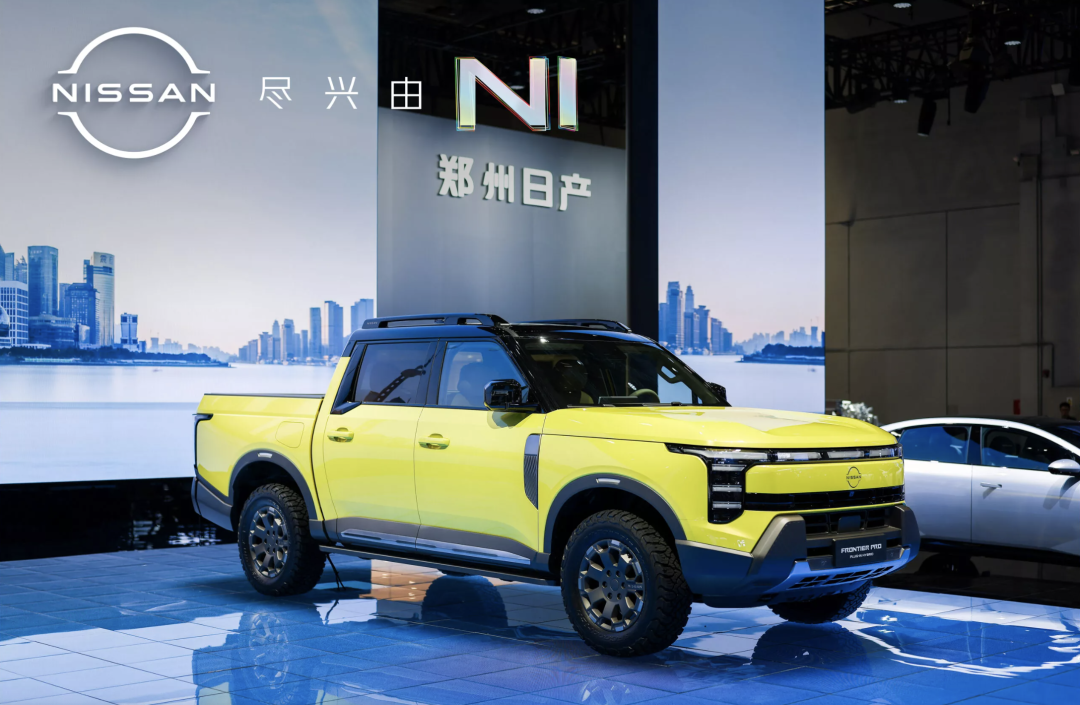
Interestingly, some multinational car companies are taking another approach. For example, Nissan has not chosen to simply block Chinese cars, but is trying to use China's manufacturing capabilities to participate in global competition.
Nissan has confirmed that the Frontier Pro pickup truck model developed in China will be launched in Mexico first, and plans to further expand into the Latin American market. In addition, the new energy model N7 launched by Nissan in the Chinese market has also been included as a candidate model for overseas markets.
We are taking advantage of this opportunity to allow Chinese-developed products to compete with Chinese automakers in Latin America, where they are undergoing a significant and rapid expansion," Meunier said.
This actually forms a new industrial cycle: Chinese car companies are going overseas, and traditional multinational car companies are also beginning to use China's R&D and manufacturing capabilities to go overseas.
Competition is no longer one-way.
The European market is previewing the future
If there is still a high degree of uncertainty in the North American market, then Europe has shown the changes that may be brought about by the global competition of Chinese automobiles.
In recent years, Chinese automakers have rapidly expanded their presence in the European market and are changing the European auto market through price, technology and product competition.
Hyundai Motor CEO Jose Munoz previously warned that if the U.S. government does not maintain tariffs and other market access protection measures, the United States may face a wave of Chinese car imports similar to what the European auto market is experiencing.
In recent years, Chinese automakers have rapidly expanded their presence in the European market and are eroding the market share and profitability of traditional automakers including Hyundai Motor and Volkswagen by offering significantly lower-priced models.
Muñoz said that in some markets, including Italy, Spain and France, Chinese cars are priced 30% to 40% lower than competing models.

In the European market, sales of Chinese brand cars have grown significantly. According to data from the European Automobile Manufacturers Association, in the first half of 2026, Chinese brand cars accounted for more than 9% of new car sales in the EU market. In the UK, according to relevant data, Chinese brand cars account for 15% of new car registrations in the UK.
The EU has implemented tariff measures against Chinese-made electric vehicles, but Chinese car companies have not stopped their European deployment.
Tariffs have not caused Chinese car companies to stop their European deployment, but have changed their investment methods.
BYD is building a European production base in Hungary, and Chery has also entered the European manufacturing system through cooperation with Spanish companies.
Europe is showing that the more market access requirements emphasize local production, the more likely car companies are to move production capacity and supply chains to target markets.
The reason why Europe became the breakthrough point for Chinese automobiles earlier is not accidental.
On the one hand, Europe's new energy transformation is rapid, providing a market window for Chinese new energy vehicles; on the other hand, traditional European car companies have higher cost structures and complex supply chain systems, and Chinese companies have gained competitive space with their efficiency advantages.
At the same time, the European Commission is also promoting "Made in Europe" rules and plans to set minimum local production ratio requirements for electric vehicles sold in the EU, which may further encourage Chinese automakers to find production bases in Europe.
Muñoz said that the United States needs to set relevant conditions for Chinese companies: "This can reduce the impact as much as possible." But he also said: "However, this impact will definitely exist."
As of October 2026, the United States has actually blocked the import of Chinese electric vehicles through approximately 100% tariffs. U.S. President Trump has publicly stated that he would welcome Chinese automakers to enter the U.S. market if they produce cars in the United States.
Munoz's views also echo previous warnings from Detroit automakers that Chinese auto brands could eventually enter the U.S. market.
Ford Motor CEO Jim Farley said in July 2026 that the company was preparing for the possibility of Chinese automakers entering the U.S. market in the next five to 10 years.
Munoz also said that when he was in charge of Nissan's China business ten years ago, he had been paying attention to the development of the Chinese automobile industry. He said: "The level of innovation, speed of improvement and technical capabilities here are incredible."
As of October 2026, there may still be a high wall between Chinese cars and the North American market. However, the history of the global automobile industry has proven many times that trade barriers can change the path of competition, but it is difficult to change industry trends.
Comments