
Abstract:
The researchers used a 10 petawatt laser at the Extreme Light Infrastructure Nuclear Physics Center in Romania to generate a high-energy muon beam and take an "image" of the object behind the wall through a two-meter-thick concrete wall. This is not the laser itself penetrating the concrete, but the muons produced by the laser accelerating the electrons passing through the wall, and then the signal is recorded by the detector on the other side. The research team said that this is the first time that lasers have been used to artificially generate mesons and complete meson imaging.
Mesons are elementary particles much heavier than electrons. When high-speed protons in cosmic rays hit atoms in the Earth's atmosphere, they produce pions, which then decay into pions. Mesons have an extremely short lifespan, but they have a large mass. Some mesons from space can still reach the surface and penetrate dense materials such as rocks. Their ability even exceeds the strongest X-rays. Archaeologists and engineers have used naturally occurring cosmic mesons to detect structures such as internal cavities in pyramids and underground mineral deposits.
However, the flux of mesons in the natural universe is low, only about one per square centimeter per second, and the incident angle is limited, making it difficult to quickly image on demand or observe from the side. To artificially create muons, the research team used strong lasers to accelerate electrons along electromagnetic waves, and then let the electrons hit a lead target. Previously, researchers from China, the United States, and the United Kingdom have demonstrated that this method is feasible; another international team involving researchers from Lawrence Livermore National Laboratory and Colorado State University has also generated a particle beam in a similar manner and photographed lead in a truck, but the actual proportion of mesons was unclear, so whether it could be counted as the first artificial meson imaging was controversial.
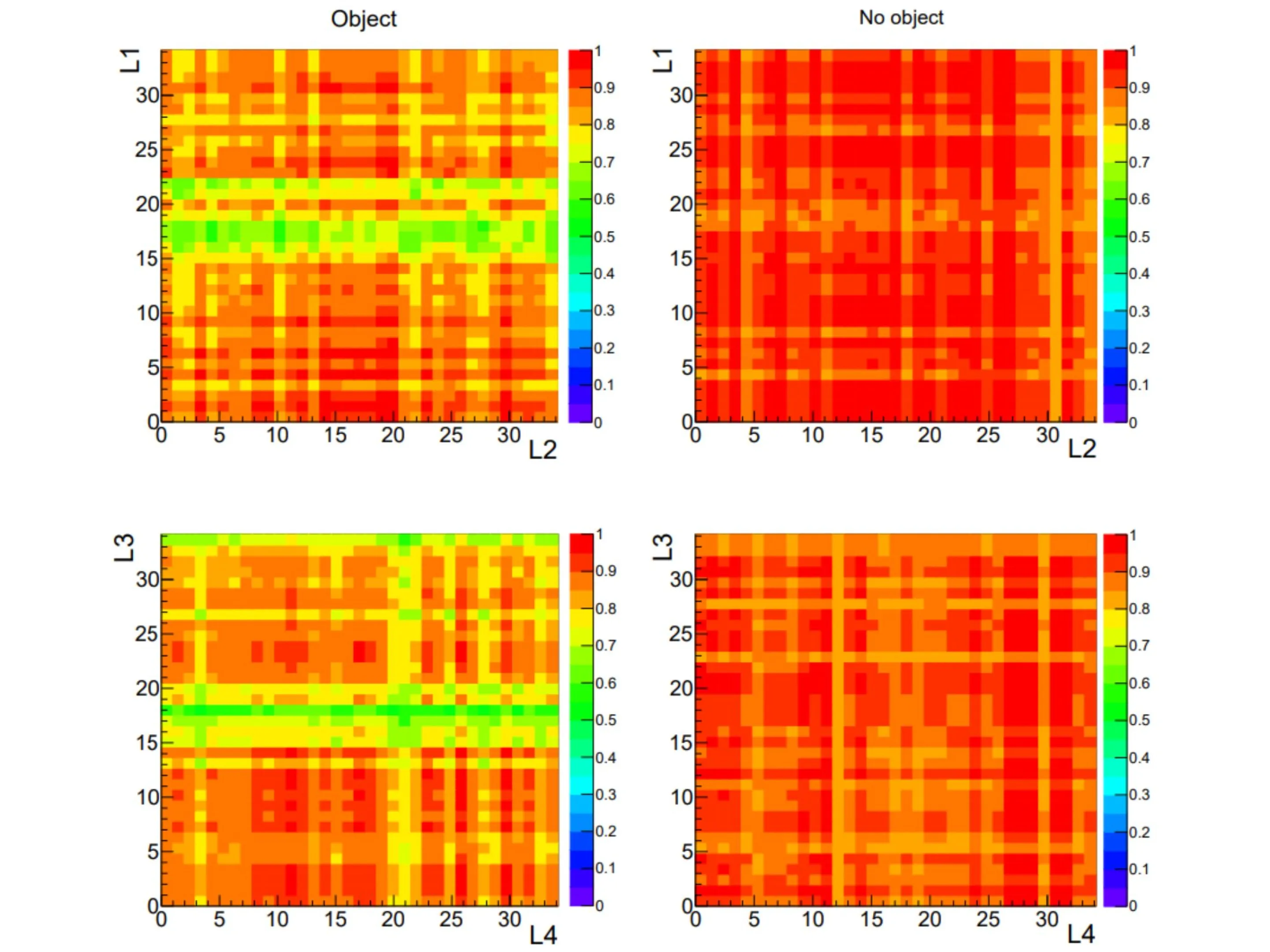
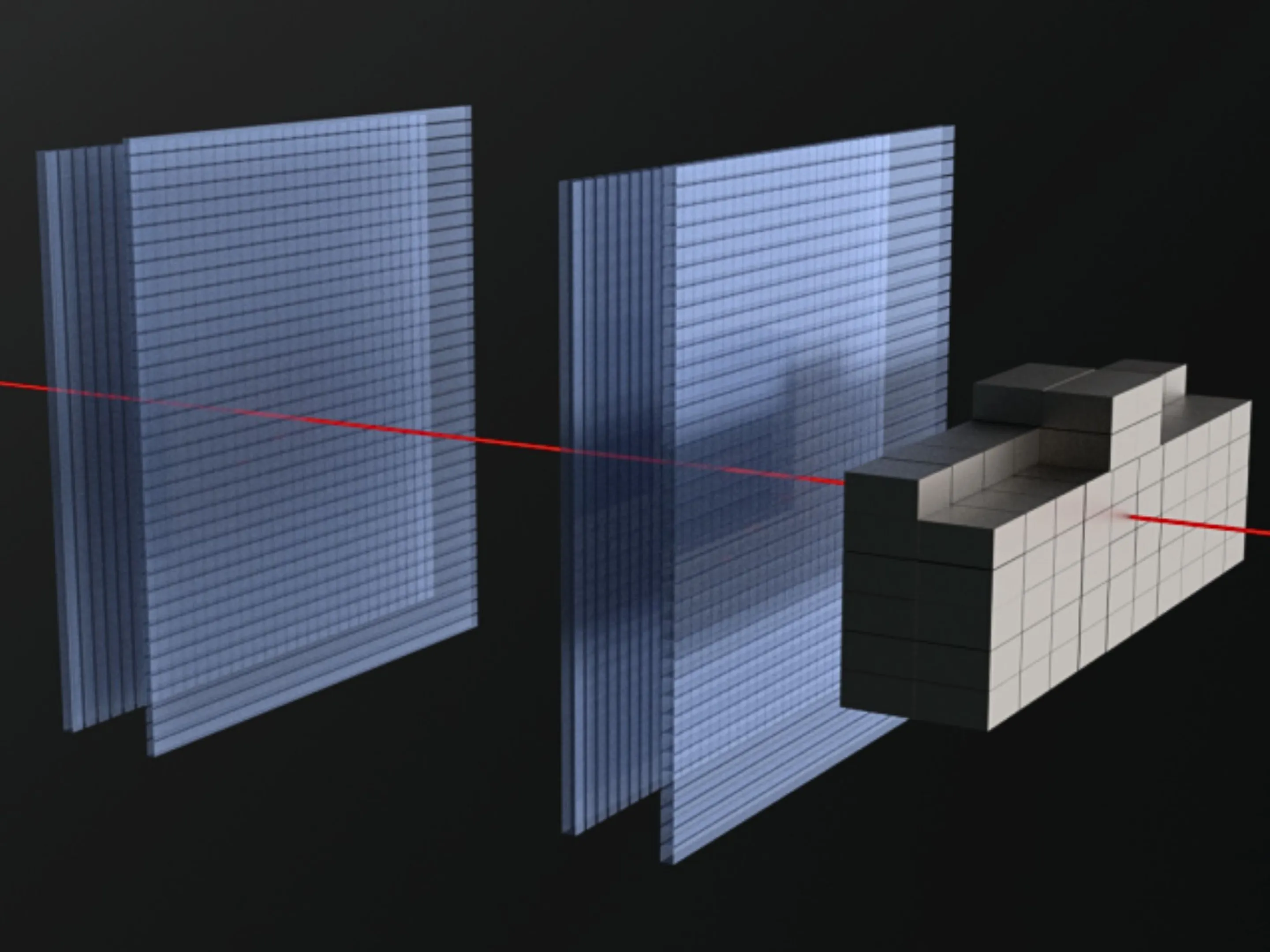
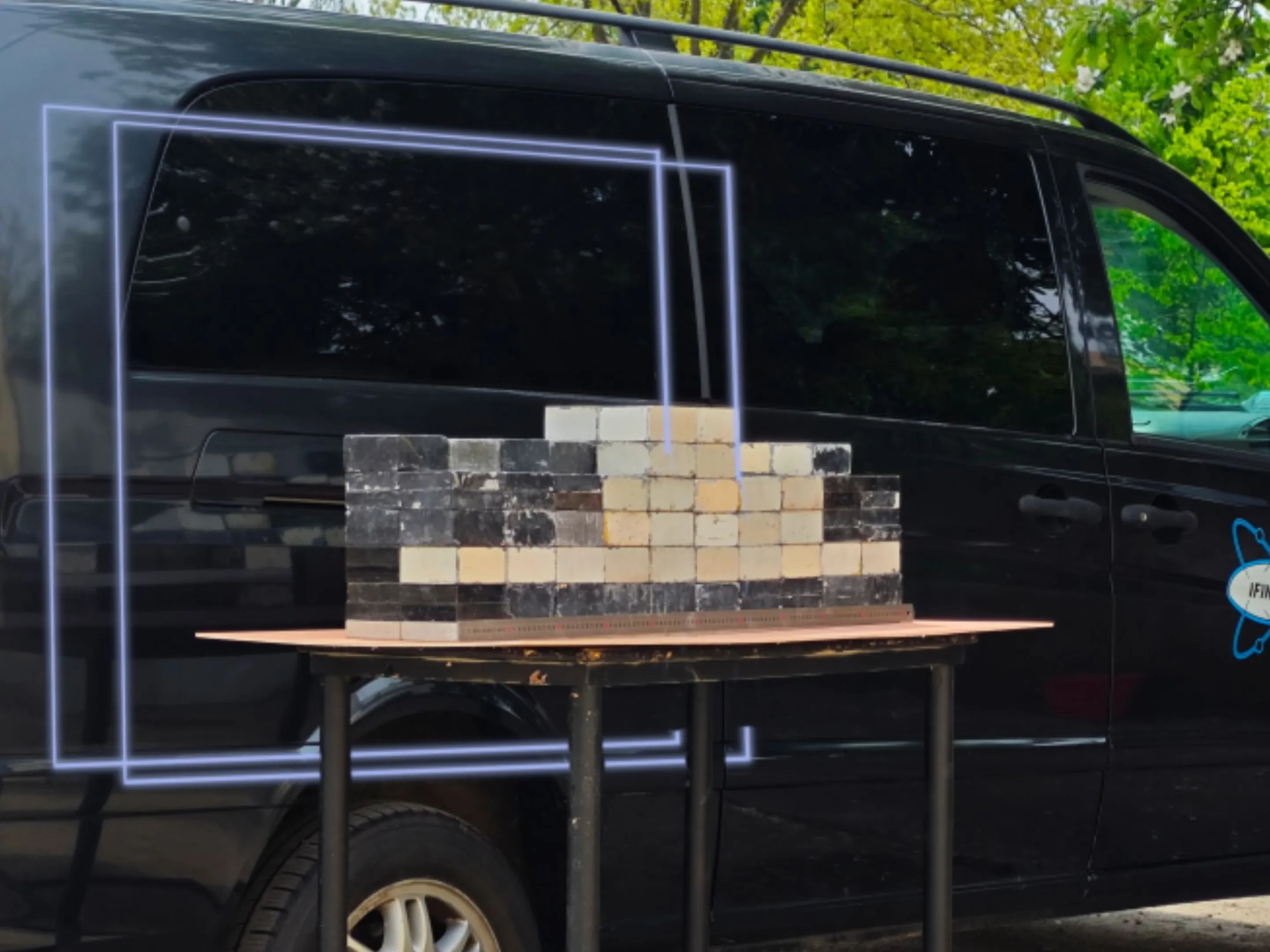
In this experiment, a 10-petawatt laser briefly released extremely high power, and the researchers allowed the accelerated electrons to hit a lead barrier. To filter out particles other than muons as much as possible, the team designed a filter consisting of a polyethylene sheet wrapped in a paraffin block, allowing the relatively pure muon beam to pass through a two-meter-thick concrete wall and reach a detector array in a vehicle parked on the other side of the wall. The detector eventually recorded an image of the shadow of a pile of lead blocks behind the wall.
The current shooting results are rough and have limited details, and relevant research is still released in the form of preprints. Researchers believe that if technology continues to develop, smaller and more portable imaging systems may be created in the future, which can be used to inspect the iron casing of rockets, the internal structure of mountains, or the stone foundations of ancient buildings, and may also be expanded to areas such as security inspection and mining.
Comments