
Abstract:
Researchers have discovered that a fish native to the Missouri River in the United States lives far longer than previously thought. Some of the blue suckers swimming in Montana's Upper Missouri River today may have hatched before the 20th century began. Research has confirmed that blue suckers can live up to 130 years, more than three times the previous estimate of about 40 years. The discovery ranks the species among the longest-lived vertebrates in North America.
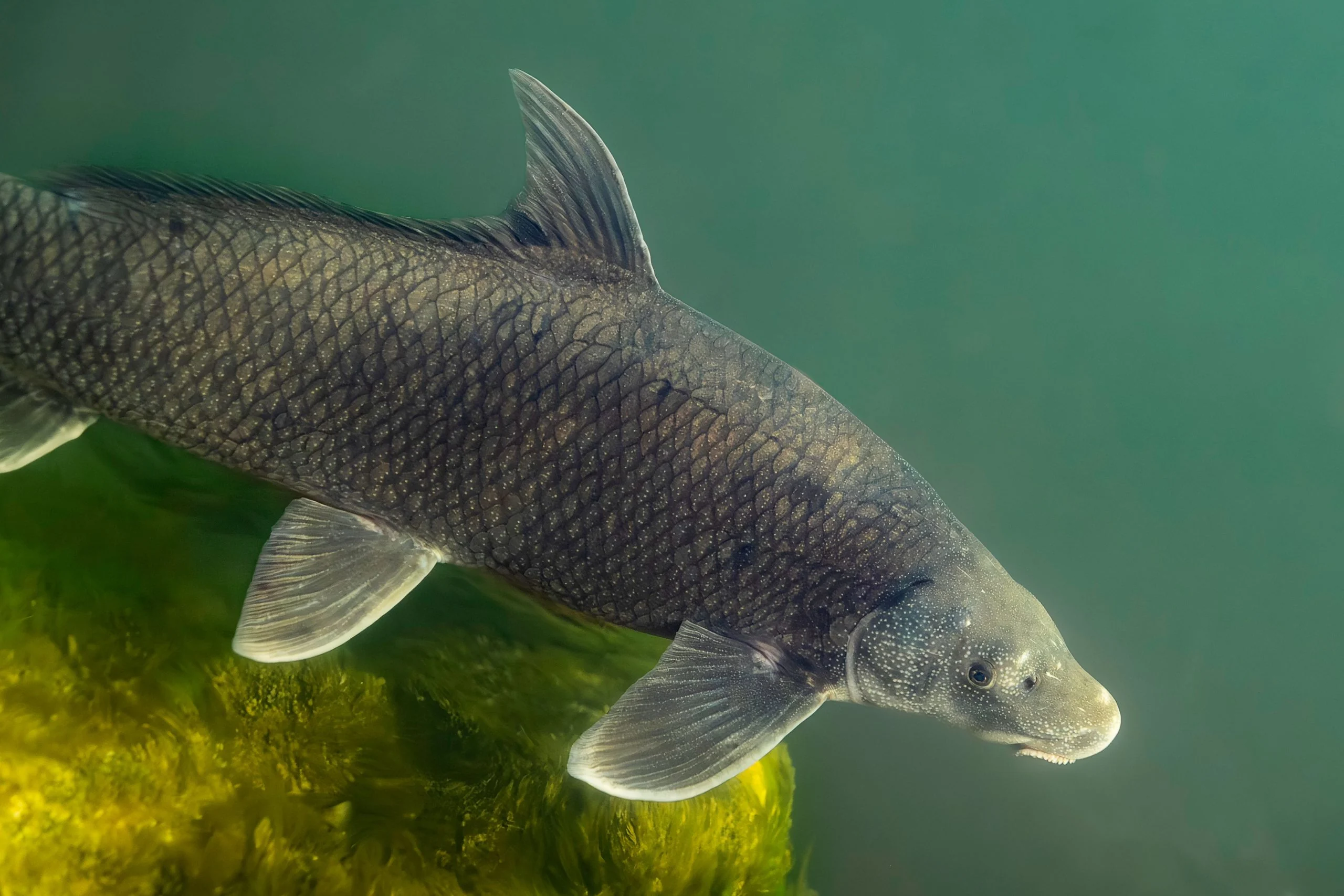
The study, published in Communications Biology, was led by Alec Luckman of the University of Minnesota Duluth, Luke Holmquist of the Montana Department of Fish, Wildlife and Parks, and Alan Andrews of the University of Hawaii at Manoa. By examining the microstructure inside the fish's head and using chemical signatures left over from nuclear weapons testing, scientists found important evidence of the fish's extreme longevity and the aging of the population.
The blue sucker is native to 23 states in the United States, but is listed as endangered or threatened in 22 of them. For decades, researchers in the Upper Missouri River have observed growing sizes of fish, but unusually few juveniles. This phenomenon suggests that young bluesuckers have difficulty surviving and joining the adult population. The species has long been of concern across much of its range, but has been lacking validated age and life cycle information, representing a major knowledge gap, the researchers wrote.
To conduct the investigation, the research team collected and examined nearly 50 blue suckers between 2023 and 2026. More than 60% of the fish are over 90 years old, and some have survived for about 130 years. Their age distribution shows that since the construction of large dams in the mid-20th century, it has become increasingly rare for new generations of fish to successfully replenish the population. Habitat fragmentation caused by dams may be one reason, but research has not confirmed a cause-and-effect relationship.
Researchers determine the age of fish by examining their otoliths. Otoliths are tiny structures found in about 97% of fish species. They continue to grow throughout the life of the fish, accumulating layers like growth rings. Scientists can count these layers under a microscope like tree rings. The otoliths of bluesuckers are unusually tiny, posing technical challenges for research. The otoliths of bluesuckers are smaller than those of bullfishes, but the team found ways to deal with them, Luckman said.
When the researchers looked at the growth layers, they found far older ages than expected. Luckman said they saw individuals as old as 130 years old in fish that were originally thought to live about 40 years. When age estimates are much higher than previously thought, additional evidence is needed to rigorously test their validity.
To independently verify these ages, the team used bomb radiocarbon dating. This method exploits atmospheric changes caused by nuclear weapons testing during the Cold War. Those experiments produced large amounts of radiocarbon-14, which was absorbed by living organisms, including fish tissue. Luckman explained that thermonuclear bomb testing in the mid-to-late 1950s and early 1960s more than doubled the amount of radioactive carbon in the atmosphere, leaving a specific time stamp in organisms that experienced the "bomb pulse." If one could quantify the growth bands in an individual thought to have experienced a bomb pulse, it would be possible to test whether the calculated age is accurate.
By comparing the carbon-14 signature in the otoliths with the known timing of atmospheric radiocarbon additions, the researchers validated the estimated age based on the growth layers. This independent evidence confirms that blue suckers can survive for more than a century.
The blue suckerfish has now become the fourth member of the family suckerfish to be found to have a lifespan of 100 years or more, the other three being the largemouth bullfish, the smallmouth bullfish and the black bullfish. The extreme longevity of all four species has been documented since 2019, thanks in part to advances in fish age-dating technology.
The blue sucker also challenges expectations about how river environments affect animal lifespans. Unlike fish that live in relatively calm lakes, they spend their entire lives in fast-flowing rivers, where maintaining position and moving through currents requires a lot of energy. Such environments are generally thought to be associated with faster life cycles, so the extreme longevity of this species is particularly surprising.
The oldest blue suckers examined in the study lived decades before many of the dams that shape the Missouri River system were built today. Their survival across more than a century of environmental change contrasts with the apparent scarcity of younger generations, raising concerns about whether older adult fish are being replenished.
Holmquist said the oldest fish hatched about two years after Montana became a U.S. state, which was at the dawn of the automobile age and about 20 years before the sinking of the Titanic, which is incredible. He said that when people put these fish back into the landscape background where they hatched and compare all the changes that have occurred since then, they will find that they continue to swim in the river.
Comments