
Abstract:
Researchers at Kyoto University in Japan have discovered that there may be a physiological connection between cats and their owners related to social bonding and emotional states. Studies have shown a positive correlation between oxytocin concentrations in the urine of cats and owners, and owners of cats with higher oxytocin levels tend to exhibit lower cortisol levels and report less negative emotions. Additionally, daily physical proximity to cats was associated with more positive emotional states in owners.
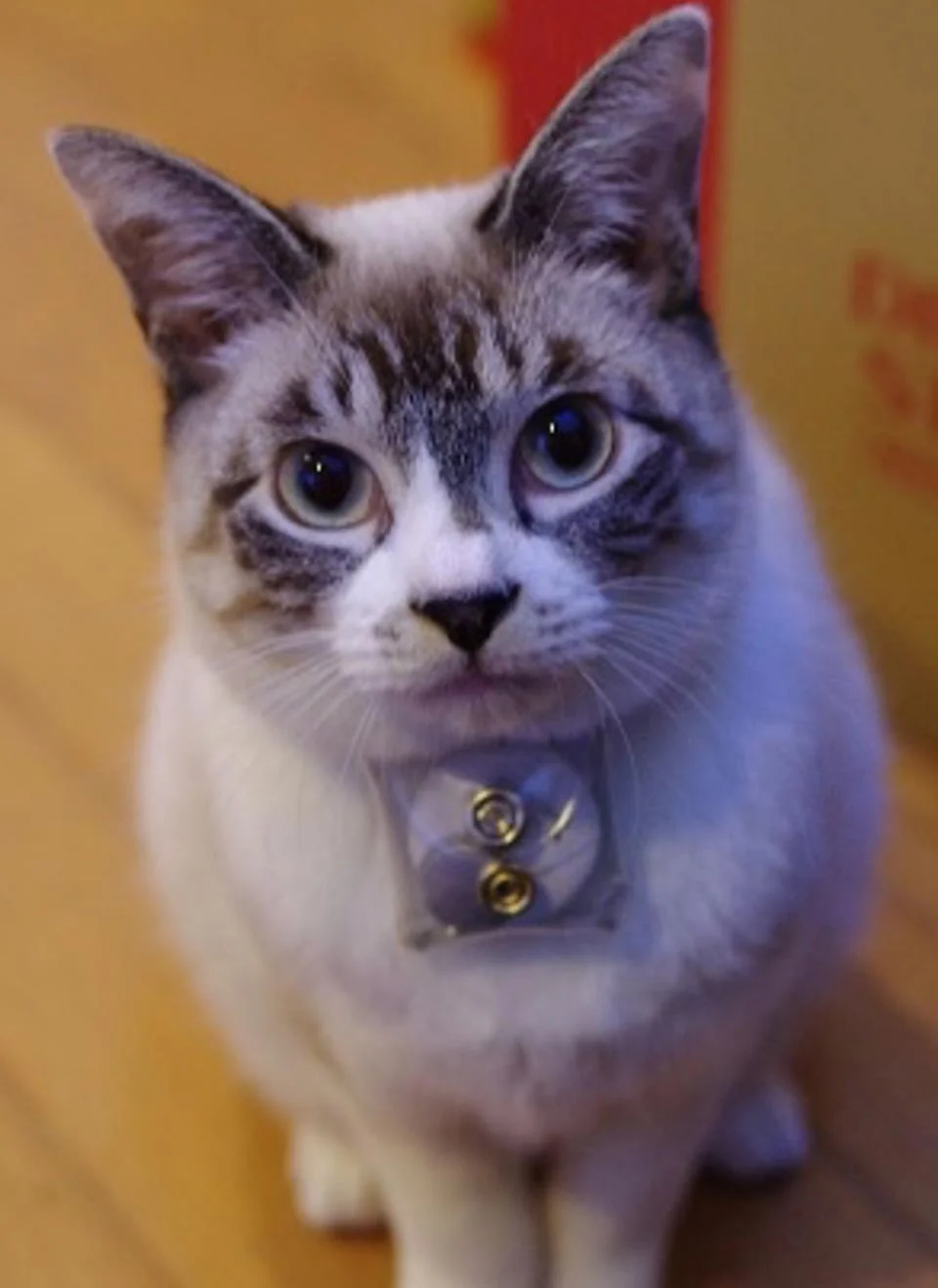
For this study, published in the journal iScience, the research team observed 29 cats and their 19 owners for a month. The researchers used urine samples to analyze hormone levels in cats and owners, used questionnaires to assess owners' emotional states, and observed cats' behavioral responses to their owners and strangers. In order to understand the proximity of cats and their owners in daily life, the researchers also installed low-power Bluetooth beacons on the cats' collars to estimate the distance between the cats and their owners through the signals.
The study focused on two hormones: oxytocin and cortisol. Oxytocin is usually related to social relationships, intimate interactions and attachment behaviors, and is also involved in the formation of parent-child relationships; cortisol is related to the body's stress response and energy metabolism. Scientists have previously conducted some research on the physiological connection between humans and dogs, but there is still a lack of sufficient evidence whether there is a similar hormonal connection between cats and their owners.
The analysis results show that there is a positive correlation between the oxytocin concentration in the urine of cats and their owners. That is, cats with higher oxytocin levels tend to have owners with higher oxytocin levels. The researchers also found that cats with higher oxytocin levels generally reported fewer negative emotions in their owners, who also tended to have lower cortisol levels.
However, further analysis shows that these associations are not equally stable across all sentiment indicators. When the researchers took into account factors such as the possibility of multiple cats in the same household, some of the associations between cats' oxytocin levels and owner mood measures such as anxiety and confusion persisted, while other associations failed to maintain statistical significance. Therefore, these results should be viewed as preliminary clues rather than well-established physiological laws.
The research team also found that the closer the owner and cat were in daily life, the more positive emotions the owner reported tended to be. For example, owners who maintain close proximity to their cats on a daily basis often exhibit higher levels of vitality and energy. In contrast, no clear association was found between the length of time an owner had a cat and their positive emotions.
This result suggests that the factors that determine the quality of the relationship between humans and cats may not only be the number of years they have been together, but also the actual interactions in daily life. For cat owners, having a cat approach, rest next to, or be petted may be an important part of establishing a close relationship.
Takagi Saho, the corresponding author of the study and a researcher at Kyoto University, believes that many cat owners are familiar with this experience: sitting on the sofa after a tiring day, the cat actively jumps on the lap to seek closeness, and when the owner strokes the cat, the cat purrs with satisfaction. The sense of comfort brought about by this interaction may also be reflected, to some extent, in the hormonal connections of both parties.
Researchers speculate that close contact, such as petting and being petted, may prompt changes in oxytocin levels in both cats and owners and help maintain the relationship between them. However, this is still only a possible explanation. This study did not directly measure the changes in hormone levels of both parties before and after a specific interaction, so it cannot prove that petting will definitely cause corresponding hormonal responses in cats and owners at the same time.
The study also has some limitations. First, the number of participants was small. There were only 19 owners and 29 cats in the study, and the sample was not representative of all cat-raising households. Secondly, Bluetooth beacons can only estimate the distance between the cat and its owner, and cannot determine whether the two parties were petting, playing, or just staying in the same room. In addition, hormone levels are affected by sampling time, daily activities and other environmental factors, so a hormone concentration cannot be directly equated with happiness, stress levels or emotional intensity.
More importantly, this study found correlation, not causation. The fact that the cat's oxytocin levels are higher and the owner's negative emotions appear at the same time does not prove that the cat's hormonal changes improve the owner's mood. Another possibility is that the owner with a better emotional state is more willing to interact with the cat, or the shared living environment and daily habits of both parties also affect each other's physiological state.
To further confirm these relationships, the researchers hope to conduct more detailed observations in the future and continuously measure hormonal changes in cats and owners before and after specific interactions such as petting. In this way, scientists can better determine whether the physiological responses of both parties are indeed changing in sync with the interaction, and whether this change is associated with improved mood.
This study provides new insights into the relationship between humans and cats. The psychological and physiological benefits of cat ownership may not depend solely on owning a cat, but on the actual relationship established, the pattern of daily contact, and the quality of interaction between the two parties. However, the available evidence is still insufficient to prove that owning a cat will definitely reduce stress or improve mental health. Larger-scale and more rigorous research is needed in the future to reveal the specific mechanism of this physiological connection between cats and their owners.
Comments