
Abstract:
As global climate warming intensifies, high temperatures in summer are becoming a real challenge to railway transportation safety. The Korea Railway Research Institute (KRRI) recently developed a new type of magnetic insulation fabric that can be directly covered on the surface of the rail to block solar radiation heat and reduce the temperature of the rail by up to 10.9°C. This technology does not require the installation of complex water spray cooling systems or the continuous consumption of large amounts of water, and is expected to provide a more economical solution for railway safety in high-temperature areas.
In sustained high temperature weather, the surface temperature of railway rails may exceed 60°C. Rails are made of metal materials and will continue to heat up after absorbing solar radiation. When the temperature exceeds a certain range, the thermal stress generated inside the rail may cause the rail to bend or deform laterally, which is what is called rail expansion in railway engineering.
For high-speed railways, this risk is particularly worthy of attention. Once the rails are significantly deformed, high-speed trains may face serious derailment risks when passing by. Therefore, railway operators must closely monitor track temperatures during high summer temperatures and take necessary cooling measures.
At present, some railway systems mainly use water spraying to reduce the temperature of the rails, but this solution requires the laying of special spraying facilities and continues to consume a large amount of water. Installing and maintaining such systems is not easy in countries and regions where water resources are scarce and funds for infrastructure construction are limited.
The solution proposed by the Korea Railway Research Institute is to install an insulating fabric composed of multiple layers of fiberglass and magnetic materials on the surface of the rails.
This kind of fabric can cover the surface of the rail exposed to the sun, block solar radiation heat through a multi-layer material structure, and use a magnetic structure to be fixed on the rail. Unlike traditional fixed insulation, it does not require drilling holes in the track or complex mechanical installation, and can be quickly laid and removed according to seasonal changes.
Researchers say this material can block more than 85% of intense solar thermal radiation. Its performance has been tested on two actual railway lines: in the summer of 2024 on the Gwangju line in South Korea, and in the summer of 2025 on the central inland high-speed railway line.
The Korean Testing and Research Institute certified the test results and confirmed that this insulating fabric can reduce the temperature of the rails by up to 10.9°C, equivalent to 19.62 degrees Fahrenheit.
This cooling range is of practical significance when the rail temperature may exceed 60°C in summer. It can reduce the thermal stress caused by continuous heating of the rails, reduce the risk of rail deformation, and leave a greater safety margin for railway operations.
Considering that high-speed trains will generate strong airflow when running, the fixation reliability of insulation fabrics is also one of the focuses of research and development.
The running speed of South Korea's KTX high-speed trains can reach 300 kilometers per hour. The airflow generated when the train passes may cause continuous impact on the covering material on the track surface. To this end, the researchers designed a dual magnetic fixed structure and conducted safety verification under wind speed conditions of up to 238 km/h.
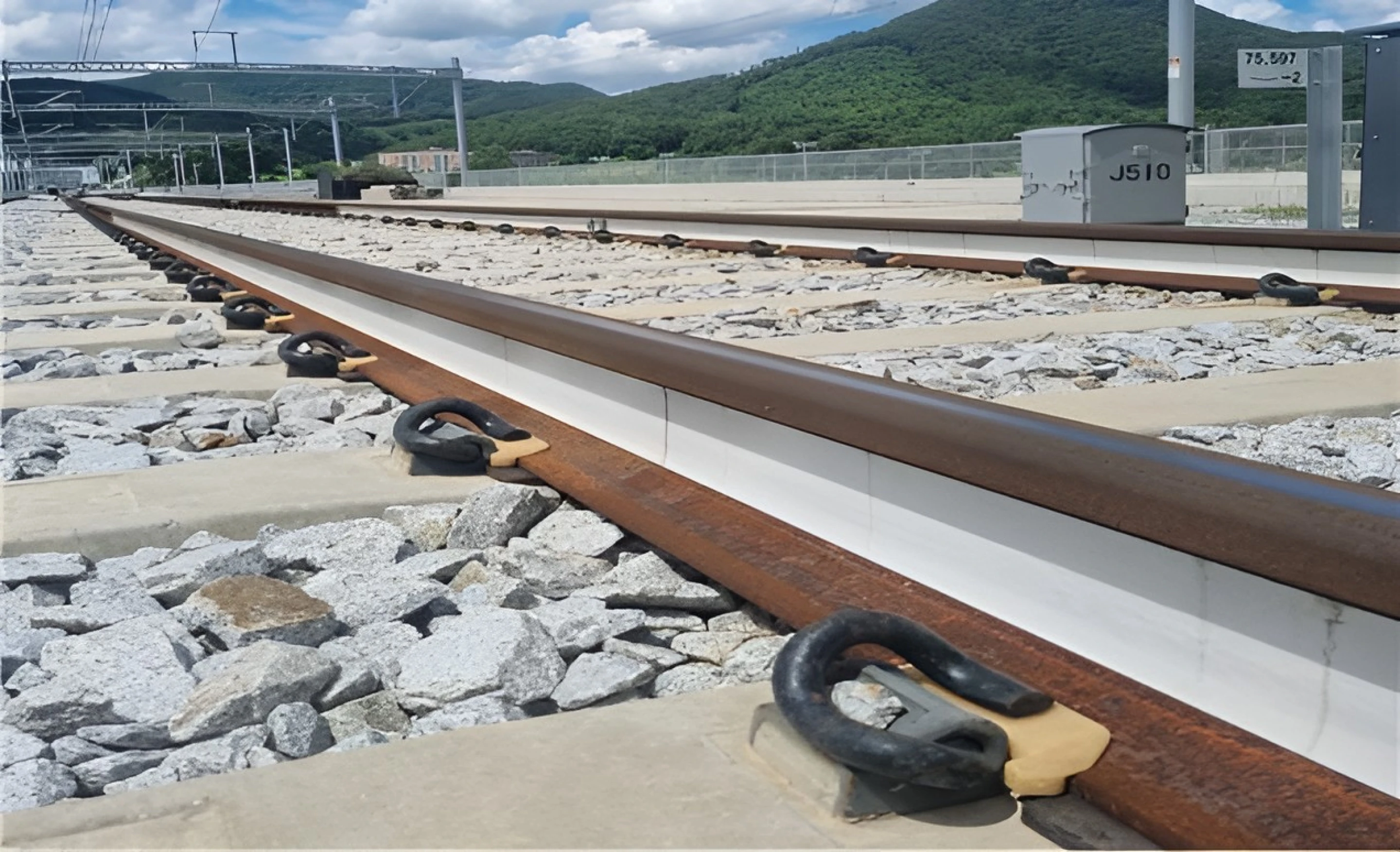
The research team stated that this fixing system can withstand wind force equivalent to 150% of the airflow intensity generated by high-speed train operation, so as to reduce the possibility of the fabric loosening or shifting when the high-speed train passes by.
In addition to thermal insulation performance and fixing strength, installation efficiency is also a major advantage of this technology.
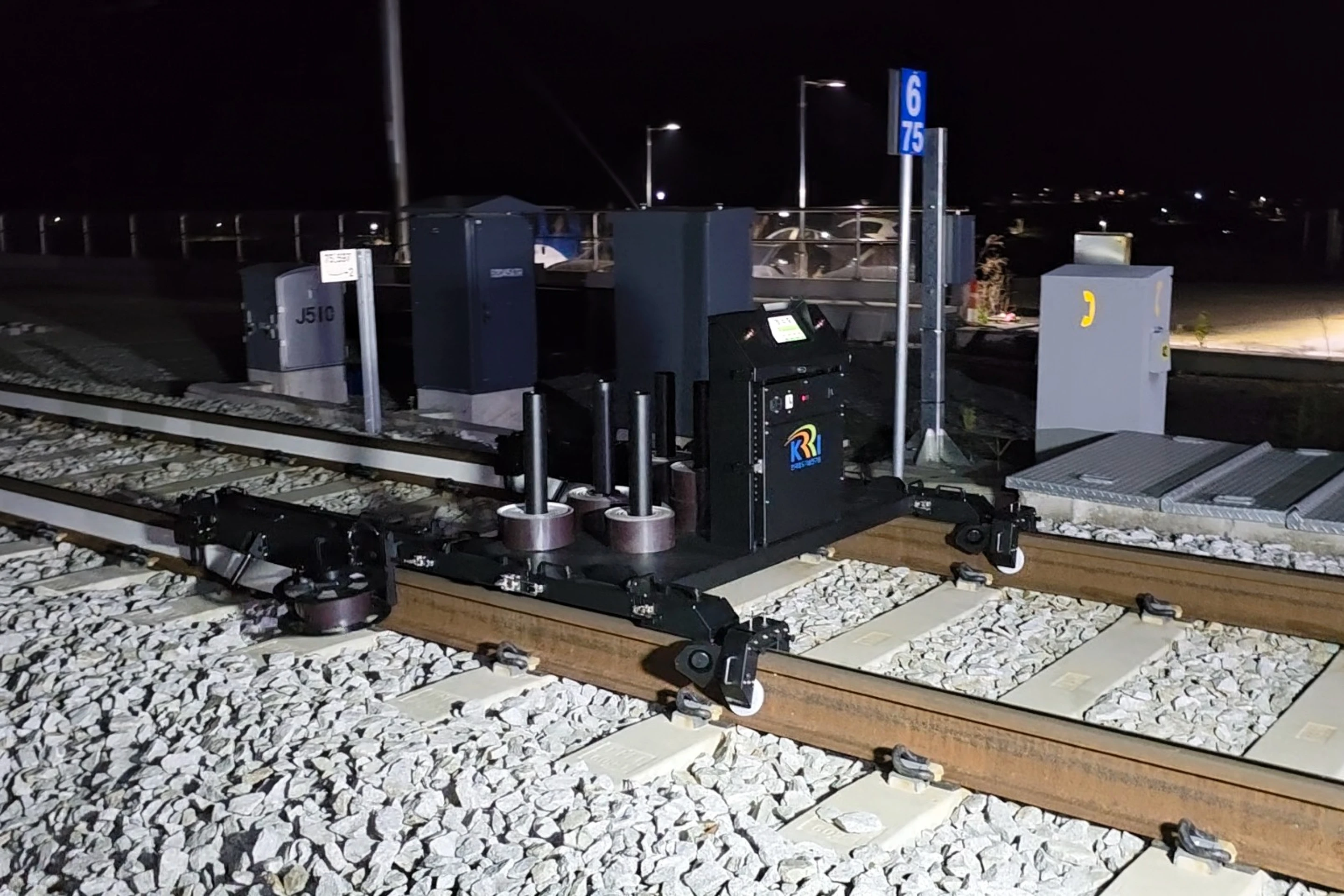
According to data released by the Korea Railway Research Institute, a set of automated integrated equipment requires only two technicians to operate and can complete the fabric laying of about 2 kilometers of railway per hour. Compared with traditional track reconstruction projects that require a lot of labor and specialized construction equipment, this method can significantly reduce the installation workload.
In terms of seasonal use, the researchers also designed corresponding cleaning and recycling mechanisms. The insulating fabric can be cleaned regularly during the summer and, at the end of the season, is removed and recycled using a specialized set of equipment for reuse in subsequent seasons.
The Korea Railway Research Institute stated that the material has a designed service life of up to 10 years in conventional railway and high-speed railway environments, and the goal is to create a railway cooling facility that does not require ongoing complex maintenance after installation.
Sagong Myung, president of the Korea Railway Research Institute, said that this technology was developed in response to actual railway operation needs and hopes to allow the public to continue to use the railway system safely even under extreme summer high temperature conditions. As climate change gradually becomes an important risk to the security of national infrastructure, research institutions also plan to further improve the technology and promote its entry into overseas markets.
This invention has previously received international recognition. At the 2025 Seoul International Invention Exhibition, the Korea Railway Research Institute's patent for thermal insulation fabrics won the top award, and its patent for automated installation equipment won the silver medal.
The researchers also believe that the application scope of this insulation material need not be limited to railways in the future. Since its core function is to block solar radiation heat, after further improvement, it may also be used in building exterior walls, road ancillary facilities and other infrastructure that need to reduce surface temperatures.
Compared with traditional water spray cooling solutions, the biggest advantage of magnetic insulating fabric is that it does not require continuous water supply or the construction of a complex fixed sprinkler system, and it can be flexibly installed and recycled according to seasonal needs.
However, the currently announced cooling data of 10.9°C is the highest value achieved under specific test conditions, and does not mean that all railway lines can achieve the same effect under any weather conditions. Its long-term weather resistance, actual performance in different climate environments and large-scale installation costs still need to be verified through more operational tests.
As global rail networks continue to expand, the problem of track deformation caused by high temperatures is likely to become increasingly prominent. This Korean technology provides a different idea from traditional water spray cooling: instead of trying to actively cool the rails after they heat up, they reduce the solar heat entering the rails from the source by covering them with insulating materials. This solution has the potential to be further promoted in areas with water scarcity, hot summers and dense high-speed railways.
Comments