
Abstract:
The first cracking solution that emerged shortly after the release of the Nintendo Switch 2 is spawning increasingly surprising technological experiments. Following homebrew software development, game data mining, PC simulator research and DLSS-related testing, a developer recently demonstrated a bolder result: successfully porting a platform-exclusive game originally for Switch 2 to run on the first-generation Nintendo Switch, which had significantly lagging performance.
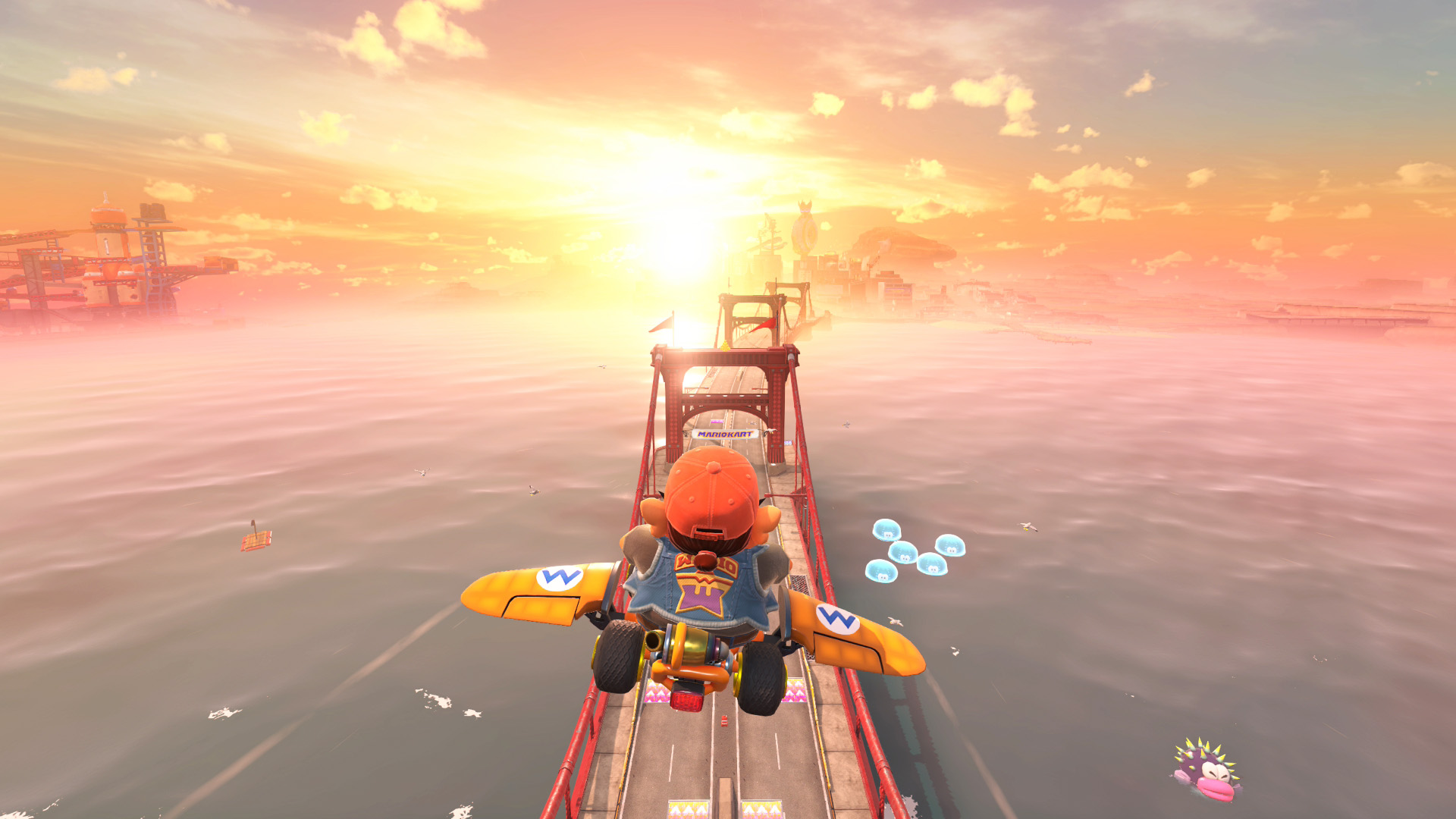
It is reported that this experiment was completed by developer @touhoufagyuri. The developer used a tool called DeepSeek Harness to carry out a lot of adaptation and optimization work on Switch 2 games, and has released multiple demonstration videos in the past few days to show the running effects of "Mario Kart World" and "Pokémon Pokopia" on the original Switch.
The most popular one is the transplantation of "Mario Kart World". The game initially barely ran properly on the original Switch, but after continuous optimization, it has been able to achieve relatively stable performance. The developers used pre-compiled shaders, forced LOD level adjustment, reduced rendering resolution and other undisclosed optimization measures, combined with overclocked Switch hardware, to finally make the game nearly playable.
The demo screen shows that although the game still has some lags and the large-scale open exploration content has been greatly reduced, the overall operating effect still exceeds many players' expectations. Considering that "Mario Kart World" was originally designed for the more powerful Switch 2, this achievement is regarded by many as a highly technical attempt.
In comparison, the porting of "Pokémon Pokopia" is even more difficult. As a newer Switch 2 game, this work has higher hardware performance requirements. Developers stated that in order for the game to reach an acceptable running state, not only did the original Switch need to be overclocked, but the resolution also had to be reduced to 720P. If run in 1080P mode, the game frame rate can only be maintained between 10 and 15 frames, making it difficult to play normally.
In order to solve the problem of frame time fluctuation, the developers then locked the game to run at 30 frames. Although this method has improved fluency, he also admitted that the current testing is mainly focused on the short-term demonstration stage, and new problems that have not yet been discovered may still appear in the complete game process.
The emergence of this achievement is closely related to the previously exposed Switch 2’s first jailbreak cracking solution. Not long ago, researchers successfully exploited software vulnerabilities to obtain partial system permissions on Switch 2, thereby enabling functions such as running homebrew programs, extracting game data, and conducting hardware research. The cracking community believes that this opens the door to more experimental projects in the future, including emulator development, game modifications, and cross-platform port testing.
However, for players who want to experience these ports for themselves, there is currently no opportunity to obtain the relevant programs. The developer made it clear that due to legal considerations, all code will not be released publicly, and related projects only exist for technical demonstration purposes. He also called on players to purchase and experience official game works through formal channels.
Industry insiders pointed out that Nintendo has always had a tough attitude towards cracked and unauthorized software. As Switch 2 cracking research continues to advance, such projects are bound to receive close attention from the authorities. Regardless of whether these experiments can ultimately be further developed, successfully bringing games that originally belonged to the Switch 2 era back to the original Switch has become one of the most surprising technological displays in the field of console cracking and porting in recent years.
Comments