
Abstract:
Less than a year after its launch, the Model Y L, the six-seater flagship SUV produced at Tesla's Shanghai factory, has received a lot of complaints from car owners. The problem of rear wheel collapse continues to be fermented on social platforms. Many car owners believe that this is not an isolated case, but a batch failure.
Many car owners shared that after the vehicle was fully loaded and driven for long distances, the gap between the rear wheel arch and the tire narrowed sharply. In severe cases, the gap was so narrow that even a finger could not fit in.
Some car owners have only driven 9,000 kilometers, and the car collapsed during a long-distance fully loaded trip, and the rear of the car sank significantly; there are also car owners who have a similar situation after 30,000 kilometers, with only two fingers left in the gap between the rear wheels. The car body shakes during driving, and there is a risk of scratches on the chassis.
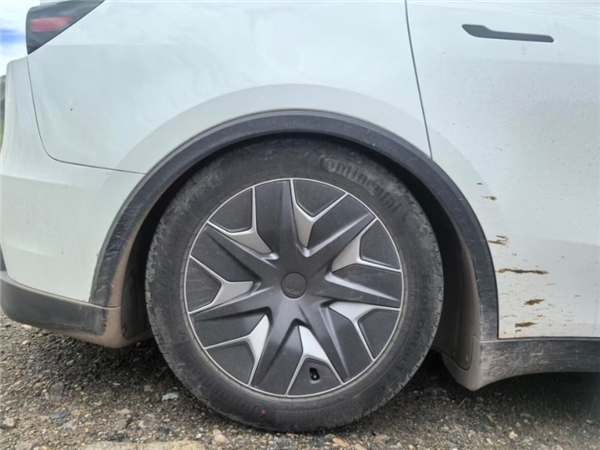
Collapse also causes losses. The suspension sinks and changes the wheel positioning, causing abnormal wear on the inside of the tires. Some car owners have worn their tires to the safety mark. Although the springs can be replaced free of charge during the warranty period, tire wear requires the owner to bear the repair costs.
Faced with a large amount of feedback from car owners, Tesla officials have not made a public response to the matter. Customer service only recommends that car owners with abnormalities make an appointment for store testing, and all offline inspection results shall prevail.
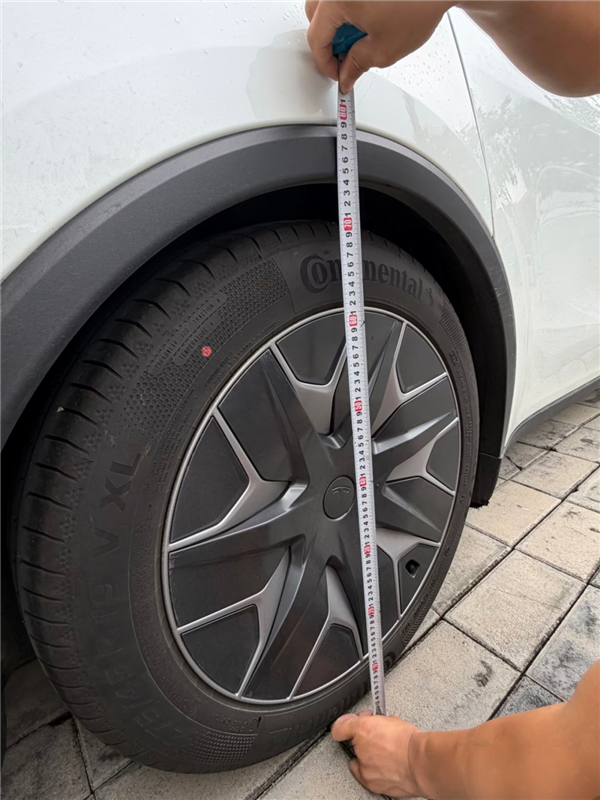
Tesla’s after-sales service stated that the height of the rear wheel eyebrow from the ground is within the normal range of 784±20mm. Only if the value is lower than 764mm, spring replacement is supported.
Many car owners have also figured out a simple self-inspection method: park the vehicle on a flat ground, squat down and put your fingers into the gap in the rear wheel arch for comparison.It is normal for the gap to be about four fingers wide; if it shrinks to three fingers, you need to be more vigilant; if there is only two and a half fingers left, there is a high probability that the problem has already occurred. However, repeated replacement of springs by car owners can only temporarily alleviate the situation. It is hoped that the manufacturer will investigate the root cause of the fault and come up with a complete solution to eliminate potential driving safety hazards.
Comments