
Abstract:
Official news from China Aerospace, at 12:03 today,
China Aerospace’s Lijian-1 Ya88 carrier rocket was ignited and lifted off in the Dongfeng Commercial Aerospace Innovation Test Zone, using the "one rocket and nine stars" method to reach the Qinling Mountains Nine satellites, including No. 01, Qinling No. 02, Yunxiao Pathfinder, Diting 01 Group A/B/C Satellite, Pengcheng Nanke No. 1, Pujiang No. 4 and Chaozhisuan No. 1, were accurately delivered into the predetermined orbit, and the launch mission was a complete success.
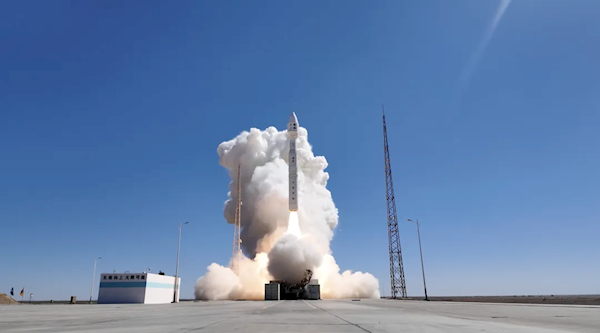
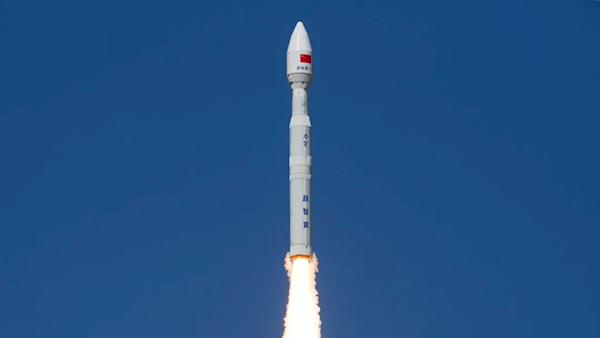
It is understood that the biggest highlight of this mission is the Super Intelligent Computing No. 1 computing power satellite. This satellite is the country's first integrated project of "first rocket and first satellite". The satellite's Super Intelligent Computing exclusively names the rocket (the rocket body is spray-painted with 'Super Intelligent Computing'), creating a precedent for the exclusive naming of a launch vehicle in the field of domestic computing power and the integration of satellites and rockets to carry AI computing power across the entire domain.
The satellite is equipped with an optical remote sensing imaging payload and an onboard intelligent computing unit, and has remote sensing data acquisition, on-orbit intelligent processing and download capabilities.
The core breakthrough of Super Intelligent Computing No. 1 lies in the "number of days and calculations in the sky" paradigm. Traditional remote sensing satellites adopt the "sky sensing and ground transmission" mode, that is, the satellite collects data in the sky and transmits it back to the ground for processing.
Super Intelligent Computing No. 1 realizes on-orbit data processing through onboard intelligent computing units.
Cooperating with laser communication technology to build high-speed inter-satellite links, it upgrades data response from "sky sensing and earth transmission" to "sky sensing and sky calculation", greatly shortening the link time from information acquisition to decision-making.
This launch is the first satellite of the "Intelligent Computing Constellation" planned by Super Intelligent Computing Technology. In the future, a cluster of thousands of low-orbit computing power satellites will be built.
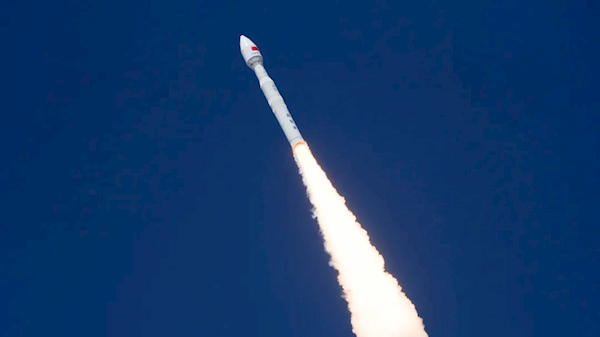
It is reported that the nine satellites, including Super Intelligence No. 1, have their own missions. Pengcheng Nanke-1 is a "Tongsuanyao" integrated technology verification satellite jointly developed by Galaxy Aerospace, Pengcheng Laboratory, and Southern University of Science and Technology. It is the first domestic on-orbit verification of communication, remote sensing, and computing power integration technology.
Diting 01 group A/B/C stars are Samsung network detection constellations. Qinling No. 01, No. 02, Pujiang No. 4, and Yunxiao Pathfinder are respectively responsible for remote sensing observation and technology verification tasks.
Lijian-1 is a solid launch vehicle developed by China Aerospace Science and Technology Corporation.
It has a take-off weight of 135 tons, a take-off thrust of 200 tons, and a carrying capacity of 1,500 kilograms in a 500-kilometer sun-synchronous orbit.
This is the 16th flight of Lijian-1 and the 17th launch of Lijian series rockets. So far, the Lijian series rockets have successfully launched 1 spacecraft and 121 satellites into space, with the total mass of the orbital load exceeding 21 tons. China Aerospace will rank first in the civil and commercial rocket launch service market share starting from 2023.
China Aerospace also revealed that the first sea launch mission of the Lijian-1 carrier rocket will be carried out in the waters near Guangdong in the near future to further expand launch flexibility.
Comments