
Abstract:
"Sanxingdui: Days of Future Past", known as China's first fully AI-generated theatrical feature film, has performed poorly at the box office since its release on October 23, pouring cold water on the hot AI film and television wave.
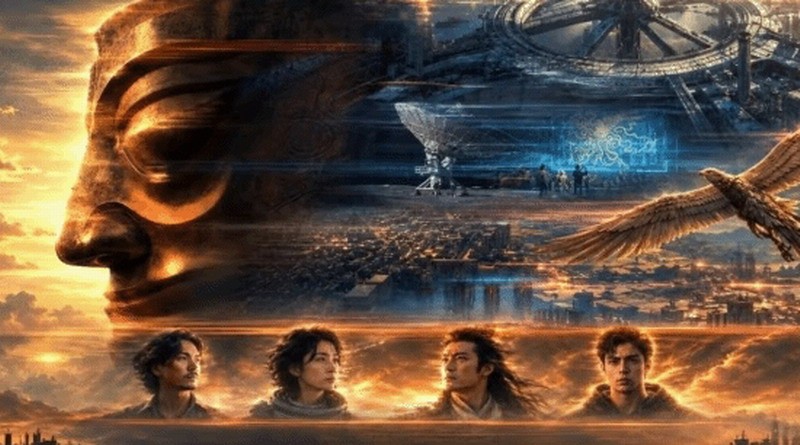
The film was produced by Bona Pictures, with an investment of over 10 million yuan. It took nearly 100 people two years to complete. The characters, backgrounds, and dubbing were largely generated by AI. There were over 10,000 screenings scheduled on the first day of release, giving it ample exposure opportunities.
However, the cumulative box office in the first few days of release was only 1.21 million yuan, the average number of moviegoers per game was only 2, and the attendance rate was as low as 0.1%. Many viewers who had seen the film bluntly said that they would not pay for this film to enter the theater.

What is quite dramatic is that just two months ago, the domestic animation "Niu Lai" staged the completely opposite script.
This work with almost no budget and completed by the director and his mother had a poor box office in the early stage. However, it became popular on the Internet with its rough and magical pictures. It relied on netizens' memes and spontaneous spread to counterattack and win a box office of 64.29 million, which is more than 50 times that of this AI movie.
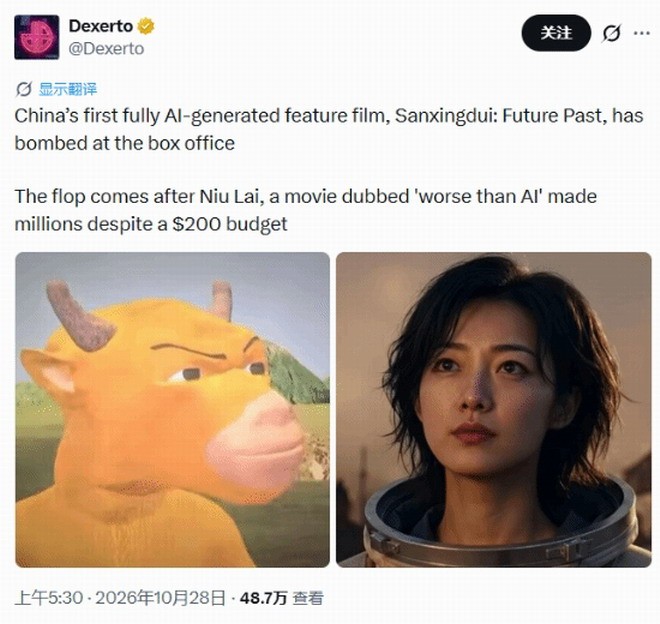
Of course, the two works cannot be equated simply and crudely. "Niu Lai" also experienced a long cold start before becoming popular. But the current results also intuitively prove that even if the popularity of AI technology remains high, audiences still value stories and emotional experiences when buying tickets and entering theaters. Technical gimmicks cannot directly translate into box office appeal. At present, many film and television companies in the industry are still continuing to plan AI feature film projects, and the commercialization path of AI movies is still full of variables.
Comments