
Abstract:
The Humanoid Robot Scenario Application Alliance updates the release of new products on the humanoid robot track every month, which is very meaningful. I sorted it out today. Damn it, the number of new humanoid robot products released is about to catch up with domestically produced cars. In August, the Humanoid Robot Scenario Application Alliance tracked a total of 24 new products released by 23 manufacturers, including one from Japan and two from the United States. 20 Chinese manufacturers released 21 new humanoid robot products.
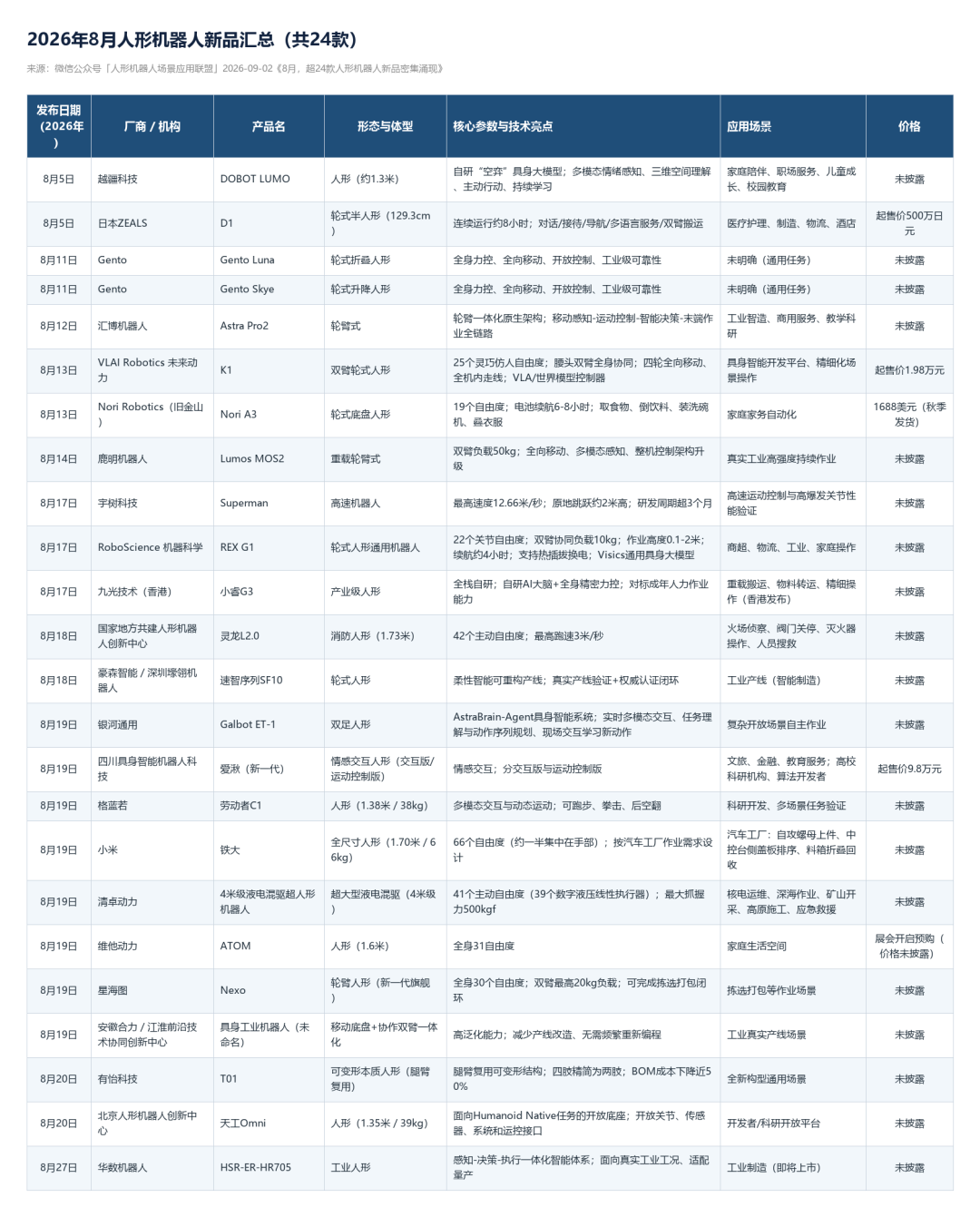
On July 21, a total of 35 new products were released by 11 Chinese manufacturers.
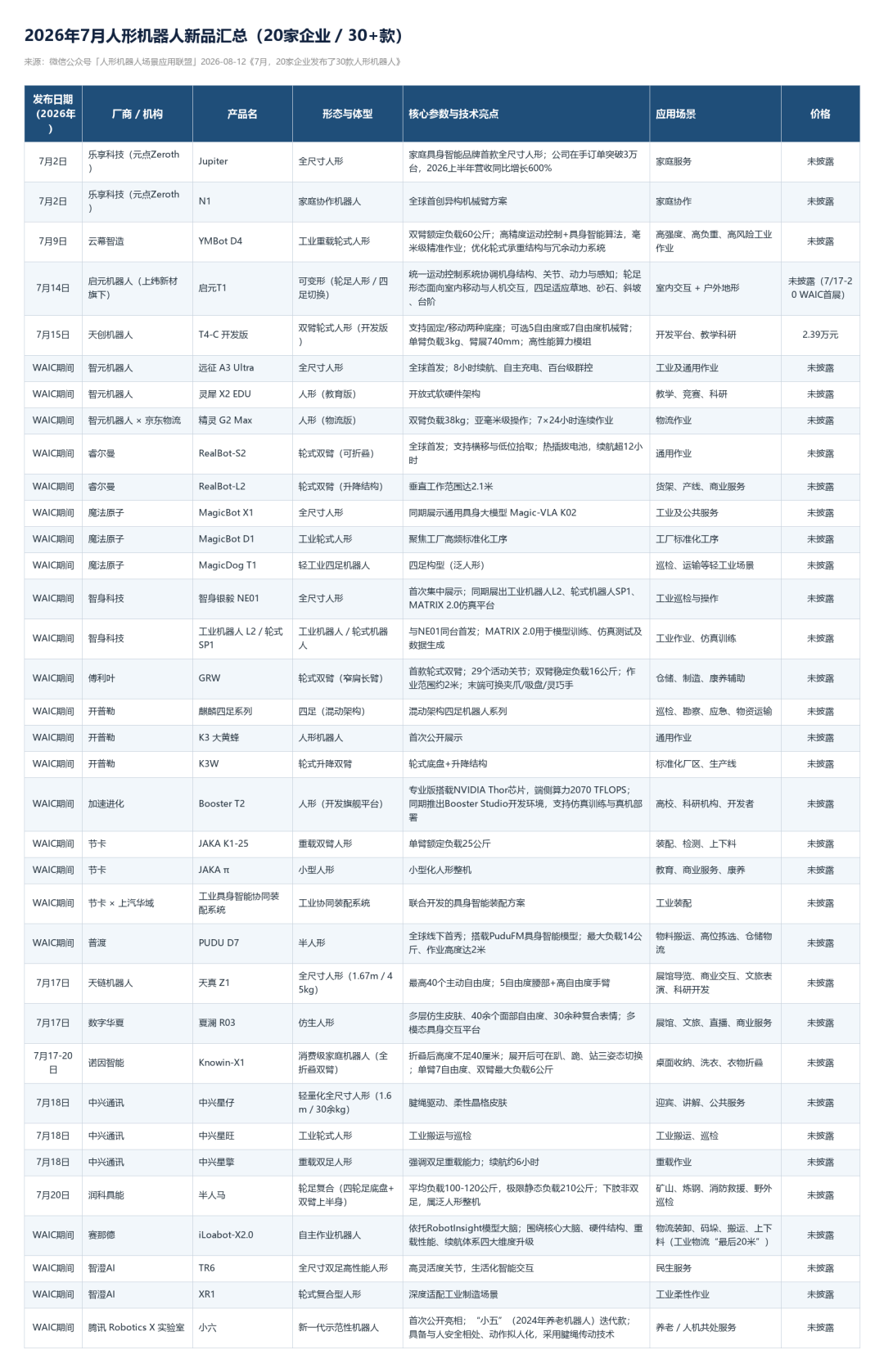
Of course, there are WAIC and Robot Games in July and August respectively, so new product releases are relatively intensive. The Humanoid Robot Scenario Application Alliance is currently tracking data since March, and I made simple statistics.
In March, 9 Chinese manufacturers released 14 new products (2 from overseas manufacturers),
In April, 10 Chinese manufacturers released 13 new products (1 from an overseas manufacturer),
In May, 8 Chinese manufacturers released 8 new products (2 overseas),
In June, 11 Chinese manufacturers released 14 new products (3 models from overseas manufacturers).
From March to August, an average of 17.5 new products were launched every month. There were 127 models last year, and we caught up in half a year this year.
I chose mobile phones and automobiles, two relatively high-volume industries, for comparison. September is the peak period for new phone releases, and the six domestic mobile phone manufacturers that have been determined will release 20 new products. New energy vehicles are the king of new product releases. Even industry insiders are complaining that 104 new cars were released every month from January to May. Many of them are facelifts/new configurations. Excluding this part, the average number of real new car models released is about 30 every month.
The pace of new humanoid robot product releases has caught up with mobile phone and automobile manufacturers. The track was more volume than we imagined.
First of all, product homogeneity is serious.
From July to August, Chinese manufacturers released a total of 56 new products. In terms of product form, wheeled and footed models compete equally, and their appearance is similar. The technical routes are converging. A large number of manufacturers use motors, reducers, sensors and controllers from the same suppliers. Key indicators such as rated load, endurance time and walking speed do not widen the gap between each other.
Secondly, there are few actual mass productions, and shipments are mainly contributed by leading manufacturers. The only three companies that are expected to ship more than 10,000 units throughout the year are Ubiselect, Zhiyuan, and Yushu. Most companies are still in the prototype stage.
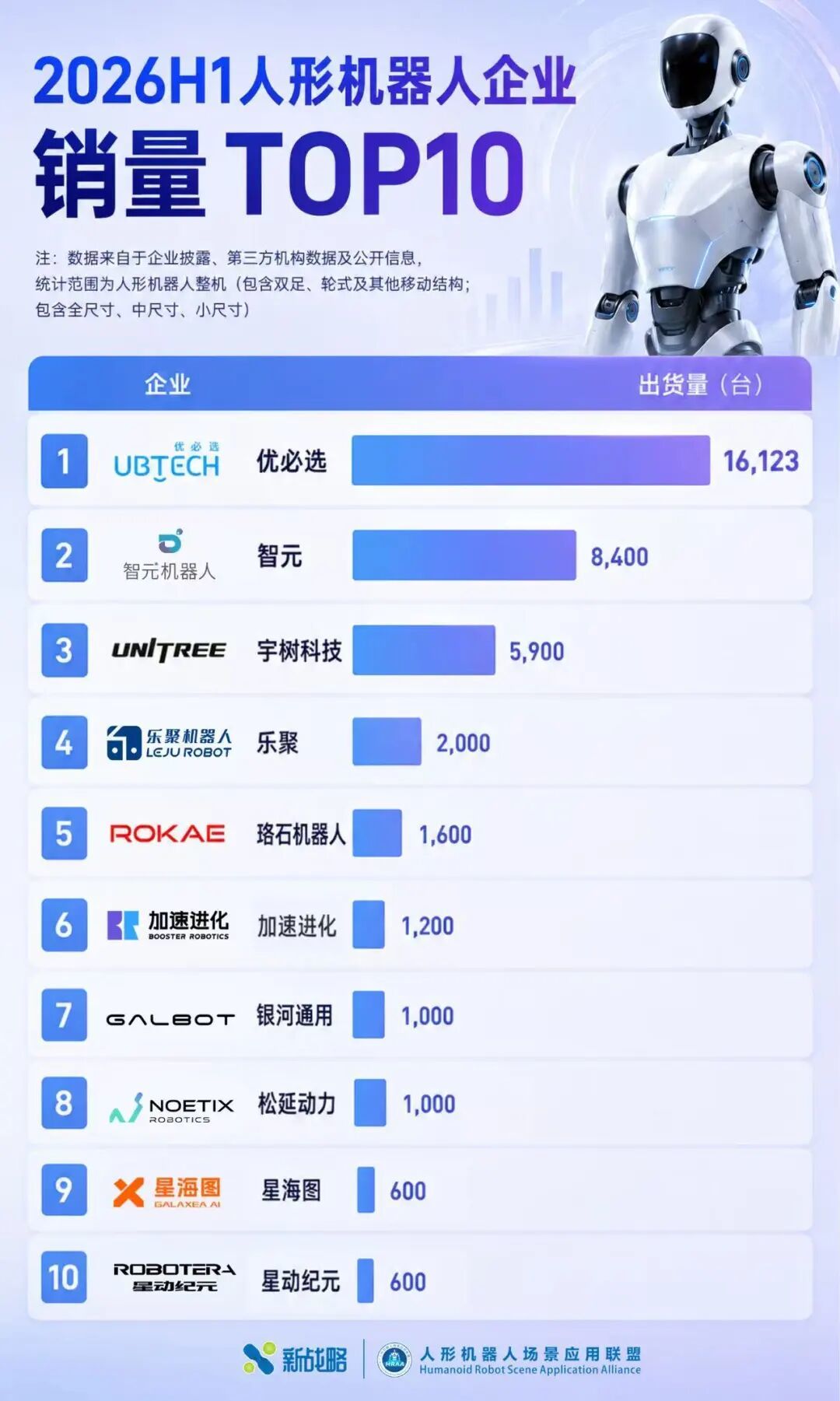
This can also be seen from the feedback from the supply chain side. Many companies mentioned in their mid-term reports that "related growth is driven by the humanoid robot business", but the specific contribution was basically not mentioned. The suspicion is higher that they are just trying to gain popularity.
For example, Hengli's mid-term orders for hydraulic robot screw screws were 500 million, while the full-year guidance given last year was only 300 million, and the order volume was significantly higher than the performance guidance. However, from the perspective of order distribution, only North American head robot customers have signed a framework agreement and are shipping hundreds of units per month, with plans to increase to thousands of units in the second half of the year; while most domestic robot customers are in the sample delivery and verification stage, and large-scale batch orders have not yet been implemented.
Third, tail manufacturers may be attacked by both supply and demand.
On the demand side, when so many manufacturers release new products, they have to find jobs for robots. In the context of homogeneous product technology, how to find effective customers in the fierce competition will be a daunting problem. It is very likely that tail manufacturers will sign orders at a loss.
On the supply side, some core components need to be queued. For example, the humanoid robotic arm launched by Huayan Robot in April was in extremely short supply. Dozens of companies lined up to wait for the goods, and each company could only get one.
Although the primary market is still very lively, according to statistics from the Humanoid Robot Scenario Application Alliance, there were 40 financing rounds in China’s humanoid robot market in August, totaling approximately 30 billion, setting a new record for the year. But a major reshuffle of the entire track is just around the corner.
Comments