
Abstract:
There are recent rumors that NVIDIA will discontinue the RTX 5090 graphics card because they want to transfer the core of the graphics card to the more profitable professional card market. After all, game cards only sell for $6,000, and professional cards start at $16,000.
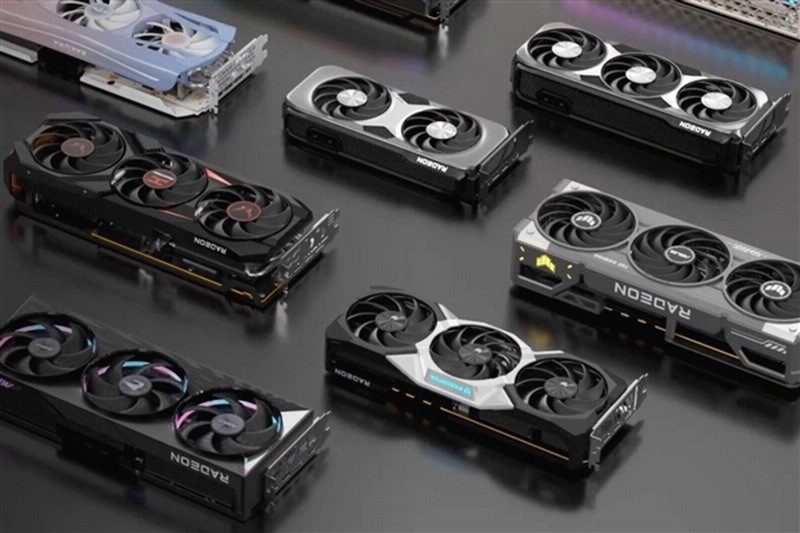
This change reflects the new challenges that graphics cards face after memory prices rise and AI demand explodes. But the scary thing is not the price increase, but that the price increase of graphics cards cannot be ended with one or two adjustments.
The reason behind this is that high prices will last for a long time, and graphics card prices will rise sharply.
There are many reasons for this. The first is the cost side. Memory price increases have the greatest impact, but it is not the only factor. Everyone has heard of the price increases of various electronic components this year, from basic capacitors and inductors to PCBs, fiberglass cloth, power semiconductors, to bulk raw materials such as copper and tin. Even the prices of various transportation logistics are rising.
Anyway, there are few industries in the electronics and chip semiconductor design industry chain that do not increase prices.
As a result, the profit pressure on motherboard and graphics card manufacturers has reached the limit, and prices have to be transmitted from the production end to the consumer end again and again.
Coupled with the universal reason of rising demand for AI, price increases cannot stop. Although there are many concerns about the collapse of the AI bubble, as long as the bubble does not really burst, the narrative of price increases cannot be falsified, and the prices of memory and graphics cards cannot stop the upward trend.
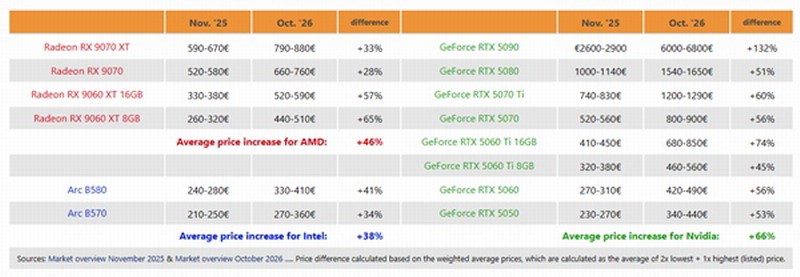
We have also reported before that the price increase of N cards has been far ahead in the past year.
Among them, the RTX 5090 graphics card has increased from 2600-2900 euros to 6000-6800 euros in the past year, an increase of more than 132%.
The overall increase in other RTX 50 series graphics cards has also exceeded 50-70%. Although AMD and Intel graphics cards have also increased in price, the increase is not so exaggerated. The average increase for N cards is 66%, for A cards is 46%, and for I cards is 38%.
So even if they have already increased by 50-60%, AMD and NVIDIA will adjust their prices in the future, and even if the price of RTX 5090 graphics cards doubles, NVIDIA will not care about this profit, and will still stop production of RTX 5090 and switch to more profitable professional cards.
Comments