
Abstract:
On September 19, according to the Financial Times, investors are questioning whether Anthropic can maintain its astonishing growth rate, as competition, price-conscious customers, and the potential risk that AI may destroy humanity have all cast a shadow on this high-profile IPO.
Anthropic
Anthropic's annualized revenue soared to $65 billion in July, and its backers expect that number to exceed $120 billion by the end of the year, which would make Anthropic the fastest-growing business ever.
But there remains considerable uncertainty about whether it can maintain that pace, which is reflected in the wide range of IPO valuations given by investors familiar with the company's performance.
Anthropic, currently valued at $965 billion, could trade at a valuation between $1.5 trillion and $4 trillion after listing, a range roughly equivalent to Amazon's market capitalization, they said.
“It’s incredible that OpenAI and Anthropic’s combined net revenue has reached $100 billion, but it’s too early to tell what it will eventually develop into,” said Joey Brookhart, an analyst at research firm SemiAnalysis who tracks AI labs.
OpenAI works again
One of the potential concerns for investors is the re-emergence of Anthropic’s main competitor, OpenAI. The ChatGPT developer has attracted increasing customer spending since releasing GPT 5.6 in July, surpassing Anthropic in weekly user spending for the first time in more than two and a half years, according to data from modeling platform OpenRouter.
OpenAI now claims that Astra, which it released earlier this month, is the best model yet. The company has postponed its own IPO and is in early talks with investors to raise new money at a valuation of $1.2 trillion.

GPT-6 Astra has received good response
Both companies also face potential threats from the "open" model. Model parameters for this type of AI software are publicly available and can be customized as needed.
These lower-cost models are currently developed mainly by Chinese companies such as DeepSeek and Dark Side of the Moon, as well as technology giants such as Meta. Their performance is gradually approaching the more advanced "closed source" cutting-edge models from companies such as OpenAI and Anthropic, and they continue to expand market share.
“This is the first time we’ve seen real price competition among labs,” said Eric Glyman, co-founder and co-CEO of enterprise payments company Ramp.
He added that Ramp and many of its customers switch between competing models depending on specific tasks, and using routing tools makes it easier to switch vendors and makes it harder for labs to lock in customers. As a result, the company cut its AI spending by 40%.
"You don't have to rent a Ferrari to buy groceries," Greiman said. He added that changing usage patterns raise the question: "Have we reached intelligence saturation?"
Executives including Microsoft CEO Satya Nadella have long argued that AI models will eventually become "commoditized" as competition drives down prices and users turn to the most cost-effective models.
Anthropic does a better job retaining customers than its competitors. Aleh Tsyvinski, an economics professor at Yale University, analyzed data from OpenRouter and found that 22.5% of Anthropic users were still using its models 12 months after first use, compared with about 13.2% of OpenAI users.
Investors who are bullish on Anthropic believe that both of these two leading U.S. labs will thrive as demand for AI grows. According to data from OpenRouter, OpenAI and Anthropic are growing rapidly, with token usage increasing 250 times since the beginning of last year.
Since the release of the ChatGPT chatbot in late 2022, both companies have been good at finding new sources of growth. Now they hope to continue this boom by pushing the frontiers of research and further honing their products.
“If AI is really successful and can form a business model, Anthropic will be at the core of it all.” Former Andreessen Horowitz partner Mike Paulus said. His family office invested in the company.
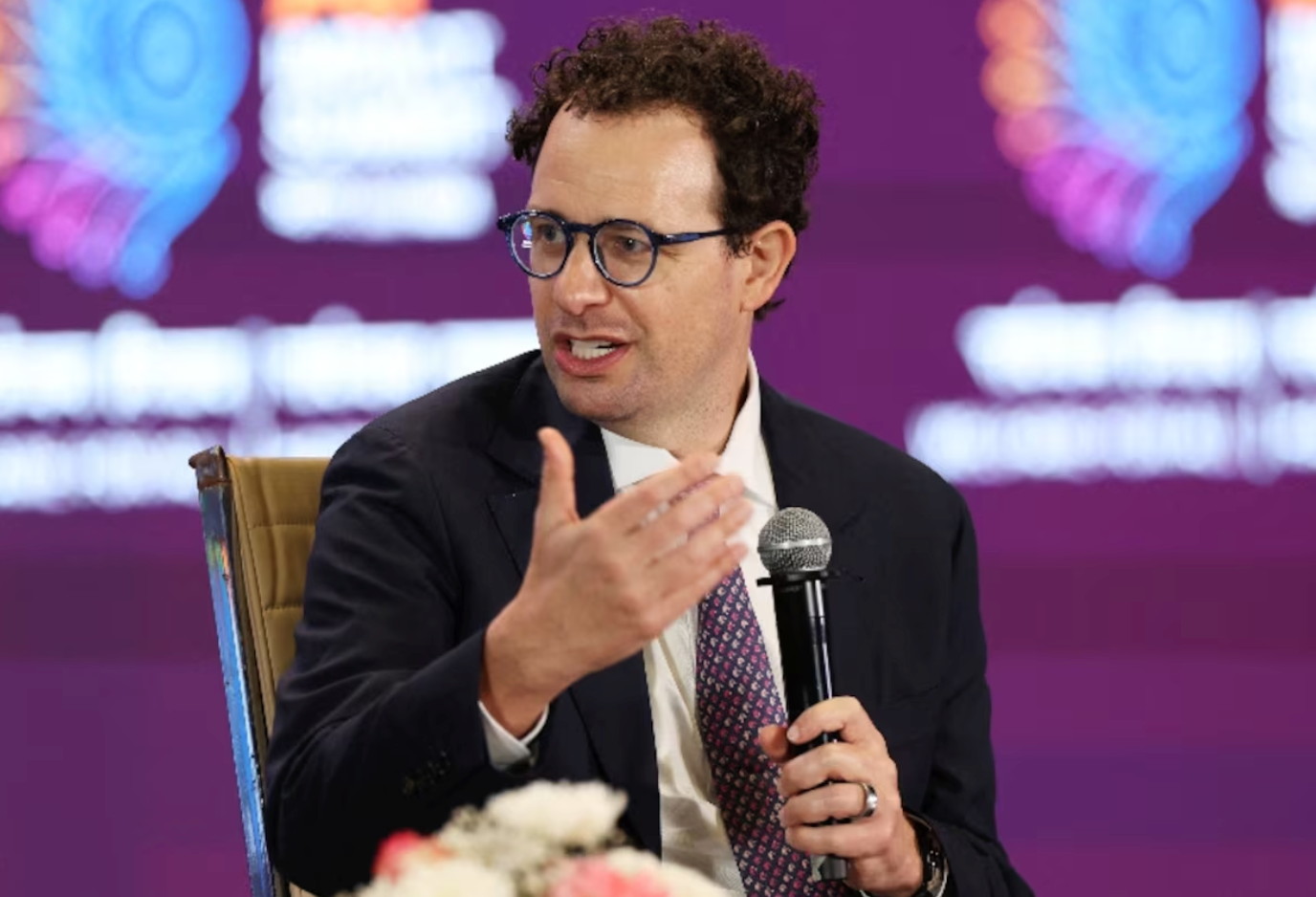
Amodei calls for slowing down model development
However, he added, "It's still an open question whether AI can really work, and it's going to be a battle that engulfs every market: OpenAI will be there, existing players will be there, open weight models will be there. This is by no means an easy monopoly."
This competition raises a larger question: Can cutting-edge AI companies replicate the economics of early, highly profitable software companies?
Investors are also scrutinizing the extent to which Anthropic's revenue is concentrated among its largest customers and cloud partners, and weighing the risk of Trump administration interference.
The risk of AI exterminating humanity
Another concern is that the advancement of AI will cause social crises. Anthropic researcher Jacob Coxon announced his resignation this month, saying "the people building AI sincerely believe it could kill us all before the end of this decade."
Anthropic CEO Dario Amodei has since called on AI labs to slow down the development of cutting-edge systems to ensure their safety. That could save Anthropic tens of billions of dollars in training costs, but would also give competitors, especially those in China, more time to close the technology gap.
“These CEOs (of AI labs) are saying, ‘We should slow down and be cautious,’ and the market is saying, ‘Yeah... but the temptation for profits is too great,’” investor Paulus said. “We may look back in the future and wonder why we didn’t take their warnings seriously.”
Comments