
Abstract:
U.S. regulators are planning to develop new visual identity standards for self-driving cars. According to the latest regulatory reform plan proposed by the National Highway Traffic Safety Administration (NHTSA), future self-driving cars may use unique turquoise (Cyan) exterior marking lights to clearly inform law enforcement officers and other road users that the vehicle is currently controlled by an autonomous driving system rather than a human driver.
This proposal is part of the revision of Regulation No. 108 of the U.S. Federal Motor Vehicle Safety Standards (FMVSS). Regulators hope to update existing lighting regulations to remove institutional obstacles for the increasing number of autonomous vehicles, while establishing a unified external communication method to avoid confusion caused by different companies using various identification solutions.
For years, the self-driving industry has been discussing how to communicate that there is no one in the car to pedestrians, other drivers and law enforcement. Related solutions include body display text, voice prompts, special lights and other visual signals, but there is always a lack of unified standards. Today, NHTSA's answer is turquoise lights.
The turquoise lights will be used to "clearly and consistently indicate to law enforcement officers and other road users that a vehicle is currently being operated by an autonomous driving system," the regulator said. This color was chosen because existing vehicle lighting systems already widely use red, yellow, white and blue-red flashing lights used by police and emergency vehicles, and turquoise can form a new visual identity category without confusing existing traffic signals.
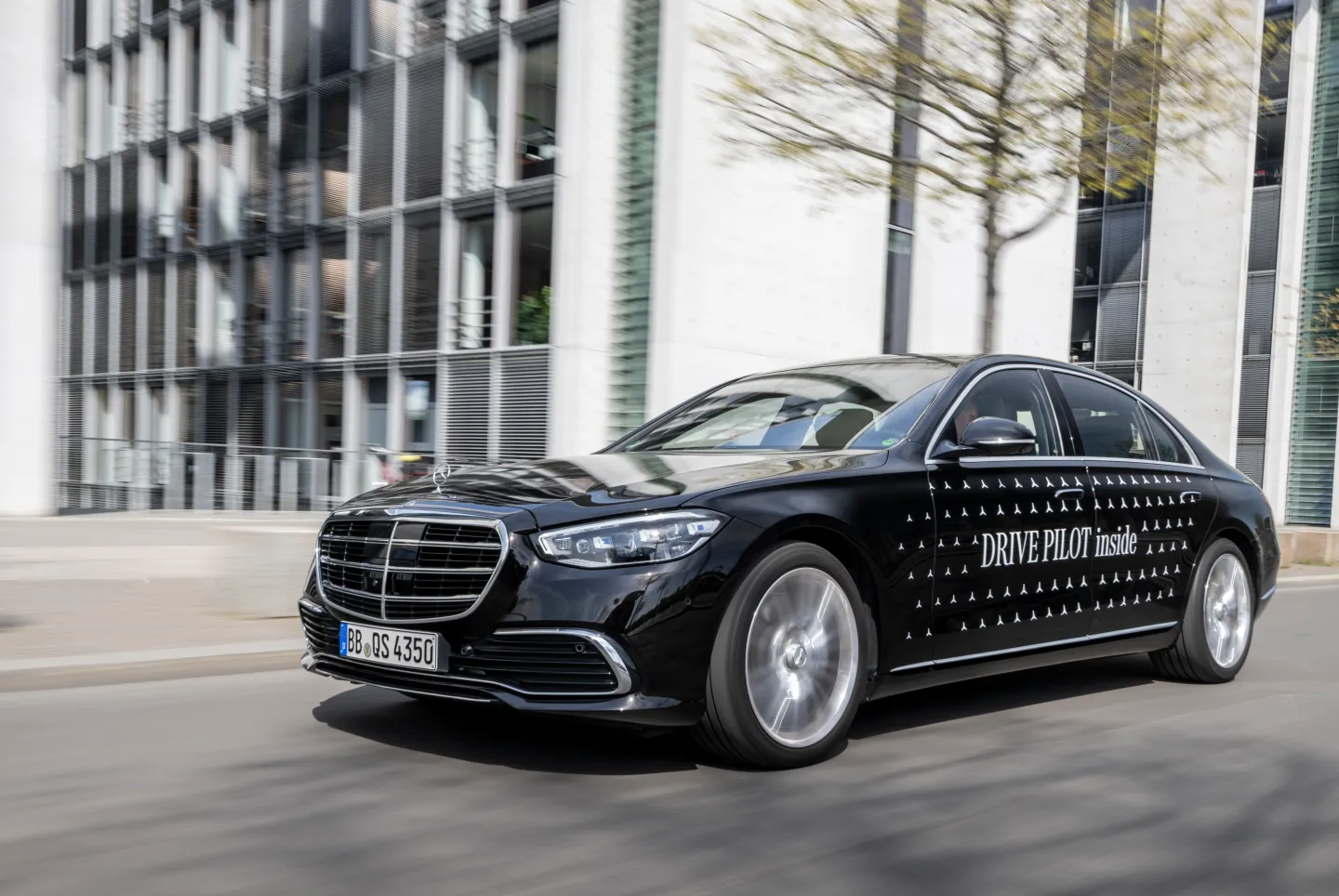
In fact, there is already a precedent for using similar colors as autonomous driving status indicators. Mercedes-Benz has received approval from some U.S. state governments to use turquoise signal lights on its L3 Drive Pilot autonomous models to show that the autonomous driving system is in working order. However, the company later adjusted its technical route and turned to a more advanced L2++ assisted driving solution, and this design failed to be widely promoted.
NHTSA hopes to establish a unified national standard so that self-driving operators such as Waymo, Nuro, and Zoox, as well as automakers such as General Motors and Mercedes-Benz, can use the same signaling system.
According to the proposal, the installation of turquoise sign lights is not a mandatory requirement, but a feature that manufacturers can choose. However, regulatory agencies will develop unified specifications for light color, brightness and installation location to ensure that all vehicles using this solution can present a consistent, legal and easily identifiable visual effect without a variety of lighting designs.
In addition to adding new autonomous driving sign lights, NHTSA also plans to delete some lighting requirements for autonomous vehicles that have lost their practical significance. Current regulations still require vehicles to be equipped with equipment such as physical hazard warning light switches, manual high and low beam switching devices, and steering control levers. However, these requirements are outdated for autonomous vehicles without steering wheels and pedals.
Regulators also plan to adjust some vehicle lighting test standards to allow automakers to more flexibly adopt modern LED lighting architecture and reduce the additional design and certification costs required to meet historical regulations. In addition, NHTSA is also considering lifting some restrictions on the placement of high-beam and low-beam headlights to further enhance vehicle design freedom.
Analysts believe the proposal reflects that the U.S. regulatory system is beginning to pave the way for the large-scale deployment of fully driverless vehicles. As self-driving taxis and steering wheel-less self-driving cars gradually move towards commercial operation, establishing a unified and easily identifiable external signal system may become an important part of the future self-driving transportation ecosystem.
Comments