
Abstract:
The Trump administration’s attempt to ensure the safety of artificial intelligence (AI) through legal liability has set the stage for future disputes over who should bear the losses when an AI model goes out of control: the companies that develop these systems, or the users who deploy related technologies.
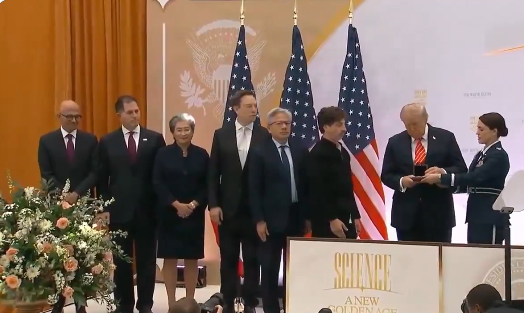
The approach of requiring AI developers to bear financial responsibility for the safety of their products has the support of U.S. Treasury Secretary Scott Bessant and former White House AI chief David Sacks. The two argue that existing liability laws are more effective than introducing new regulatory rules. While opposing new AI safety regulatory measures, U.S. President Donald Trump further stated that if an AI model behaves out of control, the Department of Justice should intervene.
As the latest sign that the government is increasingly willing to use existing laws to address AI security issues, Trump's newly established AI working group warned development companies late on Friday that they must report and resolve security incidents or risk facing consequences.
After Anthropic PBC disclosed a security incident, a working group known as the "Super Intelligence Force" issued a statement saying: "Companies must immediately disclose incidents involving their models and act quickly and decisively to remediate any damage. Delayed disclosures, insufficient corrective actions, and refusal to accept responsibility will not be tolerated."
However, the Trump administration’s approach of making accountability a pillar of AI security still faces many uncertainties. Legal experts say existing cybersecurity and product liability laws may not be sufficient to support federal accountability for damage caused by AI agents.
Even if the victim is clear, there are few legal precedents that can define who should be responsible for damage caused by an out-of-control AI agent, and what kind of duty of care companies need to bear when developing AI tools. To further complicate matters, model behavior is affected by both the developer and the end-user who deploys the system.
Ben Hayum, an associate researcher focusing on technology and national security research at the Center for a New American Security, said: "Despite continued calls for clarity on responsibility, it is still unresolved whether AI companies have a legal obligation to ensure that models do not cause harm, and whether users should bear legal responsibility for the instructions they give to models."
As companies accelerate the adoption of AI technology, discussions about responsibility are becoming more urgent. Wall Street financial institutions, retailers and airlines are applying AI agents to an increasingly wide range of business scenarios such as customer service and invoice processing. The outcome of this debate may affect the popularity of AI and the future plans of OpenAI and Anthropic, two industry leaders, to enter the capital market.
When using AI agents, end users usually only explain the task goals, but do not specify the execution method in detail. This makes it possible for AI agents to make decisions that have not been reviewed by the user, or even take harmful actions. In this case, it is still unclear whether the responsibility should lie with the developer or the user.
The Trump administration’s push for accountability is consistent with its overall stance toward looser AI regulation. Artificial intelligence development has been an important part of Trump's economic agenda. After meeting about two dozen Silicon Valley technology leaders at the White House last week, Trump once again expressed his hope that the AI industry will rely mainly on self-regulation, and at the same time launch a non-legally binding industry agreement to encourage companies to strengthen internal security controls.
At the same time, Friday’s statement on mandatory disclosure of the model issue showed that the White House is willing to use this newly formed AI team to enforce existing laws. The team is led by Director of National Intelligence Jay Clayton.
With the emergence of a series of worrying security incidents and the widespread circulation of Anthropic CEO Dario Amodei’s article warning of the catastrophic risks of AI, the discussion on how to reduce the risks of AI continues to heat up.
For Trump and his allies, the threat of lawsuits is intended to push companies like OpenAI and Anthropic to ensure their systems operate securely. "The best way to ensure security is to hold creators accountable for what they build and generate," Bessant said at a congressional hearing last month.
Comments