
Abstract:
Canonical officially released Ubuntu 26.10 "Stonking Stingray", which is a half-year update version launched after the Ubuntu 26.04 long-term support version. As a non-LTS version, Ubuntu 26.10 will receive official support for 9 months and will serve as an important technology transition platform for future Ubuntu 27.04.
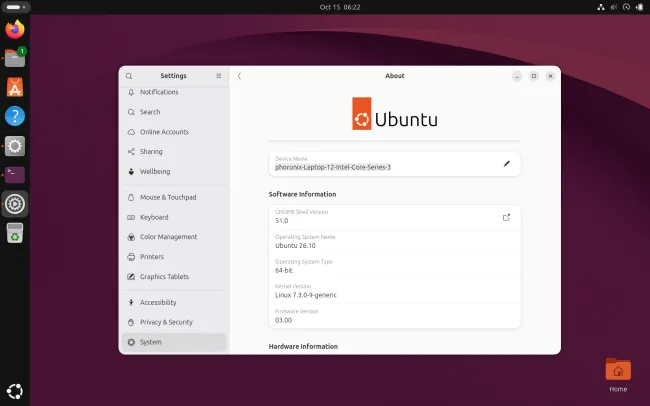
In terms of core components, Ubuntu 26.10 is equipped with the Linux 7.3 kernel, which provides more complete support for the latest hardware platforms. It also introduces the GNOME 51 desktop environment, which brings a number of interface and functional improvements. In terms of graphics stack, the new version integrates the Mesa 26.2 open source graphics driver to provide better performance and compatibility for AMD, Intel and some open source GPU environments.
One of the most concerning changes in this release is that Ubuntu has officially completed the migration of Rust Coreutils. For a long time, the basic command tools in Linux systems have mainly come from GNU Coreutils, and Canonical has been promoting the migration of some key system components to the Rust language in recent years to improve code security and reduce potential memory security vulnerabilities.
With the release of Ubuntu 26.10, the Rust version of Coreutils has been deployed, becoming an important milestone in Ubuntu's modernization of the underlying system. This is also an important achievement of Canonical's promotion of Rust strategy after the gradual introduction of system tools, network components and other infrastructure implemented by Rust.
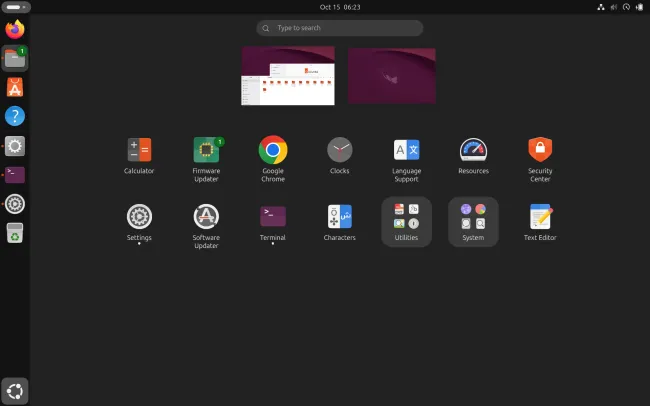
In addition to the underlying architecture updates, Ubuntu 26.10 also brings a large number of software package upgrades. The new version of the system includes updated compilers, development tool chains, system libraries and desktop applications to provide developers with a more modern software development environment.
In terms of artificial intelligence and new hardware support, Canonical continues to promote optimization work for the Qualcomm Snapdragon X series platform. The Ubuntu concept version for Snapdragon X1 and X2 processors has been continuously updated in the past few months, further improving the compatibility and user experience of ARM-based laptops, paving the way for more Windows on ARM devices to run Ubuntu in the future.
At the same time, the official derivative versions of the Ubuntu community are also updated simultaneously, including Kubuntu, Xubuntu, Lubuntu, Ubuntu MATE, Ubuntu Budgie, Ubuntu Studio, Ubuntu Cinnamon, Ubuntu Unity and Ubuntu Kylin. Users can choose different desktop environments and usage scenarios according to their own needs.
As a semi-annual update version, Ubuntu 26.10 does not take long-term stability as the primary goal like the long-term support version, but is more responsible for new technology verification and transition tasks. Therefore, new versions usually take the lead in introducing the latest desktop technology, development tools, and system architecture improvements to accumulate experience for subsequent long-term support versions.
Industry insiders believe that the biggest highlight of Ubuntu 26.10 is not a single function, but Canonical’s overall direction of continuing to promote the modernization of the underlying system. From Rust component extensions, the latest Linux kernel, GNOME 51 desktop to ARM platform optimization, these changes collectively reflect that Ubuntu is laying out the development of the Linux desktop and development ecosystem in the next few years.
With Ubuntu 26.10 officially launched, developers, open source enthusiasts, and users who want to experience the latest Linux technology can already download and deploy this new version. For enterprise and production environment users who pursue a long-term and stable operating environment, Ubuntu 26.04 LTS will still be a safer choice; and users who want to be the first to experience the latest technological achievements can experience Canonical's future development direction in advance through Ubuntu 26.10.
Learn more:
https://lists.ubuntu.com/archives/ubuntu-announce/2026-October/000330.html
Comments