
Abstract:
CODE380, a Ukrainian technology start-up based in Kiev, has launched a small radio receiving device, D·Vision SDR, which can directly receive real-time video footage transmitted by radio from a variety of Russian drones. With the help of this device, Ukrainian frontline troops can see in advance what the enemy drone is observing, where it is flying, and what target the operator is targeting before the enemy drone flies to the target area.
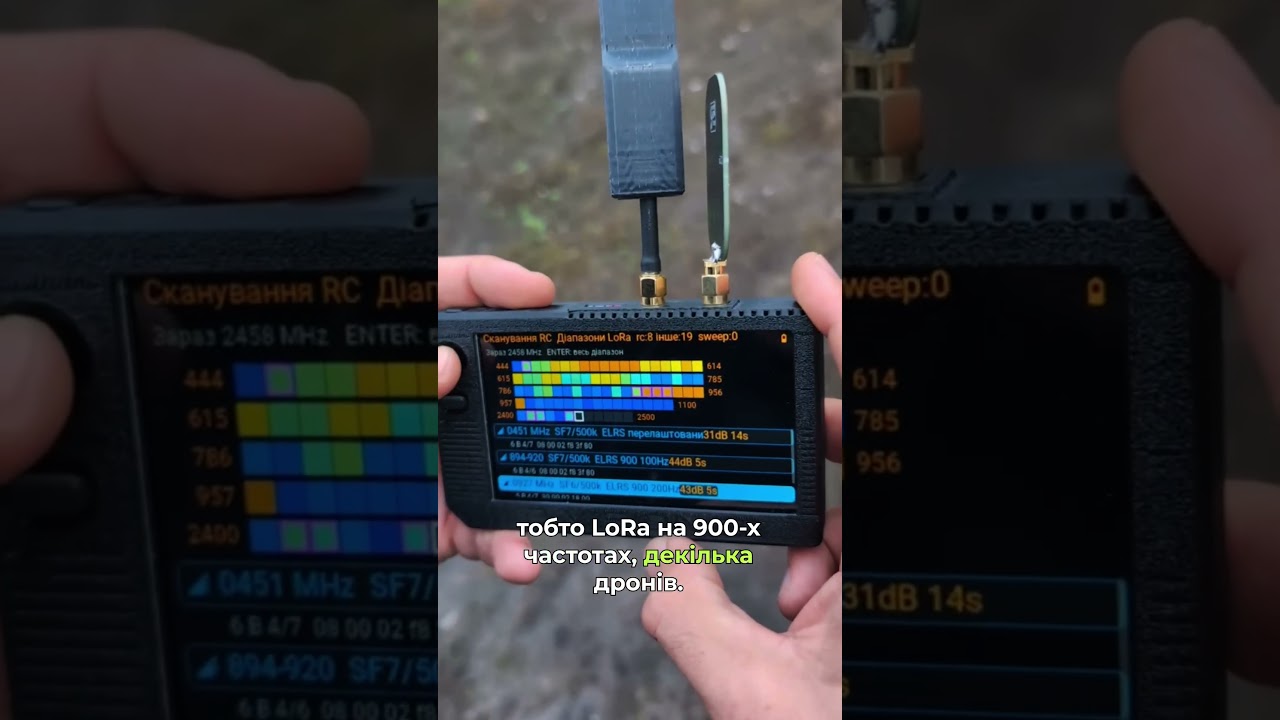
The most special thing about this device is that it does not need to shoot down the drone or interfere with its communication signal. Instead, it directly exploits the lack of encryption in the video transmission of some Russian drones to intercept its wireless video signal.
When many drones perform reconnaissance and attack missions, they will transmit the images captured by the camera back to ground operators in real time via radio. If these video signals are not encrypted, then a device with the appropriate frequency band and reception capabilities could theoretically listen to the same signal.
D·Vision SDR takes advantage of this feature. Ukrainian soldiers can directly view the real-time footage returned by the Russian drone through the device screen to understand the drone's flight direction, reconnaissance area and potential attack targets.
This means that the cameras originally used by Russian drones to discover Ukrainian positions and military equipment may instead become a source of information exposing their own actions.
According to Defense News, an important advantage of the D Vision SDR is its size and weight. The whole machine weighs about 10 ounces, which is equivalent to 283 grams and less than half a kilogram. In comparison, some similar devices previously used in Ukraine weigh several pounds and are more inconvenient to carry and deploy.
This difference has practical implications for soldiers who need to move quickly on the front lines. The device can be carried around and activated quickly after detecting a suspicious drone signal, without the need to deploy a large receiving system.
More importantly, D·Vision SDR can monitor some of the video transmission bands used by Russia’s new Molniya drone.
Russia will allow a new batch of Molniya drones to use new radio frequencies to transmit video starting in June 2026. Ukrainian radio expert Serhii "Flash" Beskrestnov has warned that many existing drone detection equipment cannot effectively identify these frequencies or can only provide very limited detection capabilities.
This means that if Ukrainian forces continue to rely on older detectors, they may not be able to detect some new drone activities in time. D·Vision SDR’s support for these new frequency bands gives it certain advantages in responding to Russian drone technology updates.
However, this technology is not a panacea. It works on the premise that the drone still transmits video via radio signals that can be received externally. Once Russia switches to an encrypted digital video transmission system or adopts an autonomous flight method that no longer actively transmits radio signals, such receiving equipment may become useless.
In fact, Ukraine has noticed this trend.
Beskrestnov previously warned that digital video transmission may gradually replace traditional analog video systems in the future, which will challenge existing wireless video monitoring equipment. Compared with analog video, digital transmissions can employ encryption, frequency hopping and other complex communication mechanisms, making it more difficult for third parties to intercept and identify the signal.
The New York Times reported in August this year that some Russian Molniya drones have begun to adopt artificial intelligence-assisted guidance systems and use Nvidia chips for target recognition and autonomous navigation. Such drones can even perform part of their missions without continuously emitting radio signals, thereby reducing the probability of being detected by traditional radio detection equipment.
This also shows that the technological competition between Russia and Ukraine around UAVs has gradually expanded from pure flight performance and load capacity to multiple fields such as radio communications, artificial intelligence, electronic warfare, and autonomous navigation.
For Ukraine, D·Vision SDR provides a relatively low-cost countermeasure: it is not necessary to destroy the enemy drone immediately. As long as its camera footage can be obtained, it is possible to grasp the opponent's reconnaissance direction and attack intentions in advance, buying time for troop transfer, concealment and deployment of defense.
For Russia, this equipment also means that the drone video link itself may become a security weakness. Future drone designs must not only consider how to capture and transmit high-quality images, but also whether communications can be eavesdropped by the enemy and whether they can continue to complete their missions when communications are interfered with or completely interrupted.
From a broader perspective, D·Vision SDR reflects an important trend in the Russo-Ukrainian war: battlefield technological innovation does not always rely on expensive large-scale weapon systems. Sometimes an electronic device weighing only a few hundred grams may change the way frontline troops obtain information.
However, the TechCrunch report did not provide complete test data on which specific types of drones this device can currently intercept, how far the actual effective distance is, and how reliable it is in a complex electromagnetic environment. Its actual combat effectiveness still needs more independent information to verify.
Comments