
Abstract:
A computer enthusiast recently demonstrated a creative home experiment: He completely disassembled a damaged MSI laptop, leaving only the motherboard, memory and storage devices, and then installed it directly on the wall, transforming it into a home server that runs around the clock to control smart devices such as lighting, air conditioning, curtains and fans in the house.
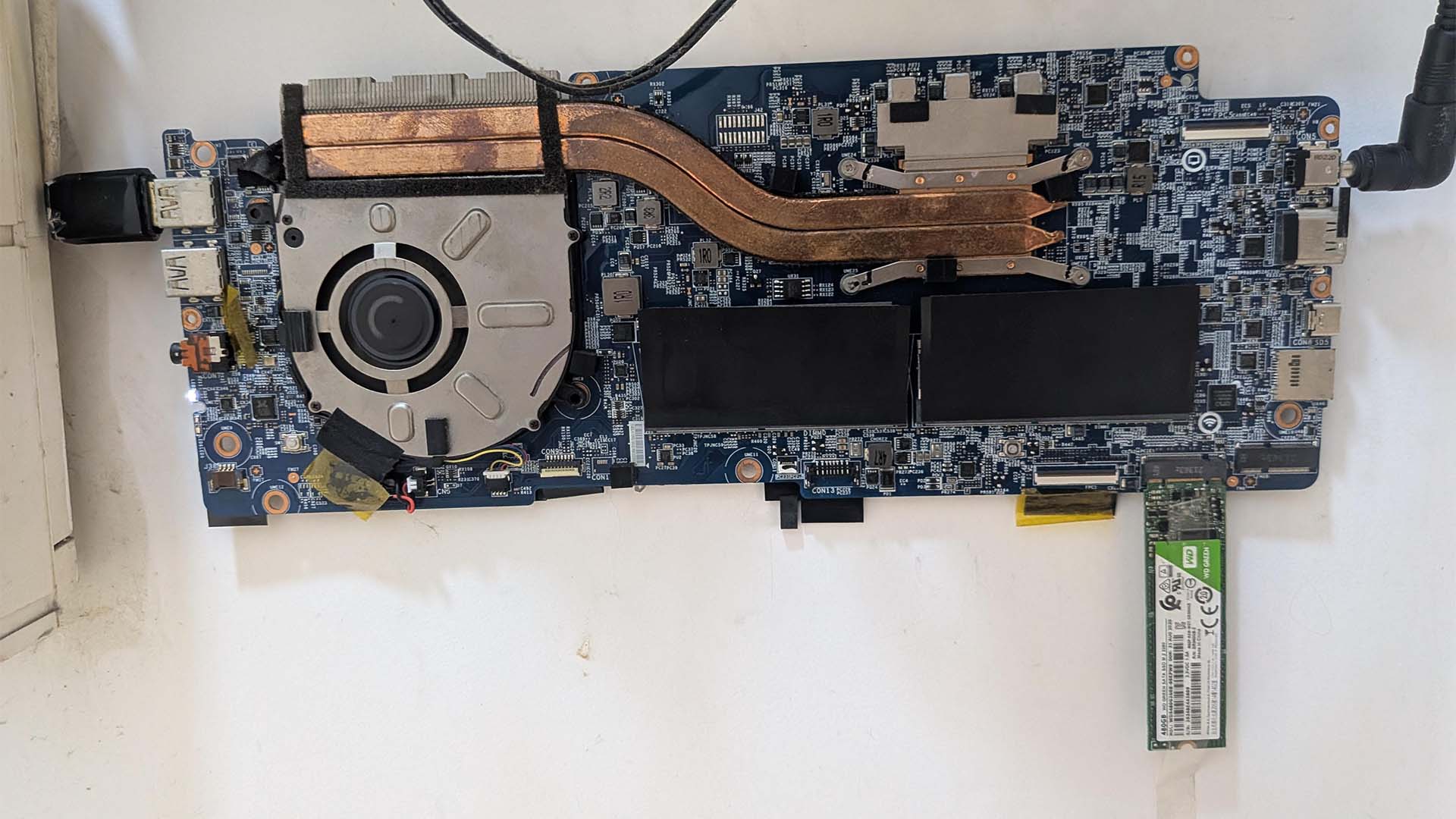
This transformation was shared by user u/noobakw on the Reddit forum r/homelab. It turned out that the screen of this MSI notebook had been severely damaged, and the display component was almost separated from the body. If it is handled according to the conventional maintenance method, not only the screen needs to be replaced, but it may also involve repairs to the fuselage structure and other accessories, and the cost is not low. As a result, the owner decided to abandon repairing the entire laptop and instead make full use of the core hardware that was still functioning properly.
During the disassembly process, the owner removed the notebook's casing, keyboard, trackpad and entire screen assembly, leaving only the motherboard and necessary computing components. He then fixed the motherboard directly to the wall, under the home's network equipment.
Judging from the photos displayed, this set of equipment is also placed next to the Jio broadband gateway, Artis universal power adapter and TP-Link Wi-Fi signal extender. The copper heat pipes, blast cooling fans and chipset on the motherboard are all exposed to the air, and the structure originally used for internal heat dissipation of the notebook continues to undertake the heat dissipation task. A WD Green M.2 SATA SSD also plugs directly into the motherboard slot without even using the retaining screws on the other end.
Since the original body and physical power button have been removed, how to make this device automatically start up in daily use has become a problem that needs to be solved during the transformation process. The owner finally enabled a feature called Wake on Power by entering the BIOS settings. In this way, the motherboard will automatically start as soon as the device is connected to power, eliminating the need to operate it through physical buttons.
Another interesting aspect of this transformation is that the artificial intelligence tool Claude also participated in the entire project. The owner used Claude's help to complete the deployment of the home assistant system, giving the originally scrapped notebook motherboard a new purpose.
As can be seen from the displayed control interface, this home assistant system already has quite a wealth of functions. Users can navigate through home floor plans, manage temperatures in different areas, and control devices such as smart lighting, automatic curtains, and ceiling fans. Equipment in different rooms can be operated separately, and the entire system actually has the basic functions of a home intelligent control center.
Wccftech believes that this transformation method also reflects the value of reusing old hardware. As prices for memory and other computer components are affected by factors such as tight DRAM supplies, purchasing new server hardware may be more expensive. For users who only need to take on home automation, network services and lightweight computing tasks, an old laptop motherboard that is still working properly can become the core of a low-cost server.
Of course, this exposed motherboard installation method is not suitable for all home environments. The motherboard lacks shell protection, and dust, moisture, accidental collisions, and static electricity may pose risks; the solid-state drive is not fully fixed and is not suitable for long-term vibration. In addition, exposed cooling systems, while working properly, still need to ensure adequate air circulation around them.
However, this project demonstrates a very practical idea: even if the screen, keyboard or casing of a laptop computer is damaged, it does not mean that the entire device has lost its value. As long as the processor, memory, motherboard, and storage system are still functioning properly, they can be retrofitted into a home server, smart home controller, or other low-power computing device. For players who like to tinker with hardware, an old laptop that was originally intended to be discarded may still be useful for many years.
Comments