
Abstract:
Waymo, the self-driving travel company, officially announced its entry into the Canadian market, and Toronto will become its first operating city in Canada. However, the Waymo vehicles that citizens have recently seen on the streets will not operate in fully driverless mode for the time being. Instead, they will be controlled by human drivers to carry out preliminary road mapping and testing.
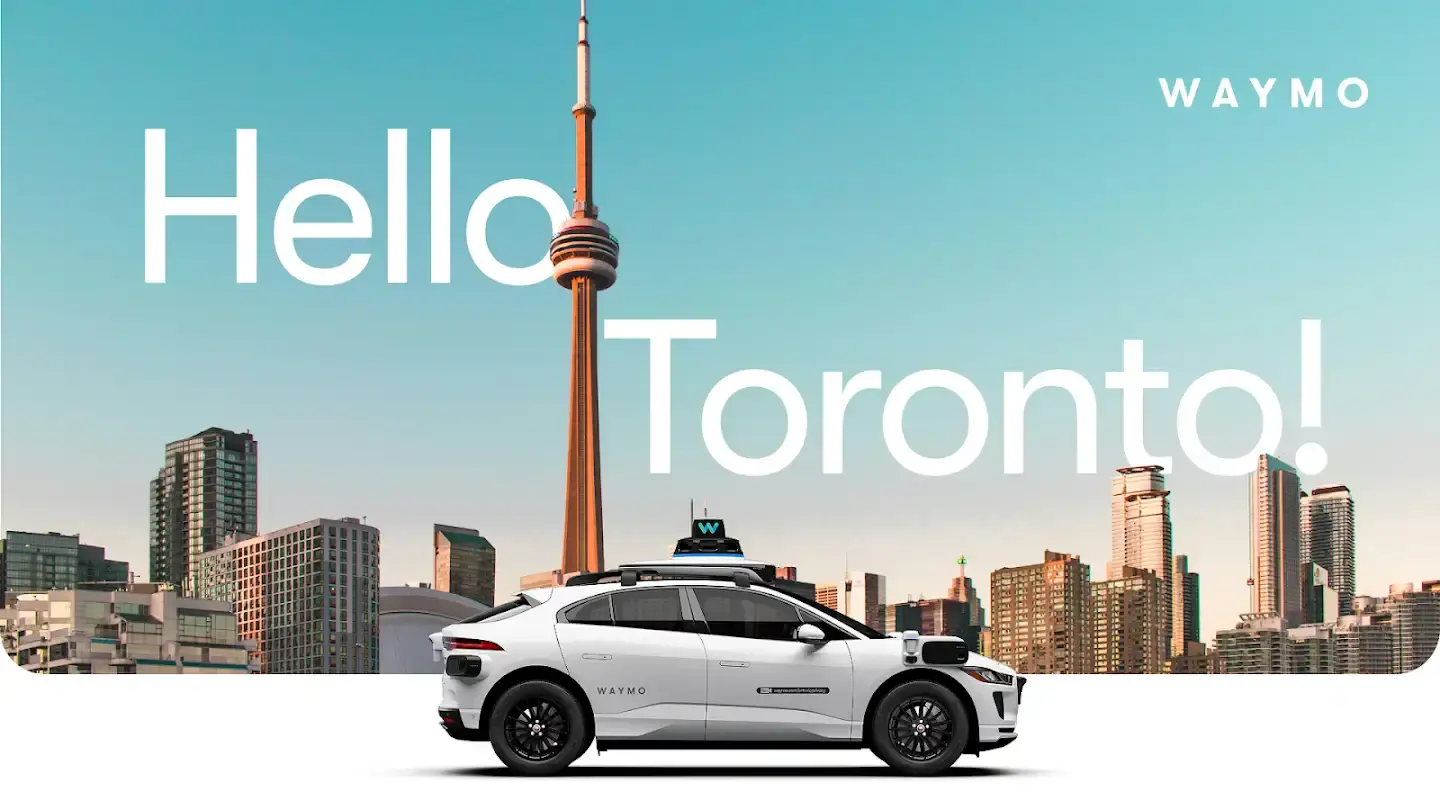
According to plans announced by Waymo, vehicles equipped with its self-driving technology will begin to appear on the streets of Toronto in the next few days. The company will first complete high-precision map collection and road data collection through manual driving to familiarize the system with the local traffic environment.
After completing the mapping, Waymo will enter the next phase of testing, where specially trained staff will drive the vehicles to verify and optimize the autonomous driving system. As the testing progresses, driver participation will gradually decrease, eventually achieving fully autonomous driving operations.
This expansion builds on the approval of Ontario’s autonomous vehicle pilot program. Waymo has been approved to participate in the project and can conduct autonomous driving-related tests locally. According to the company's past experience, every time it enters a new market, it usually goes through multiple stages such as road mapping, supervised testing, and final commercial operation to ensure that the system can adapt to the complex local traffic conditions.
Waymo co-CEO Tekedra Mawakana said that entering Canada is an important step in the company's global development. She pointed out that Toronto is an international city full of innovation, cultural diversity and future-oriented. The company hopes to work with local businesses and communities to promote a safer road environment and more convenient travel services.
To support future operations, Waymo has partnered with Toronto-based Element Fleet Management. The company will be responsible for fleet management, maintenance and operational support. The two parties expect that as the project continues to expand, hundreds of jobs will be created in the future, covering areas such as vehicle maintenance, test driving, customer service, and operations management.
In recent years, Waymo has continued to accelerate market expansion. The company currently provides self-driving taxi services in many cities in the United States and continues to expand into new international markets. In addition to Toronto, Waymo is also promoting related test projects in cities such as London, UK, and Tokyo, Japan.
Toronto is of special significance to Waymo. Not only is this one of the northernmost large cities within its current layout, it also has long, cold winters and complex and changeable weather conditions. The industry generally believes that icy and snowy roads, low-temperature weather and harsh winter conditions will become important test sites to test the maturity of Waymo’s autonomous driving technology.
Waymo stated that its autonomous driving system has completed more than 400 million kilometers of fully autonomous driving. According to data released by the company, in areas where it has been put into operation, the proportion of its self-driving vehicles involving serious injury accidents is 95% lower than that of human-driven vehicles. However, some critics believe that autonomous driving technology still faces challenges in heavy traffic and bad weather conditions, and Toronto's complex urban road environment will further test the reliability of the system.
According to the current plan, Waymo hopes to officially open self-driving taxi services to the public in Toronto in 2028. If the plan proceeds smoothly, Toronto will become the first city in Canada to welcome Waymo's commercial self-driving taxi operations, and will also become an important milestone in the company's global expansion strategy.
Comments