
Abstract:
Amazon builds satellite Internet business Amazon Leo, aiming to benchmark Elon Musk's Starlink, but the project has been bumpy along the way. Amazon is working hard to build a satellite Internet business, hoping to compete with Starlink. However, the business has repeatedly suffered setbacks in its start. The company is rushing to launch commercial service before the end of the year, and has been hit by a series of mishaps: a launch vehicle failure earlier this month and another minor setback on Monday when Arianespace temporarily postponed the launch of 36 satellites. However, an Amazon spokesperson said the project is still on track to achieve its goals.
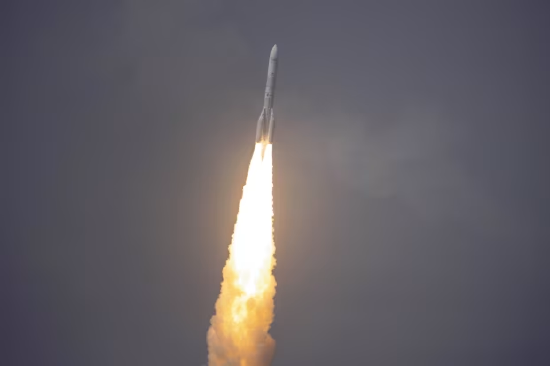
In February, a rocket launched into space carrying an Amazon Leo constellation satellite.
The goal of the Amazon Leo project is to rely on thousands of satellites to provide high-speed Internet to remote areas. Starlink has been commercially available for many years. However, recent Starlink-related incidents in Ukraine have caused controversy, and governments and consumers are eager to have a second option.
Amazon’s biggest problem right now is putting the satellites it has built into work. The company plans to eventually deploy thousands of low-Earth orbit satellites, but getting satellites into space is fraught with difficulties.
There are many difficulties in the launch process
The Amazon Leo project was formerly known as "Project Kuiper" and was approved by the U.S. Federal Communications Commission (FCC) in 2020. There are currently close to 400 satellites in orbit; Starlink has more than 11,000 satellites in orbit (data disclosed by the two companies).
Starlink can use SpaceX’s own rockets to launch satellites, but Amazon must rely on multiple third-party launch service providers, including Blue Origin. Blue Origin's New Glenn rocket exploded in May, disrupting launches, and earlier this month, United Launch Alliance's Vulcan rocket failed on a mission to launch 40 Amazon satellites.
Clayton Swope, deputy director of the Aviation Security Project at the Center for Strategic and International Studies, a think tank, said: "Amazon Satellite has been able to achieve large-scale production, and a large number of finished products are backlogged in the warehouse." Swope has participated in the Amazon Satellite project.
He compared the rocket’s capacity bottleneck to booking an online ride-hailing service during rush hour: “I waited for 30 minutes for an online ride-hailing service, but there was still no car to take me to my destination.”
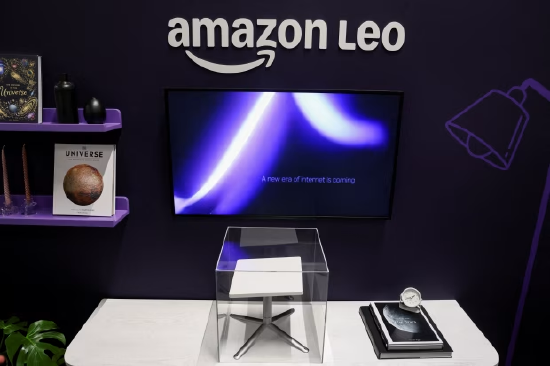
Amazon has now included SpaceX as a partner launcher, saying that this move can avoid the risks caused by a single rocket supplier, and has finalized multiple launch missions to be performed by Falcon 9.
The U.S. government is also clearing policy obstacles for this new satellite network. The FCC relaxed the rules in June, no longer requiring Amazon to put more than 1,600 satellites into orbit by this summer. At the same time, the U.S. Department of Commerce has introduced policies to encourage states to consider both Starlink and Leo when purchasing broadband projects, rather than just choosing traditional fiber optic operators.
The U.S. Department of Commerce stated that the government’s broadband policy encourages technological innovation and will not deliberately favor a certain Internet technology route.
High operating costs
Amazon is the largest company in the United States by annual revenue and one of the few companies with the financial resources to build satellite constellations.
Mark Mahaney, an analyst at investment bank Evercore ISI, calculated that a single satellite costs US$2 million, and Amazon will invest at least US$4 billion in the Leo project this year. Amazon declined to comment on the estimate.
Swope pointed out: "Large-scale space operations are expensive, and building space broadband constellations is particularly expensive, with manufacturing and launch costs remaining high."
The geopolitical concerns brought by Starlink
Musk once ordered restrictions on the Starlink services that Ukraine relies on, which affects the Ukrainian army's ability to carry out operations against Russian military targets and resist Russian missiles and drone air strikes. This incident has once again sparked discussion about the geopolitical risks caused by SpaceX’s near-monopoly on this key military technology.
Chris Quilty, an analyst at consulting firm Quilty Space, said: "The entire industry urgently needs a force that can check and balance SpaceX."
Musk said that version control of Starshield for government use is in the hands of the U.S. government, not SpaceX. He said at the New York Times DealBook Summit last week that the company had rejected Ukrainian President Zelenskiy’s request to use Starlink commercial satellites for offensive military operations. In response to Zelensky's statement that Star Shield services were artificially slowed down, Musk responded: "This is a lie."
After the interview, Zelensky said in an interview with CNN: "I said that Star Shield cannot be used normally, and that is true."
Amazon Leo’s next step
Amazon has placed great hopes on the goal of commercial launch by the end of the year.
Earlier this year, Amazon announced its acquisition of satellite operator Globalstar. The deal aims to enable ordinary smartphones to directly connect to satellite Internet. Amazon has also won orders from Delta Air Lines and JetBlue Airways to provide in-flight Wi-Fi services for the two airlines. Delta Air Lines CEO Ed Bastian was recently interviewed by Bloomberg, saying that he was confident in his decision not to choose Starlink and that the airline was focusing on "long-term layout."
Just after the Vulcan rocket failed to launch, Musk posted a picture of a skeleton on the X platform with the caption: "I found a photo of a 'long-term layout'."
Comments