While Tesla still holds the top spot among U.S. electric carmakers by a wide margin, General Motors said on Tuesday it was firmly in second place and believed it had an "inherent advantage" in electric vehicles. GM executives said on Tuesday's quarterly earnings call that the company is focused on achieving and improving profitability on electric vehicles.
When asked how General Motors plans to achieve this goal when Tesla is also facing the same difficulties, General Motors Chief Financial Officer Paul Jacobson said that due to fluctuations in demand for electric vehicles, General Motors' advantage is that its product line covers both fuel vehicles and electric vehicles, and is diverse.
"People rave about Tesla's simplicity and scale," Jacobson said. "Obviously, in a few narrow segments, they've really done that and gained some nice advantages, which we should applaud. But it also leaves them overly exposed to a very volatile demand environment."
GM currently has 12 electric vehicles in its lineup, while Tesla has five. Tesla does not divide sales by model, but classifies them into several categories for unified statistics.
Jacobson's comments come as automakers face changes in demand for electric vehicles, exacerbated by President Donald Trump's new tax and spending bill. The bill would end the $7,500 tax credit for new electric vehicles and the $4,000 tax credit for used electric vehicles after September 30.
Sales of new electric vehicles fell 6.3% year-on-year in the second quarter of 2025, the third decline on record, according to auto industry forecaster Cox Automotive.
That sales volume was up 4.9% from the first quarter of 2025, according to data from Cox Automotive. Cox senior analyst Stephanie Valdez said that could mean consumers start snapping up electric vehicles before the tax credit ends.
Valdez predicted that new EV sales will hit a record in the third quarter of 2025, followed by a plunge in the fourth quarter as the EV market adjusts to the "new reality" of no EV tax credit.
GM Chief Executive Mary Barra acknowledged that electric vehicle growth is slower than expected, but she said on Tuesday's earnings call: "We believe that over the long term, electric vehicle production will be profitable, and this remains our 'North Star' (core goal)."
Amid volatile demand, a July 17 report from Barclays said Tesla's demand and fundamentals remain weak, while its self-driving car and robotaxi stories have been in focus.
In the second quarter, Tesla reported approximately 384,000 vehicle deliveries, down 14% from a year earlier and marking its second consecutive quarter of decline. Deliveries are the closest figure Tesla has released to vehicle sales, but it was not precisely defined in the company's communications to shareholders.
But Tesla is still the absolute leader in the field of electric vehicles. GM sold 46,300 electric vehicles in the quarter, more than double the 21,900 it sold in the same period last year. However, that was a relatively small portion of the Detroit automaker's total second-quarter sales of 974,000 vehicles.
Cox Automotive noted that GM sold 78,000 electric vehicles in the first half of 2025, more than double its sales in all of 2024.
Jacobson said on a conference call Tuesday that GM is prepared for changes in demand for electric vehicles as the company builds flexibility into its manufacturing plants by investing in both electric and internal-combustion-engine vehicles.
"This inherent flexibility allows us to switch between electric vehicles and internal combustion engine vehicles, ensuring that we can meet consumer demand, which is an inherent advantage for us. Because if the demand for electric vehicles declines, we can share some of the costs of the manufacturing facilities by increasing the production of internal combustion engine vehicles." Jacobson said.
He highlighted GM's new investments in plants in Spring Hill, Tenn., and Fairfax, Kan., as examples of that diversification. General Motors announced last month that it would invest $4 billion in several U.S. factories and plan to increase production of gasoline and electric vehicles in the U.S. market.
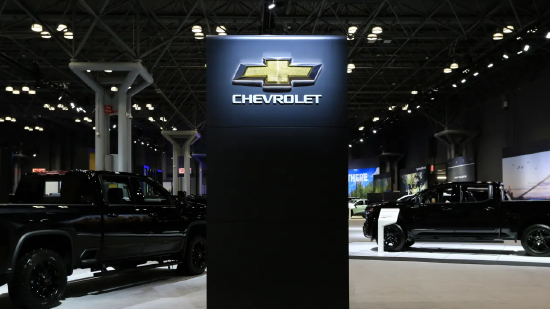
General Motors said Tuesday that Chevrolet ranked second and Cadillac fifth in its ranking of electric vehicle brands.