The Windows 11 26H2 version that Microsoft will launch later this year will continue to follow the "small steps and fast" update strategy. Without increasing the hardware threshold and major new features, it will extend the system support cycle through lightweight enablement packages, emphasizing stability and rapid deployment.
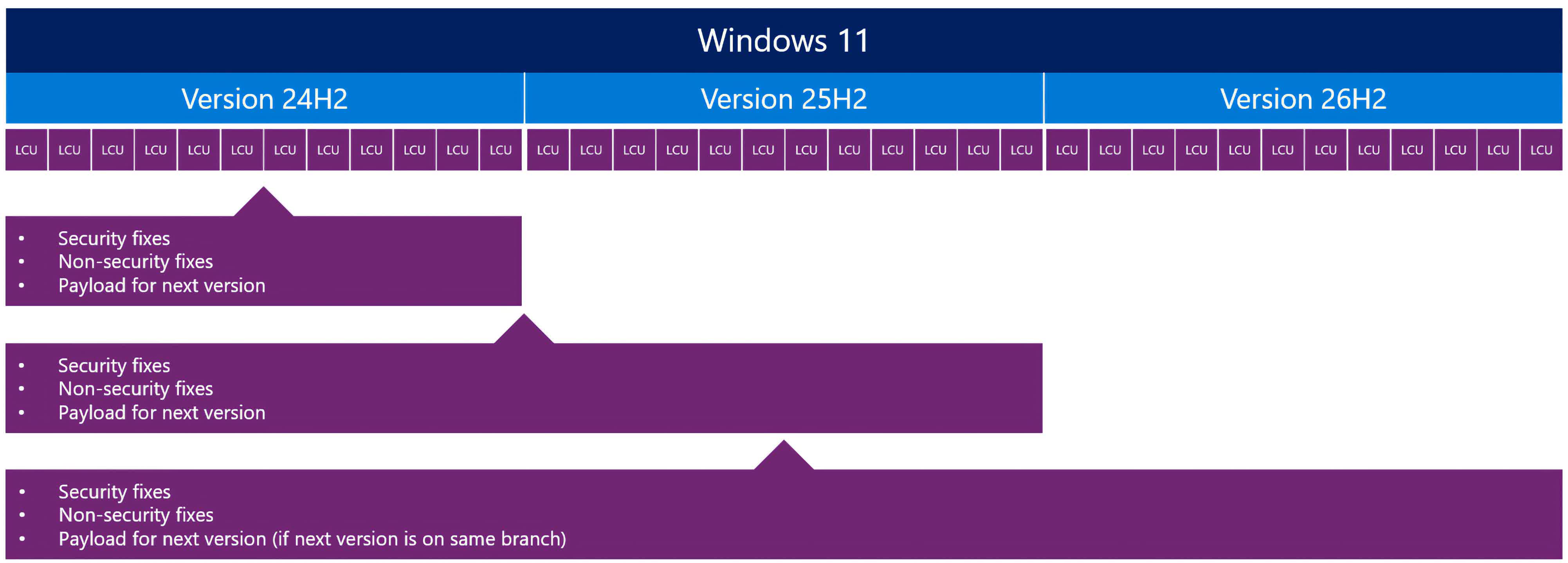
Windows 11 26H2 will not introduce large-scale new features like a traditional "feature update". Instead, like 25H2, it will be pushed to devices with 24H2 or 25H2 installed in the form of "enablement packages." For most users, the installation process only involves downloading a small patch that is less than 500KB in size and can be completed with a single reboot, with almost no obvious changes in the desktop interface. Starting from Windows 11 24H2 released in October 2024, Microsoft will no longer replace the underlying platform architecture, but will maintain subsequent versions on the same platform. The more important significance of 25H2 and this time 26H2 lies in "refreshing support time" rather than "expanding functional boundaries."
Under the new update model, functional innovations are no longer centrally bound to annual version numbers, but are split into monthly cumulative updates for continuous delivery. Recent monthly updates have brought new capabilities such as Low Latency Profile, and interface adjustments such as the movable taskbar are also expected to be pushed through the upcoming "Patch Tuesday" instead of waiting for the official release of 26H2. This means that the annual version number is more like a "milestone mark" in the system life cycle, and the features that can really change the user experience are gradually implemented in monthly patches.
In its public instructions to business and IT managers, Microsoft positioned this model as a "predictable, low-disruption" update experience, especially suitable for organizational environments with extremely high stability requirements. The enablement package itself is only responsible for "opening" new code that has been hidden in the system. Since the underlying platform remains unchanged, the installation process is faster than traditional major version upgrades, and compatibility risks and interruption times are also reduced accordingly. This shift also brings about changes in the meaning of version numbers: Upgrading from 24H2 to 26H2 no longer means a "generation change", but rather an extension of the official support period for the installation instance while maintaining the existing code baseline.
According to the currently announced information, the support cycle for Windows 11 26H2 Home Edition, Professional Edition, Professional Education Edition, and Professional Workstation Edition will continue until October 2028. The Enterprise Edition, Education Edition and IoT Enterprise Edition will receive a longer support period, and updates will continue until October 2029, continuing Microsoft's consistent life cycle strategy. In terms of hardware requirements, 26H2 follows existing standards: as long as the device can run Windows 11 24H2 or 25H2 - at least 4GB of memory, 64GB of storage space, and a 64-bit dual-core processor - it can be directly upgraded without additional hardware investment.
In addition to 26H2, Microsoft has also prepared a version of Windows 11 26H1 for a new generation of chip platforms, mainly targeting new architecture processors such as NVIDIA N1 and Snapdragon X2. It's based on a different platform baseline, but it doesn't offer "exclusive" front-end functionality for regular users, so for most existing users, this release doesn't constitute a real incentive to upgrade. Overall, the evolution of Windows is shifting from "one major overhaul in a few years" in the past to relying on steady, continuous small updates to drive the system forward, and the annual version plays more of a role in "guaranteing platform and support."
As for whether this rhythm can continue beyond 2026, Microsoft has not yet made a clear commitment in public documents, nor has it confirmed whether the 27H2 that may arrive in the future will continue to use the same model. However, it can be seen from the three consecutive versions since 24H2 that Microsoft has basically finalized an update rhythm centered on small volume and rapid deployment, and is constantly strengthening its predictability among enterprise and professional user groups.