The penetration of embedded SIM card (eSIM) technology has grown significantly over the past year, mainly due to the recovery of the global travel market and the widespread adoption and forced promotion of the technology by smartphone manufacturers. The advantage of eSIM is that users can connect to cellular networks without a physical card. The convenience and flexibility it brings are increasingly changing the way consumers obtain mobile services.
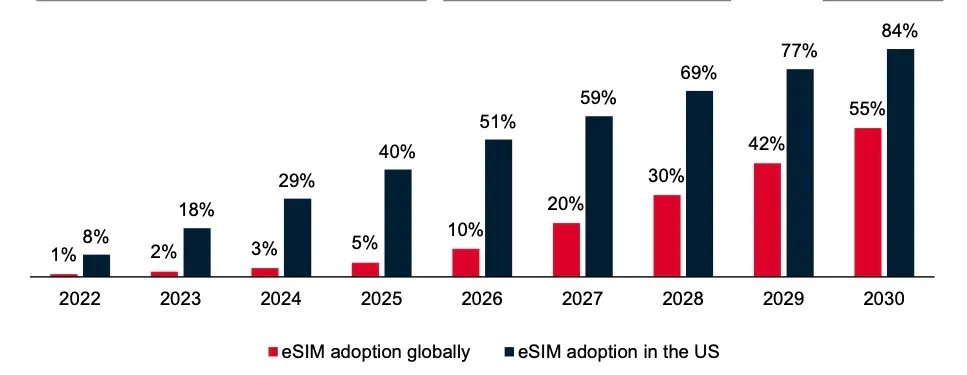
The report analysis points out that the convenience of international travel is the primary factor driving the explosive growth of eSIM applications. For users who travel frequently, eSIM eliminates the cumbersome process of finding, purchasing and replacing physical SIM cards in different countries and regions. Through simple online operations, users can instantly activate local data packages in the target country, significantly reducing international roaming charges. This has prompted the rapid rise of travel eSIM service providers such as Airalo and Holafly, becoming the preferred connectivity solution for travelers around the world.
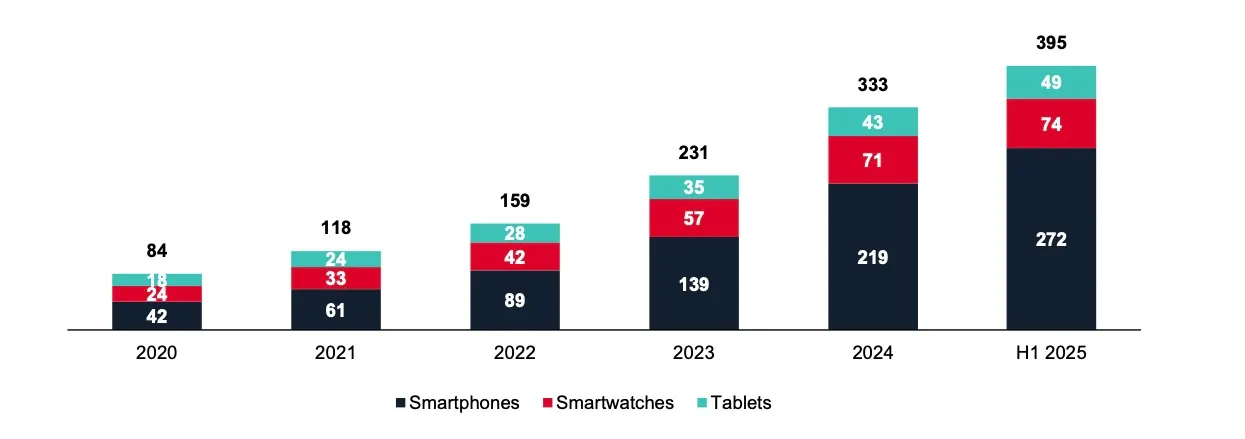
The improvement of device compatibility is another important driving force for the popularity of eSIM. Since Apple launched eSIM-only iPhone models in the US market in 2022, it has accelerated the pace of transformation of the entire industry. By 2025, the number of mainstream flagship mobile phones supporting eSIM has increased significantly around the world. High-end models including Samsung, Google and other major Android manufacturers generally support dual SIM (physical SIM+eSIM) or pure eSIM configurations. This top-down push forces operators to accelerate infrastructure upgrades to provide more convenient eSIM activation services, thus transforming eSIM from a niche feature to an industry standard.
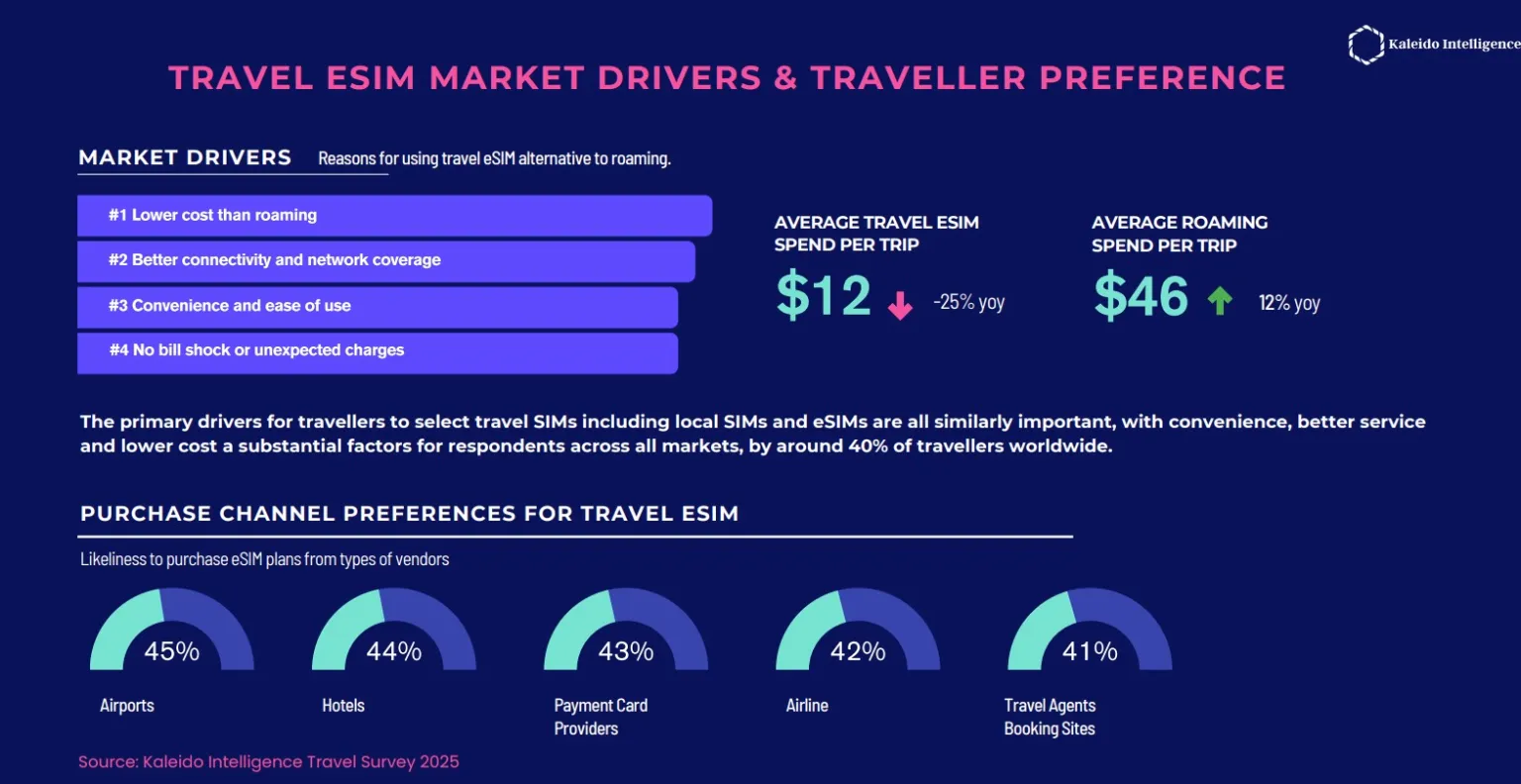
In addition, the potential of eSIM in operator switching and the Internet of Things (IoT) has also been fully unleashed. Users can switch between different mobile service providers more easily and quickly, stimulating competition in the market. At the same time, eSIM's remote configuration capability is crucial for the Internet of Things and machine-to-machine (M2M) communications. It allows devices to be pre-configured with connectivity capabilities during factory manufacturing, simplifying the logistics and deployment process, and promoting the inclusion of more devices such as smart watches and connected cars into the cellular network ecosystem. All in all, eSIM technology has moved beyond the early adoption stage and is quickly becoming the new normal in mobile connectivity thanks to its inherent convenience and growing device support.
