An internal Google presentation exposed in a child safety lawsuit shows that the technology giant is "introducing" children into its product ecosystem through heavy investment in education to cultivate long-term brand loyalty among student groups. The document clearly states that including children into the Google ecosystem early will "form trust and loyalty to the brand throughout their lives." This statement has triggered strong attention from the outside world to the role of technology companies in schools.
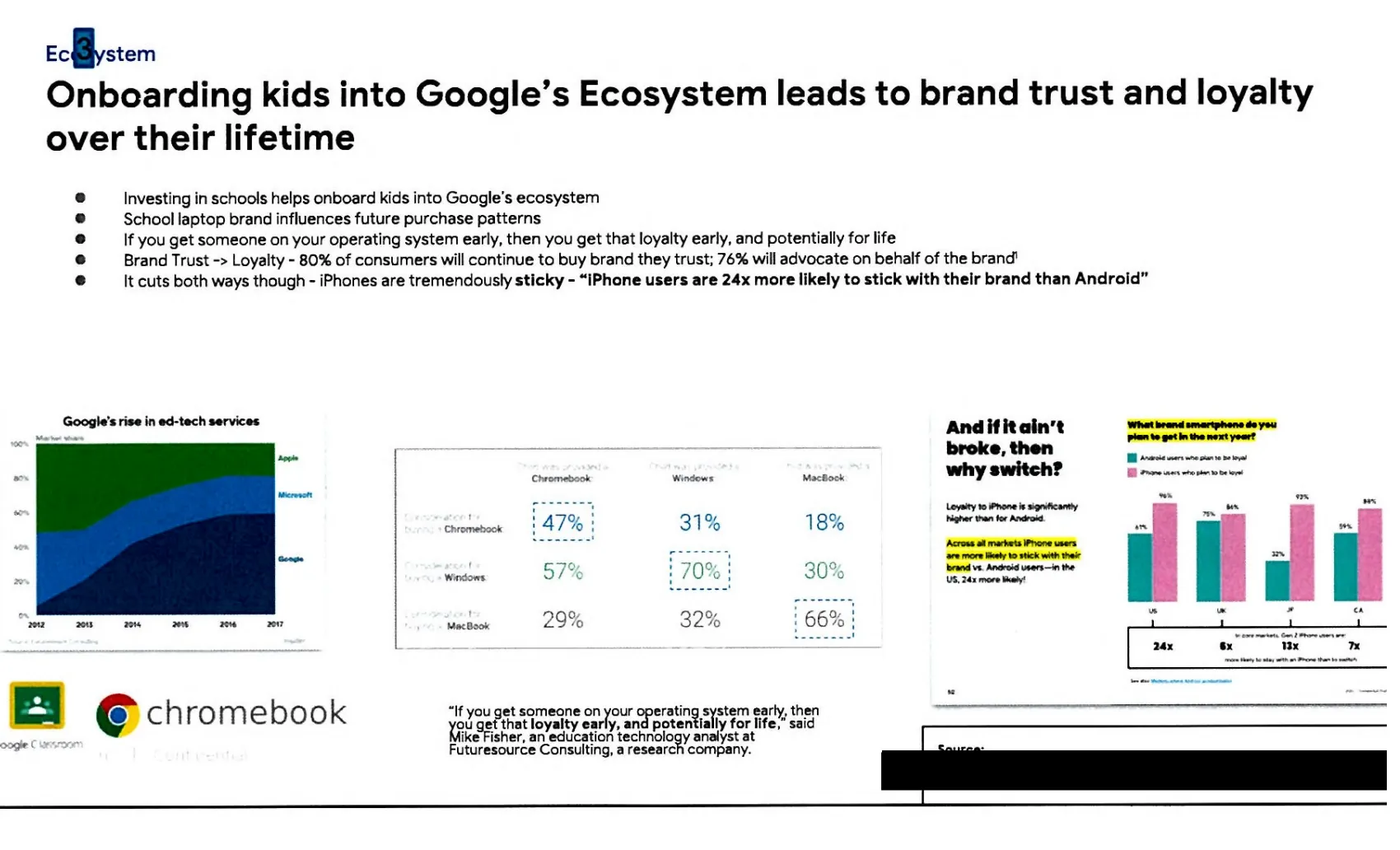
This presentation, dated November 2020, was recently released along with the case materials and has been obtained by the media. A large amount of the content has been blacked out. The relevant documents are related to a large-scale lawsuit in which multiple school districts, some families, and multiple state attorneys general sued Google, Meta, ByteDance, and Snap, accusing them of creating "addictive and dangerous" products that have caused harm to the mental health of young users. Snap settled a social media addiction lawsuit earlier this week.
The document shows that Google has continued to increase investment in education products over the past decade and has made Chromebooks a standard equipment in classrooms. The document also cited research stating that the brand of laptops used by schools will "affect future purchasing patterns." One page of the presentation specifically cited a 2017 New York Times report, which highlighted the sentence "Google is engaged in a battle to 'hook students into future customers'" in bold. The quote is repeated several times in the document, and is accompanied by the inductive statement: "If you can get someone to use your operating system early, you can gain their loyalty early, possibly for a lifetime."
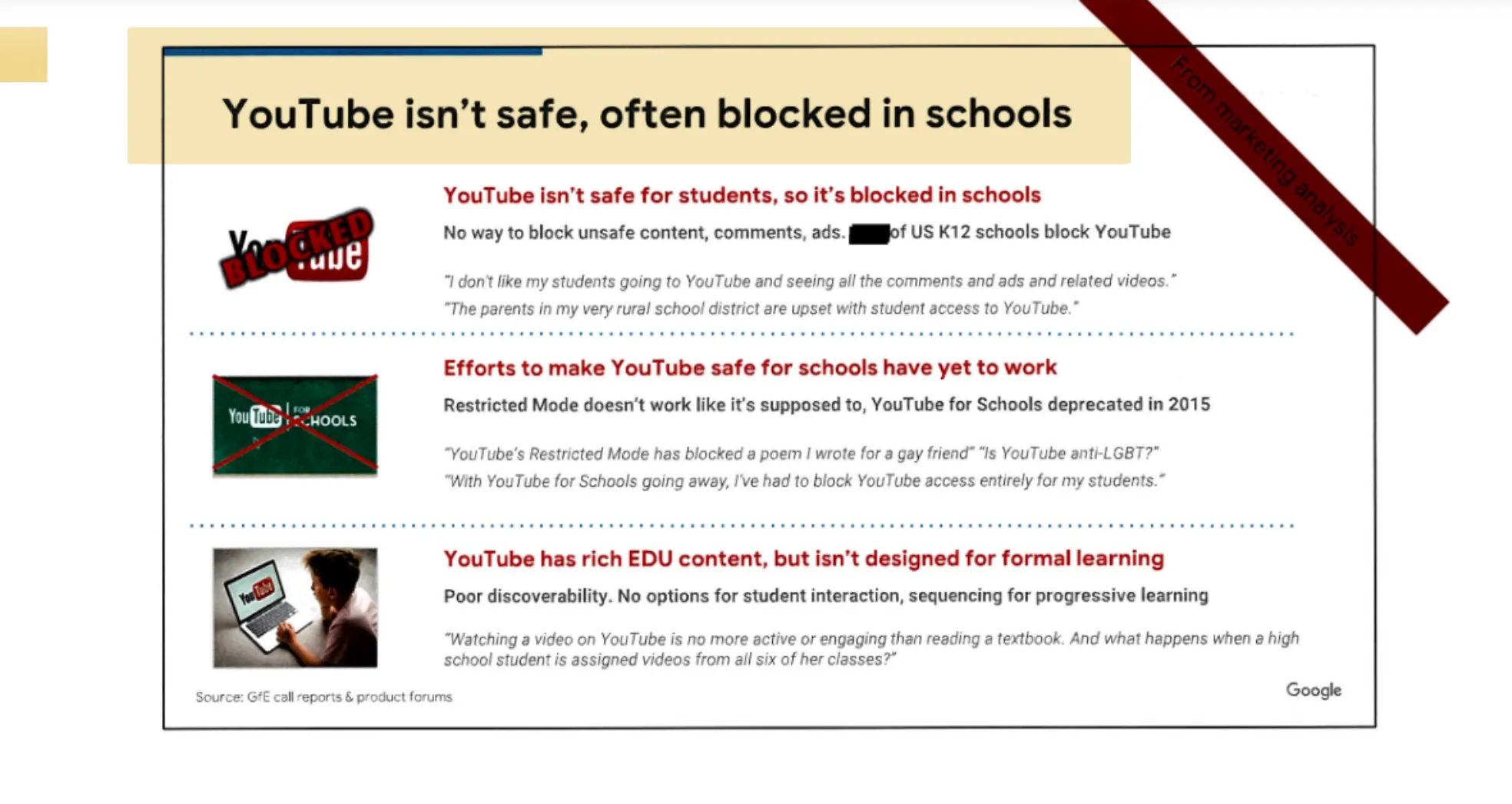
The manuscript also points out that introducing YouTube to campus is expected to create a "transmission pipeline" for future users and creators. Google proposed in a supporting material that the use of YouTube in schools has the potential to transform students into long-term platform users, thereby increasing their stickiness in content creation and viewing. A corresponding set of slides focused on practical obstacles to promoting YouTube in school settings, such as the fact that YouTube is "often blocked" on many campus networks and that previous efforts to make YouTube safer in school settings "have not yet worked."
In terms of mental health, the document also takes on a certain self-reflective tone. In a related presentation in 2024, a slide stated that many users regretted the time they "unintentionally "got deeper and deeper" and wasted time." Some users said that YouTube "distracted them", affecting their studies and even going to bed on time. The content shows that even internally, Google teams are aware of the potential negative impact of the video platform on time management and psychological burden.
In the face of external doubts, Google firmly denied it. Google spokesman Jack Malon responded via email that the documents "misrepresented" the company's work in education. He said YouTube does not market directly to schools and that the company only provides products in response to strong demand from educators for "high-quality, curriculum-matched content." He also emphasized that school administrators "have complete control" over the use of the platform, and that schools must obtain parental consent before opening YouTube access for students under 18 years old.
The material now coming to light provides new context for a major trial over social media addiction. According to the court arrangement, jury selection in this case will begin on January 27, 2026. The outcome of the trial will not only affect the legal liability of several large technology companies, but may also reshape their business boundaries and regulatory requirements in education scenarios.