Microsoft is launching a round of large-scale performance upgrades for Windows 11, trying to systematically solve long-term criticisms such as high memory usage, interface lag, slow file explorer, and unreliable search. It is also taking the opportunity to make this generation of systems better adaptable to new hardware and respond to the increasingly fierce competitive pressure from the Apple camp. In 2026, Microsoft hopes to use this to reverse the reputation and return Windows to the "legendary" list again.
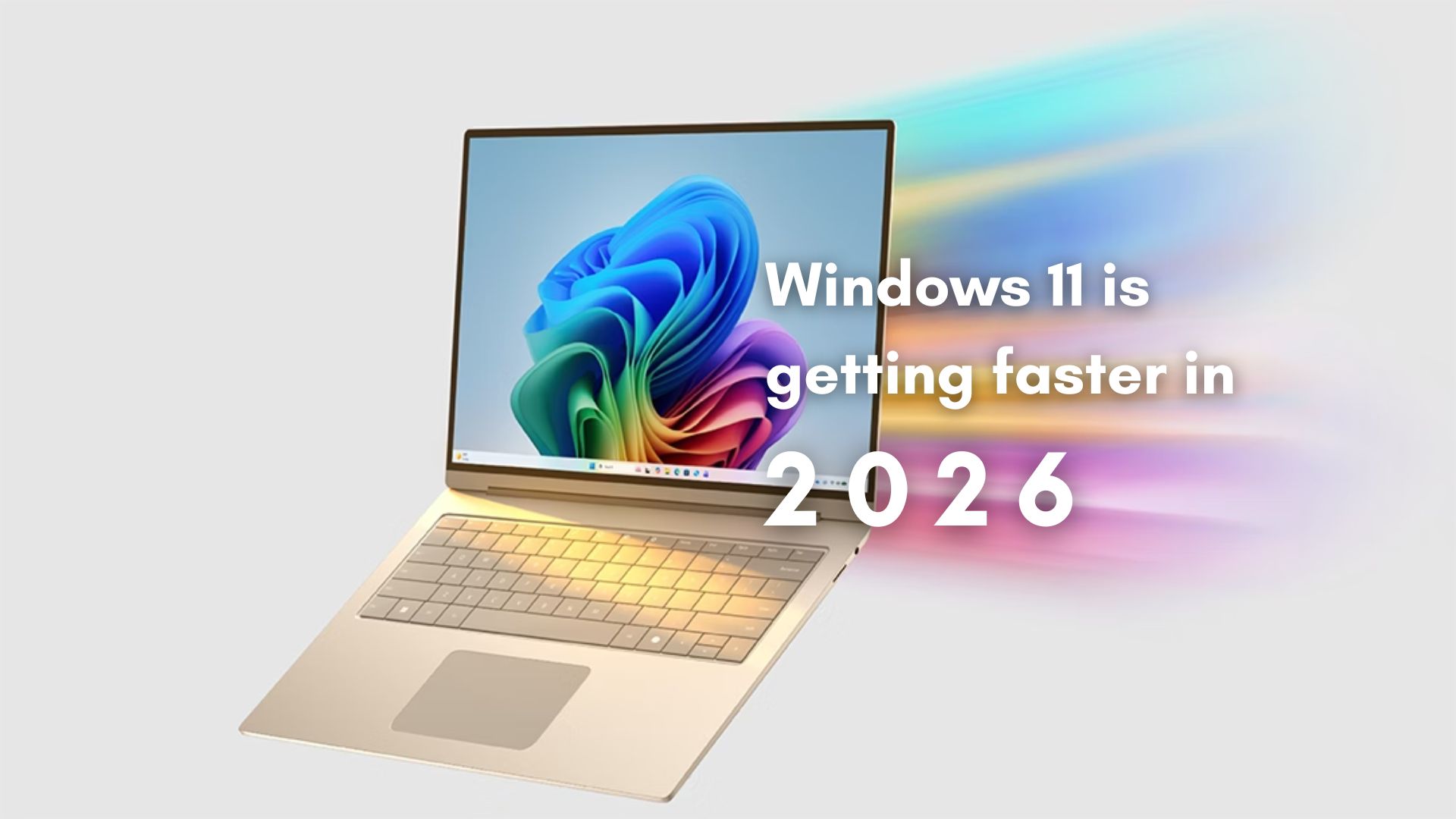
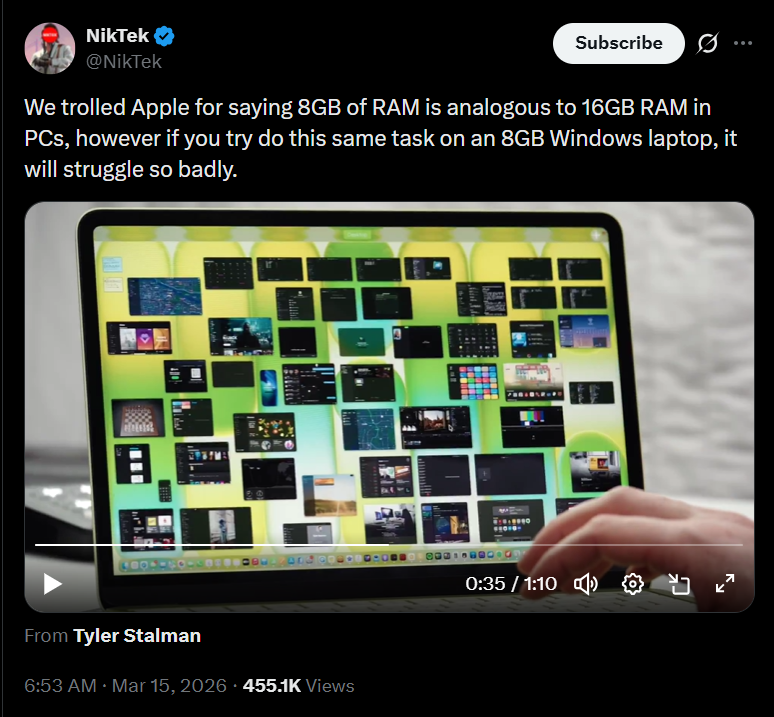
Since Apple released the MacBook Neo, there has been a significant increase in complaints about Windows performance issues on social media, especially focusing on memory management, system smoothness, and reliability. Although some views are exaggerated, Microsoft's series of "deteriorating" adjustments to Windows 11 in 2025 have indeed put a heavy burden on this system in public opinion. "Scolding Microsoft" once became a popular "politically correct" gesture. Even if the recent cumulative updates are relatively stable, Windows 11 still cannot escape negative reviews. Microsoft is also aware internally that if it does not take substantial actions in terms of performance and quality, its market value and brand will be at risk.
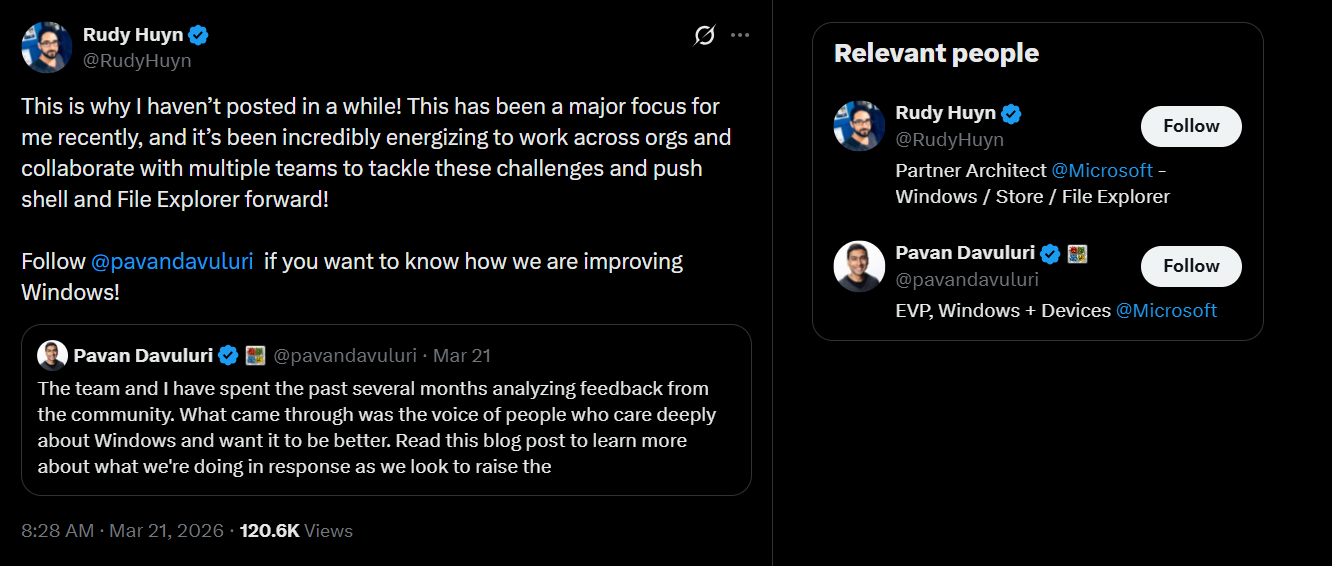
On March 20, after being accused of "letting go" for a long time, Microsoft finally announced a detailed plan to focus on repairing the performance and reliability problems of Windows 11. As early as December 2025, Microsoft proposed the so-called "Performance fundamentals" concept, hoping to improve the gaming experience by adjusting system behavior. At the end of January 2026, Windows business president Pavan Davuluri also rarely publicly stated that "we need to improve Windows in a way that is truly meaningful to users" and promised to bring real performance improvements this year. However, in the context of a decline in word-of-mouth, it is difficult to change public sentiment with just a few statements of attitude.
The official blog post "Our commitment to Windows quality" released this time is more like a "construction roadmap" targeting user pain points, responding to long-standing problems one by one. Judging from the feedback on social platforms, many Microsoft executives and engineers have actively participated in the discussion, and the comment area has rarely begun to show clear "deflection" voices towards Microsoft.
In this plan, Microsoft lists a number of performance and reliability improvements that will come to Windows 11 in 2026, focusing on system memory usage optimization, interface latency reduction, file explorer speedup, search experience transformation, and alleviation of driver quality and system crash issues.
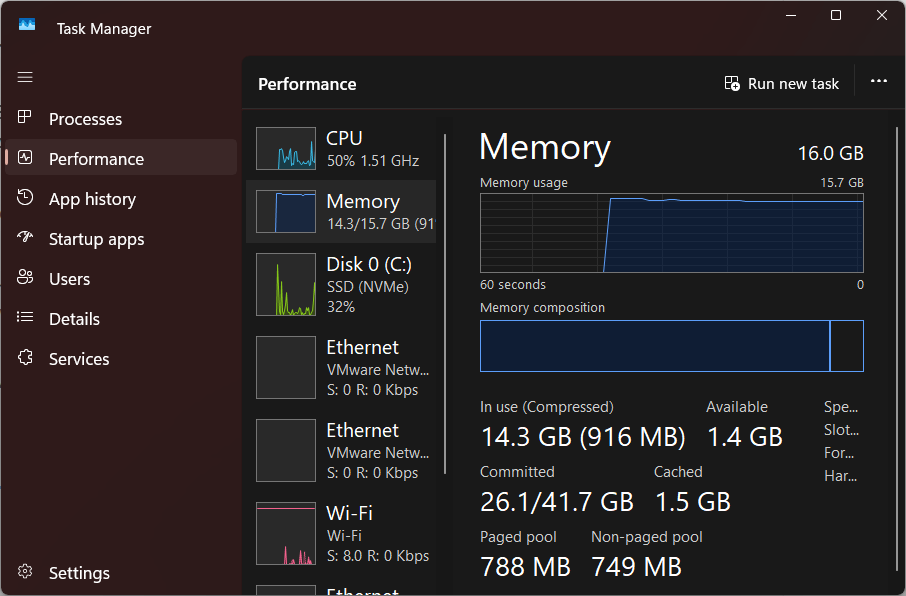
In terms of memory usage, Microsoft intends to reduce the basic memory usage of Windows 11 so that the system takes up less resources in idle state, thereby freeing up more memory for applications and improving the response speed when switching between multitasks. Currently, the minimum memory requirement for Windows 11 is 4GB (except for Copilot+ devices), but in actual use, a computer with 8GB of memory often already occupies about 6GB when idle, while the idle occupancy of a 16GB memory device can easily exceed 10GB. Microsoft has not yet detailed what technical path it will take to optimize memory, but it promises to bring "more consistent performance under high load" and allow open applications to maintain smoother responses throughout a full day of use.
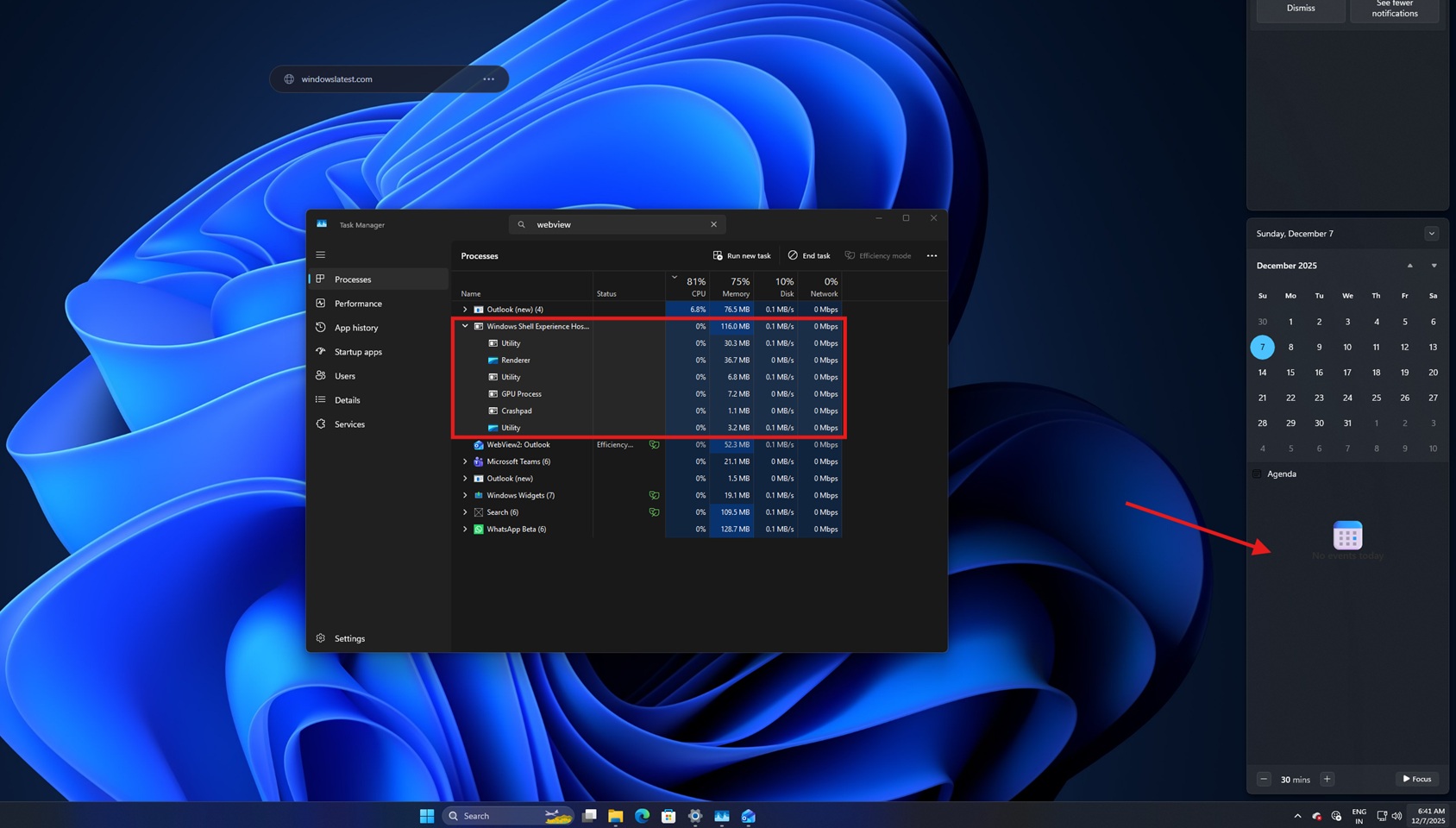
To reduce interaction latency, Microsoft will migrate more core experiences to WinUI 3 and optimize the shared UI infrastructure within Windows. WinUI 3 is Microsoft's new local desktop UI framework, while the current Windows 11 uses a mixture of a large number of traditional frameworks, local components, and web page layers such as WebView2 and React. Although this "mashup" is flexible, it introduces additional overhead between user input and interface response. This is why in the same system, some interfaces respond "open in seconds", while others lag significantly, which is unavoidable even if they are running on high-performance hardware. As more components migrate to WinUI 3, for example, the start menu will move from React-based web components to native UI, Microsoft expects its response to become more "instantaneous", and the overall system animation and operation feedback are also expected to become smoother and more unified.
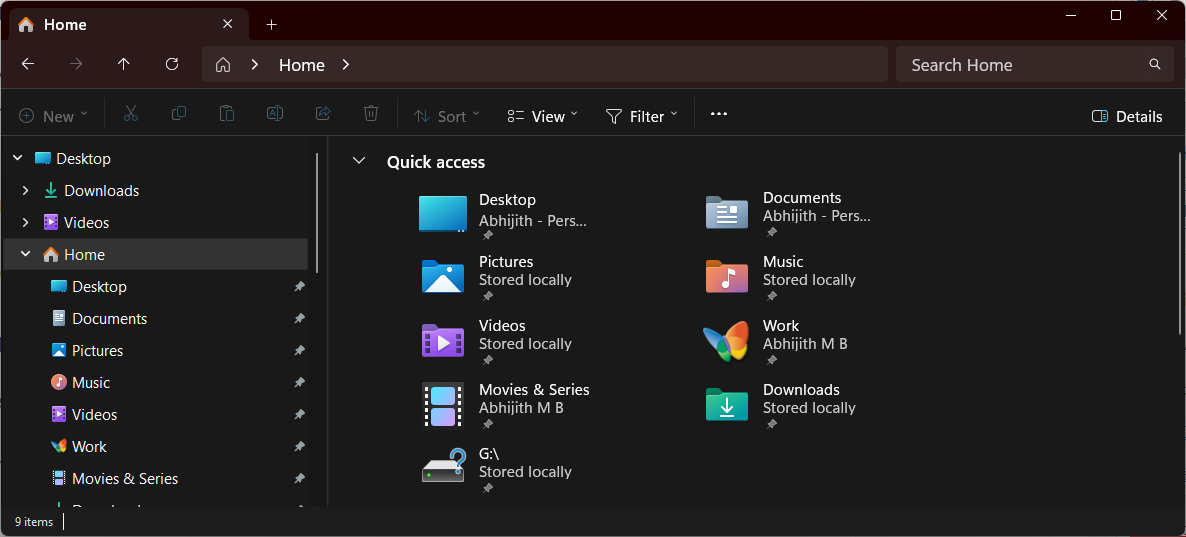
File Explorer is one of the most frequently used tools in Windows 11, but it has long been criticized by users for not being fast enough, especially compared to the Windows XP era that many users remember. Microsoft has previously tried to speed up the startup of File Explorer through a preloading mechanism. A test by Windows Latest in November 2025 found that the startup speed of the preloaded version was indeed improved, but it was still not as fast as the Explorer on Windows 10. This time, Microsoft plans to focus on search, navigation, right-click menus and other aspects to reduce operation delays, while improving the reliability and speed of operations such as copying and moving large files, and further shortening the startup time and interactive response of Resource Manager.
In terms of search experience, Microsoft will uniformly optimize search across Windows, including the Start menu, taskbar, File Explorer, and Settings applications. A problem that current users often encounter is that when searching for installed applications, online search results appear first, and they are even made into various "jokes", exacerbating the negative impression of Windows search. Microsoft said it will make clearer distinctions in search results and provide more reliable local results display logic to reduce the situation of "searching for applications but seeing web pages first".
In addition to performance, Microsoft will also focus on improving system reliability, reducing the frequency of system-level crashes, and improving application stability under different hardware configurations by improving driver quality. In the Windows camp that supports an extremely diverse range of devices, it is extremely difficult to achieve driver consistency like macOS. Microsoft plans to focus on improving several high-complaint areas, including Bluetooth peripheral connection stability, USB interface reliability, consistent performance of cameras and audio in office and media scenarios, and wake-up behavior when used with docking stations. The goal is to provide a "smoother and more reliable Windows 11 experience" for various processor platforms, independent software developers and OEM partners that support Windows, so that the notorious "blue screen" gradually fades out of users' sight.
At a macro level, Microsoft's move is also regarded as the most important "callback" in ten years. Historically, Windows 8 was criticized for its touch-first design that seriously undermined the traditional desktop experience. Microsoft then corrected its direction step by step through Windows 8.1 and Windows 10, eventually making Windows 10 one of the most stable and widely adopted versions. This experience at least proves that when Microsoft is determined to "repair the system", it has the ability to implement changes on a large scale on a huge installed base.
Today's Windows 11 has gone "too far" in some directions after several years of feature stacking and commercialization attempts. Microsoft is now trying to "put on the brakes" and return the focus to performance and basic experience. More importantly, this round of software-level adjustments coincides with structural changes in PC hardware: a new generation of processors with high energy efficiency and AI acceleration units are entering the mainstream market. Qualcomm's next-generation Snapdragon X2 chip is expected to further promote ARM-based Windows PCs in terms of energy efficiency and AI capabilities. Intel's Panther Lake architecture also focuses on improving performance per watt, and AMD is also continuing to iterate the Ryzen product line. What has not been seen for many years is that the Windows hardware ecosystem is accelerating its evolution in multiple directions at the same time.
At the same time, the $599 MacBook Neo has put considerable pressure on Windows OEMs. It may not immediately disrupt the PC market, but it has significantly raised consumer expectations for entry-level notebooks. It forces the Windows camp to rethink the standards for "budget notebooks" in the $600 price range: from body materials to design quality, from performance release to battery life, everything must be more competitive. In the view of many observers, this external competition is precisely the "catalyst" that the Windows ecosystem has been missing for a long time.
For a long time in the past, either hardware progressed faster than system optimization, or the system blindly piled functions but neglected to polish the experience. In 2026, Microsoft's performance rectification, chip manufacturers' energy efficiency upgrades in the ARM and x86 camps, and strong pressure from Apple are jointly creating a rare window period for "synchronous development of software and hardware." If Microsoft can fulfill this promise, 2026 may not only be the year when Windows "runs fast" again, it is also expected to be the starting point for the image of affordable notebooks to turn around and for Microsoft to rebuild user trust.
Ultimately, what users want is a Windows 11 that “works as expected”—fast, stable, and without lags. Judging from the currently announced route and the signals released internally by Microsoft, the company seems to have finally understood the true requirements of this "examination question."