Recently, the UP owner of Bilibili "Bian Liang_Network Security" released a video saying that he successfully revived the first version of QQ and achieved login.This operation brought back the youthful memories of many netizens, and also brought this classic instant messaging software, which was born in 1999, into the public eye again. The blogger revealed that the research on resurrecting the first version of QQ has been started last year. During this period, many early versions of QQ, such as the eye version, the thin penguin version, and the pager version, were collected. After repeated installation tests, installation package unpacking and code comparison,It was finally determined that the eye version conforms to the initial characteristics of the first version of QQ in terms of version number, function settings, compilation timestamp, etc.
This version is extremely rare on the Internet, and few bloggers have successfully logged in before. This operation became the first successful attempt on the entire Internet.

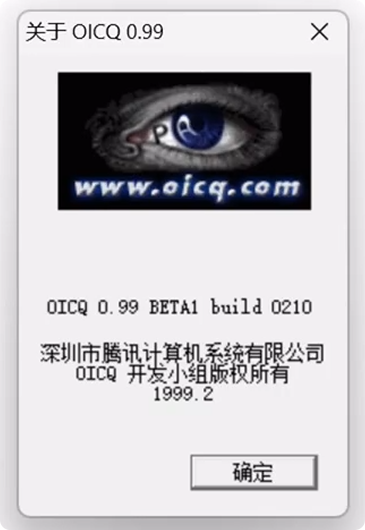
In the video, the blogger showed the entire process of resurrection and login, using technical means to adapt to the operating environment of the first generation QQ, solving various compatibility issues caused by system iterations and server interface changes, and finally allowing this classic software that has been dusted for many years to successfully start and complete login.
The first-generation QQ interface after logging in is simple and retains the most original core functions. It is in sharp contrast to today's feature-rich QQ, showing the simple style of early Internet products.
The first version of QQ was officially released on February 10, 1999. At that time, it was still named OICQ. Its core functions were mainly online display, paging, and basic chat. It was an important social tool for the first generation of netizens.
The blogger's successful resurrection and login this time is not only a technical attempt, but more like an Internet nostalgia trip, allowing netizens to get a glimpse of the initial development of China's instant messaging industry.