While analyzing strong earthquake data near fault lines, a research team from Kyoto University discovered a previously unknown earthquake phenomenon - when fault movement between tectonic plates suddenly stops, an effect similar to a "geological whiplash" occurs. The discovery stems from negative-phase waveforms the researchers observed in seismic data, an unusual pattern never expected in known plate activity.
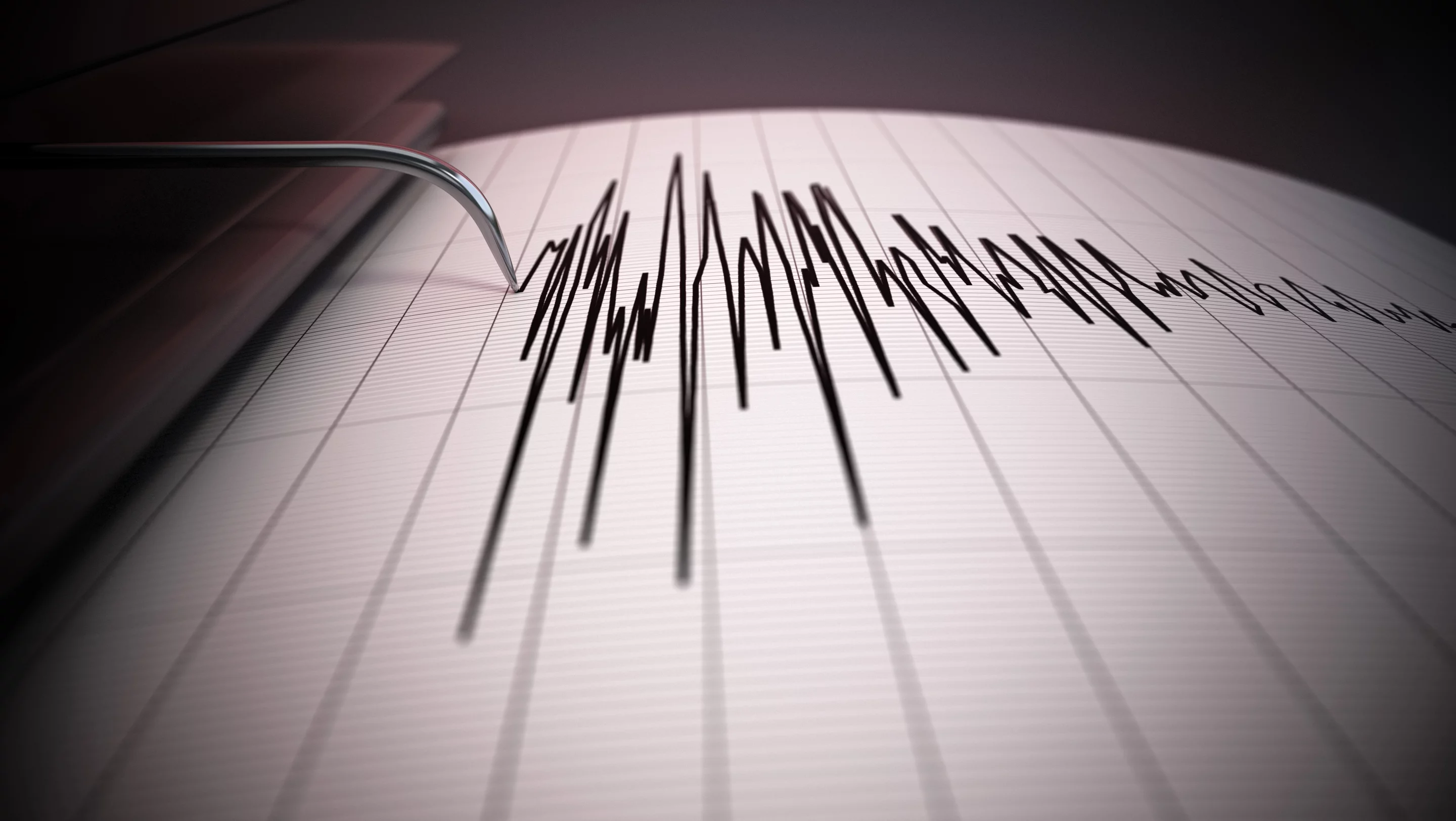
The study found that the ground near the fault line did not just move in one direction during the earthquake, but overshooted - first moving in one direction and then briefly and sharply rebounding in the opposite direction. This phenomenon is similar to the situation where the car body first tilts forward due to inertia during emergency braking, and then rebounds backward due to the action of the suspension system, pushing the passengers towards the seat back. The study grew out of a broader effort to better understand near-fault earthquake records and interpret them in terms of source processes, said Jesse Keels, the study's first author.
These negative-phase waveforms may be related to the degree of earthquake damage to the surface, especially in large strike-slip fault earthquakes, as the researchers note that it is particularly difficult to design structures such as buildings to withstand such reverse motion. A strike-slip fault is a vertical or nearly vertical fault surface, and the rock blocks on both sides of it mainly move in the horizontal direction. In the Pacific Ring of Fire - which generates about 90% of the world's earthquakes - the "grinding" or subduction of non-volcanic tectonic plates along boundaries such as the San Andreas Fault and the Queen Charlotte Fault can lead to sizable strike-slip earthquakes.
The team combined observed ground motions with model predictions, paired seismic accelerations with satellite data, and then simulated how such a large strike-slip earthquake would occur if there was some kind of obstacle that suddenly stopped moving. Using this method, they found that negative phase waves are actually related to plate motion reaching the boundary and stopping ground motion.
The researchers also found a difference in the strong "stop phase signal" between sudden and slow stops in earthquakes, opening new ways to understand how the physics of such motion affects motion above the surface. Stopping the phase "produces long, whiplash-like ground motions," which presents engineers with unique challenges, the team explains. Just like a car braking, the faster the earthquake stops, the stronger the backward whiplash effect it creates.
"We demonstrate systematic near-field ground motion cessation phase observations from large strike-slip earthquakes," the research team wrote in the paper. "Analysis of 12 earthquake events around the world shows that transient overshoots in fault-parallel surface displacements are a reliable diagnostic signature of sudden termination of fault propagation." The researchers now plan to expand the scope of the study to examine the occurrence of large earthquakes around the world to better understand the behavioral characteristics of earthquakes during the cessation phase. For earthquakes caused by strike-slip faults, magnitude is critical, and their stopping characteristics can help us better protect against their effects. The research has been published in the journal Science.