The U.S. Navy recently completed a landmark maritime rescue operation: After a U.S. Army AH-64 "Apache" armed helicopter made an emergency landing over the coast of Oman, two Army crew members were safely transferred to the evacuation area for the first time in less than two hours by an unmanned "Corsair" unmanned ship.
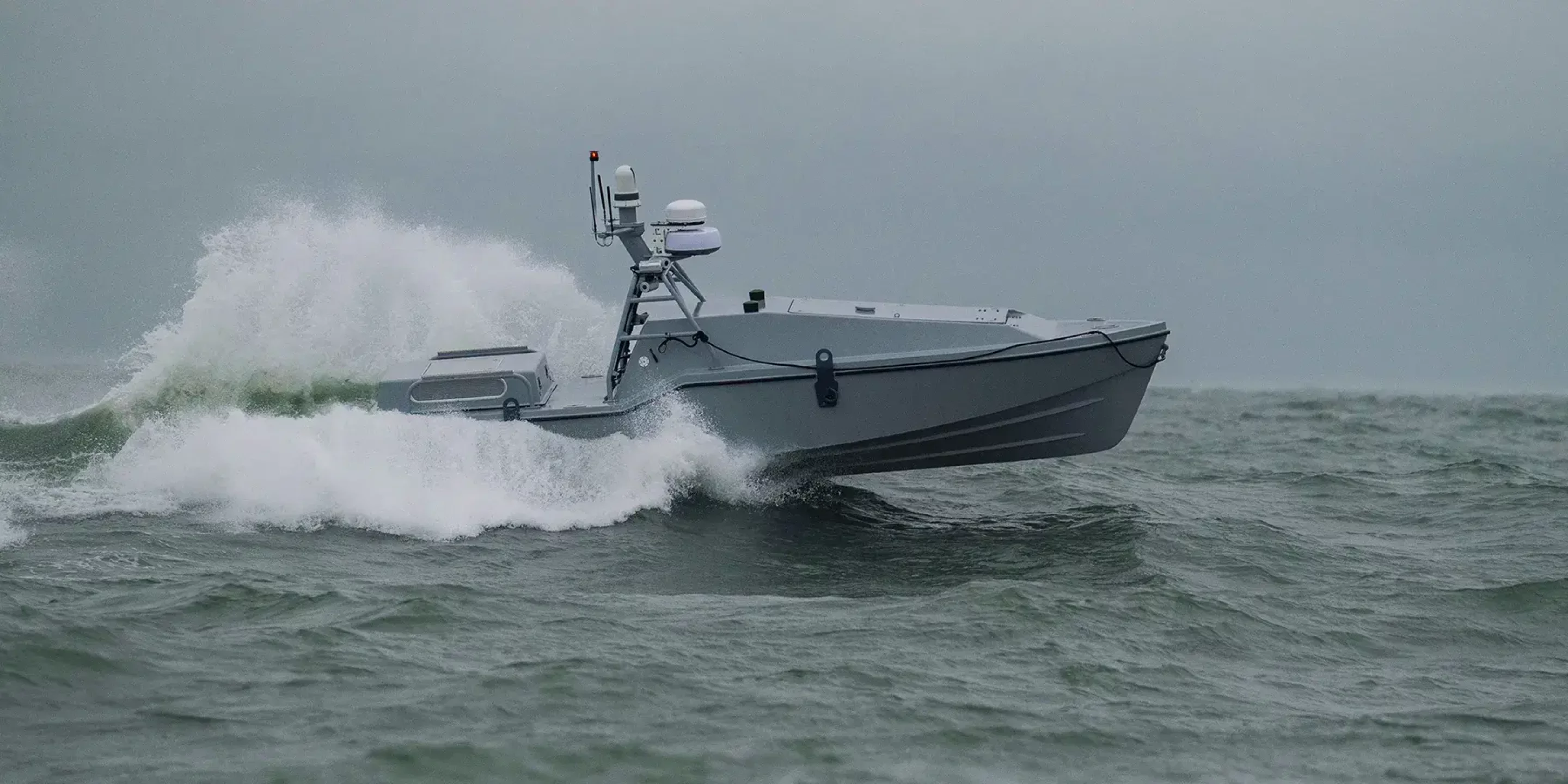
According to public information, the incident occurred at 11:33 (GMT) on June 8, 2026. An Apache attack helicopter performing a routine patrol mission near the Strait of Hormuz suddenly encountered a problem during the flight. It is not yet clear whether the specific cause was a mechanical failure or a hostile act. After the incident, the U.S. military jointly launched a search and rescue operation, led by the U.S. Naval Forces Command and the 82nd Airborne Division, with support from multiple forces of the U.S. Air Force and Navy.
Different from traditional rescue operations, this operation specifically included Task Force 59, an unmanned and artificial intelligence combat integration unit of the U.S. Fifth Fleet. The task force operates a fleet of unmanned surface vessels, including the Kosir unmanned vessel developed by Saronic. The approximately 24-foot-long unmanned vessel is equipped with a 360-degree passive sensing payload and is capable of searching for people and targets in complex sea conditions. Through relevant sensors, the "Koshier" successfully located the two Apache crew members who fell into the water and sailed to the sea area where they were located.
Subsequently, the two crew members boarded the structure above the cabin section of the unmanned boat and held on to the hull. The unmanned boat transported them to relatively safe waters for subsequent lifting and transfer by manned helicopters. According to the US military, the two were in stable condition after being rescued. This "first" actual combat search and rescue operation by an unmanned ship is not only regarded as a breakthrough in technology and tactics, but also as evidence of the feasibility of unmanned systems in the field of military rescue.
In modern warfare, battlefield attrition and wounded evacuation have always been key problems faced by the armies of various countries. Especially Western armies that adhere to the principle of "never abandoning any comrade" often need to invest a lot of manpower in order to rescue the wounded. In traditional practice, at least two healthy soldiers are needed to carry one wounded person, which creates obvious constraints in troop deployment and tactical advancement.
Historical combat examples also highlight this problem: In the Vietnam War, opponents often forced the troops to pause by quickly injuring a US soldier, so as to use the time to deal with the casualty to disrupt the rhythm of the US offensive. By the time of the Falklands War, the British army had made some adjustments in tactics, preferring to quickly complete basic treatment for the wounded on the front line before continuing to advance, and arrange systematic evacuation in a time window when conditions permitted to avoid slowing down the combat rhythm due to single-point injuries.
Unmanned and autonomous rescue platforms are seen as a potential key to breaking this dilemma. The report pointed out that multiple types of unmanned platforms, including land, sea and air, may be deployed as rescue and evacuation units in the future. This type of system can, to a certain extent, replace combatants in high-risk search and rescue missions, freeing up more troops to devote to core operations and other operations. It may also reduce expensive and complex manpower rescue operations.
From the perspective of medical treatment, unmanned platforms are expected to help better seize the "golden hour." Rapidly transferring the wounded to the rear or a platform with medical capabilities during this critical time window is often directly related to life and death. Compared with manned teams, unmanned platforms can perform tasks in extremely high-risk areas or harsh environments, pushing rescue forces into previously inaccessible areas, thus improving the overall rescue success rate.
The potential applications of unmanned rescue technology extend far beyond the battlefield. The report pointed out that unmanned rescue platforms can also play an important role in large-scale natural disasters such as earthquakes, hurricanes, wildfires, and tsunamis. These unmanned systems can quickly maneuver in areas with interrupted roads, serious environmental pollution, or high risks of subsequent secondary disasters, deliver emergency supplies such as food and medicine to disaster areas, and transfer the injured from high-risk areas to safe areas. In addition, such platforms can be pre-deployed in high-risk areas and can be quickly activated in the event of a disaster.
It is worth noting that unmanned platforms performing rescue missions are not necessarily specialized equipment specifically designed for medical treatment or search and rescue. The Apache incident shows that as long as the platform has the ability to carry personnel or humanoid payloads, it can be "temporarily converted" into a rescue tool in an emergency. This idea may be extended to more unmanned vehicles in the future. Whether it is a surface unmanned vehicle or other types of unmanned systems, it is possible for "one machine to be used for multiple purposes" in wartime and disaster rescue scenarios.
The report also mentioned that the types of unmanned platforms responsible for rescue and evacuation tasks in the future may be more diversified. For example, the quadruped robot under development was originally conceived as a "pack mule" to accompany the team, used to share the load of supplies for infantry, but after the technology matures, it can also be modified into a small rescue robot to carry the wounded or carry emergency supplies. At the same time, there is also a lot of discussion about humanoid military robots. Such platforms have potential advantages in mobility, environmental adaptability, and adaptability to human space. In theory, they can assume the role of "mechanical medics" on the battlefield after software reconstruction.
At the end of the article, in a slightly science-fictional way, it is pointed out that in the future, when someone calls out "Military Doctor" on the battlefield, the responder may be a humanoid robot wearing camouflage, with a red cross logo on its chest, and an appearance similar to C-3PO. The maritime rescue operation completed by the "Koshier" unmanned boat is regarded as one of the early practical samples leading to this future picture.