The Indian government temporarily cut off access to the messaging app Telegram nationwide for a week starting Tuesday due to concerns about exam fraud, immediately triggering a large number of users to turn to virtual private network (VPN) services and other messaging apps to bypass restrictions or find alternative tools. App intelligence company Appfigures told the media that the day India announced the restrictions had the highest number of VPN app downloads in the country since early 2025.
Data shows that the total number of downloads of major VPN applications that day increased by 49% from the recent daily average of 139,000 times to approximately 208,000 times.
Among various VPN products, Proton VPN and Turbo VPN have seen particularly significant growth. Data from Appfigures shows that Proton VPN downloads jumped 113% in Apple’s App Store in India, while Turbo VPN downloads increased by 85%. On the Google Play platform, Proton VPN downloads increased by 64% and Turbo VPN by 35%. NordVPN saw a 41% increase in downloads on the App Store, and ExpressVPN saw a 31% increase in Google Play downloads. This round of download surge also pushed the positions of many VPN apps to rise rapidly on the Indian App Store rankings: Proton VPN rose from 18th to 5th in Apple’s “Tools” category, and from 8th to 2nd in Google Play’s “Tools” category.
This VPN craze is directly related to India’s phased ban on Telegram. The Indian government has decided to temporarily restrict access to Telegram until June 22 on the grounds that criminals are using the platform to distribute fake test papers to candidates and commit related fraud on the eve of the re-examination of the National Undergraduate Entrance Examination (NEET), the country's largest undergraduate entrance exam. The government said the measure was aimed at preventing the further spread of false test questions and scams. Telegram has challenged the decision in the Delhi High Court, arguing that regulators should take action against specific content violations rather than banning the entire platform, which has hundreds of millions of users.
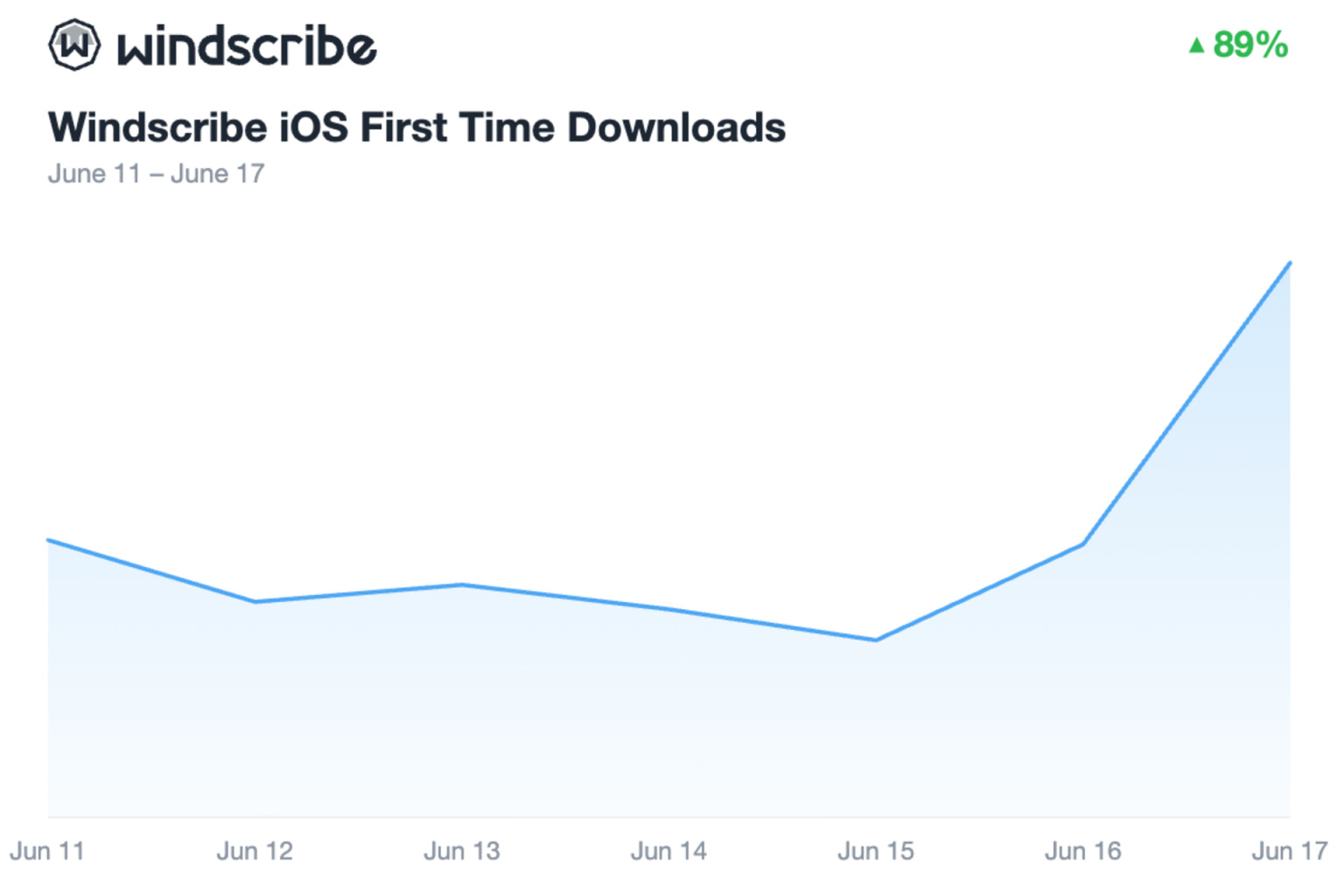
Data from service providers themselves also confirm this surge in demand. Proton said daily registrations in India soared 120% from baseline levels the day after Telegram was restricted, after hourly registrations jumped as much as 150% on the night the restrictions were announced. The company said the growth was "significant" given its existing user base. Canadian VPN service provider Windscribe has also observed a similar trend, revealing that user registrations in India once doubled from the baseline, while first-time downloads of the local iOS app increased by approximately 89%. Rebecca Rosenberg, the company's manager of growth operations, said similar surges in VPN use typically occur when countries impose bans on specific apps, introduce age restrictions or identity verification requirements, and other forms of restrictions on internet access.
Statistics from market data agency Sensor Tower show that the trend is not limited to a handful of VPN service providers. On June 17, after Telegram was restricted, overall VPN app downloads in India increased by 10% month-on-month, reversing the decline that had continued in the previous two weeks. At the same time, Indian users have also begun testing other messaging apps including Signal and Viber as alternatives to Telegram. Appfigures data shows that Signal’s downloads on the Apple App Store in India increased by 72%, and downloads on Google Play increased by 322%; Viber’s downloads on the App Store increased by 216%.
The growth of iMe, a third-party app closely tied to Telegram, has been particularly prominent. According to Appfigures statistics, iMe’s average daily downloads in Google Play India were previously about 827 times, and this number surged to 50,900 times on June 16. However, judging from overall usage, this round of temporary restrictions did not immediately reduce Telegram’s activity in India. Sensor Tower said that Telegram's daily active users in India increased by 17% on the day the restrictions were announced, setting the largest single-day growth rate for the application in the Indian market since the widespread outage of Meta services in 2021.
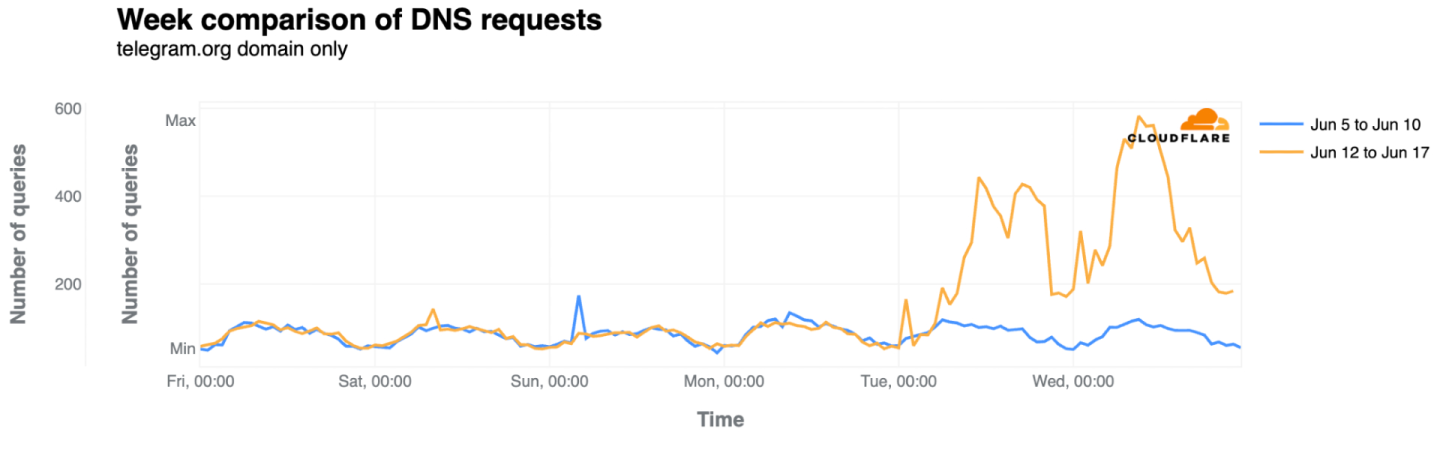
Other data also shows that Indian users are still actively trying to reconnect to Telegram after the ban was implemented. Lai Yi Ohlsen, head of Cloudflare Radar, said that the number of DNS requests for Telegram-related domains in India surged within two days after the measures were announced. However, she also reminded that the increase in DNS traffic does not necessarily mean successful access, and some requests may simply reflect the behavior of users repeatedly trying to connect after the platform is blocked.
At a hearing in the Delhi High Court this week, Telegram stressed that it was cooperating with Indian regulators. Telegram has removed offending channels named by authorities, company lawyers said, questioning the need for sweeping restrictions on a platform that it says has more than 150 million users in India. Lawyers for the government defended the measure as a temporary, event-driven response closely related to the NEET re-examination. India's Attorney General Tushar Mehta pointed out in court that if a permanent ban is implemented, legal disputes on the principle of proportionality may arise, but there is currently a "reasonable relationship" between this phased restriction and the governance goals pursued by the government.
After hearing submissions from both Telegram and the government, the Delhi High Court reserved its ruling on Thursday and will deliver its judgment on Friday. The tug-of-war over this ban and counter-ban has once again triggered discussions on how countries balance governance needs and user rights when restricting large online platforms. Sensor Tower reminded that similar VPN download surges have appeared in other markets before: for example, TikTok was briefly removed from the US App Store in 2025, and local VPN downloads increased by more than 40% week-on-week that week. Windscribe noted that it has also observed a simultaneous increase in VPN usage and registrations after Iran, Russia and other countries implemented relevant restrictions.