For a long time, the scientific community has generally believed that as long as an ordinary worker bee larvae is continuously fed enough royal jelly, it will develop into a queen bee. This is regarded as a "simple recipe" for the birth of a queen bee. However, the latest research published in the journal Nature by the University of California, Riverside and other institutions shows that the cultivation of a queen bee is far more than just diet, and relies on the "royal nursery" carefully designed and maintained by the entire bee colony.
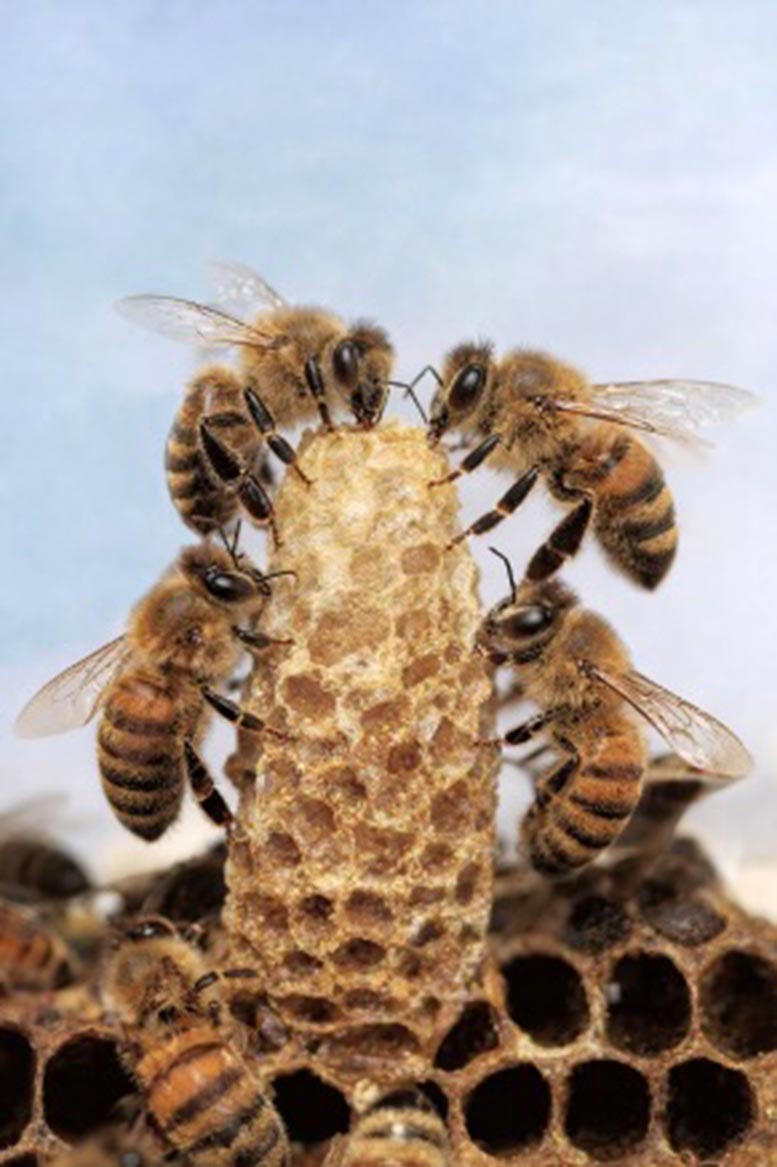
The research team found that young worker bees will use beeswax with a unique composition to build a special brood chamber, maintain a higher and more stable temperature in it, and provide round-the-clock care, thereby creating a microenvironment conducive to the development of future queen bees. The scientists dubbed these queen cells "royal cribs" and identified a previously undescribed group of worker bees - "queen cell builders" - who appear to be physiologically and behaviorally "tailor-made" for this special task.
Queen bees and worker bees have almost the same starting point in life: they both originate from fertilized eggs that look almost identical. But in the end, the queen is larger, develops faster, lives longer, and is the only female in the colony responsible for laying eggs and continuing offspring. In the past, it has been thought that nutrient-rich royal jelly is the key driver of the huge differences between queen bees and worker bees, but new research points out that food alone cannot fully explain the process of queen bee formation.
In order to deeply understand the "nurturing mechanism" of the queen bee, the team used a variety of technical methods such as thermal imaging, behavioral tracking, material science and chemical analysis to conduct a systematic comparison of the differences between the queen's brood chamber and the common hexagonal brood chamber (cells where worker bee larvae develop) in the hive. The results showed that the beeswax used in the honeycomb cells is peanut shell-shaped. Compared with ordinary honeycomb cells, the beeswax used in it has significantly different physical and chemical properties: lower density, better flexibility, stronger insulation and moisturizing capabilities, and contains significantly different fatty acids and chemical signals.
The researchers further designed a controlled experiment in which the queen bee larvae were raised in brood chambers composed of "king-raising wax" and ordinary worker bees wax, while controlling that the food formula they received was exactly the same. It was found that larvae exposed to ordinary worker beeswax were more likely to die, and even if they survived, they often developed into smaller queen bees. This strongly suggests that the surrounding physical and chemical environment is as important as nutrition in queen bee development.
At the same time, scientists have also identified the specific group of worker bees responsible for building these "royal cradle" - the "royal room builders". They are typically younger than other worker bees, maintain an abnormally high body temperature as they care for the future queen, and their physiological state changes as they do this specialized job. The extra warmth seems to help speed up the queen's development: It only takes about 16 days for a queen to emerge as an adult, while it takes about 21 days for ordinary worker bees. This difference allows the colony to complete the replacement of the queen more quickly when it needs to be replaced.
The study also found that these worker bees do not simply reuse the ready-made beeswax in the hive, but actively collect, modify and enrich materials in the hive specifically for the construction of the royal chamber, and activate different biological pathways to participate in beeswax production. In other words, in the process of creating the "royal cradle", their own physiological functions have also been adjusted to cope with this highly specialized task. To trace the flow path of beeswax in the hive, the researchers added a small amount of graphite to ordinary honeycombs to slightly darken the beeswax. The appearance of these dark waxes was then observed in the nursery cells, confirming that worker bees consciously collect, transport and reprocess beeswax for use in the construction of the nursery cells.
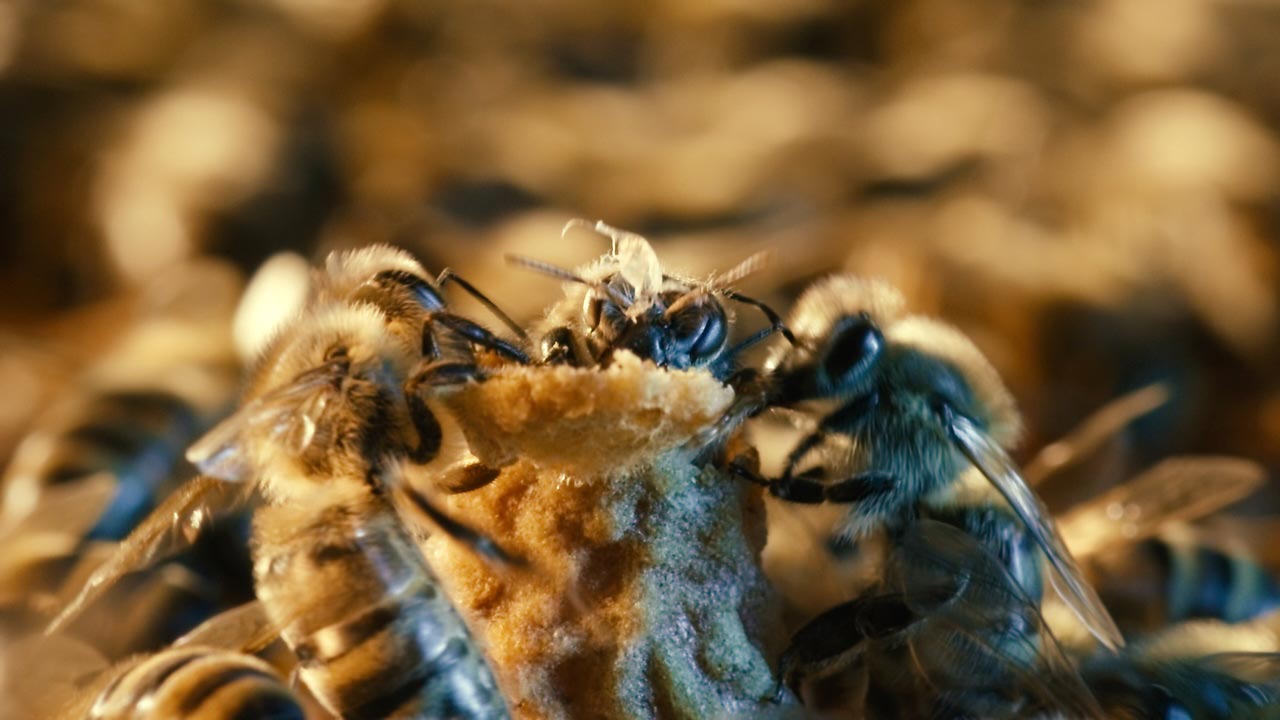
When describing this process, one of the project participants, entomologist Boris Baer, director of the Center for Integrated Bee Research (CIBER) at the University of California, Riverside, described the raising of the queen bee as more like a "palace project" within the colony rather than simple larvae feeding. "The previous view was simple: put an egg into the brood chamber, feed it royal jelly, and you will get a queen bee." He said, "We found that there is a whole set of complex 'machines' behind the whole process, which is far more sophisticated than we originally imagined."
The team also observed similar behavioral patterns in Asian honeybees and European honeybees, suggesting that this strategy of relying on a specialized nursery and a colony of professional worker bees to create a queen may have been formed early in evolutionary history and is widely conserved in different bee lineages. The project is led by Yu Fang and Yahya Al Naggar, former postdoctoral researchers at the University of California, Riverside. It integrates multidisciplinary forces such as behavior, physiology, materials science, chemistry and genomics, and embodies CIBER's overall concept of interdisciplinary research on complex biological problems.
The research also has implications beyond the bees themselves. Scientists believe that this work reshapes people's understanding of biological development processes, highlighting the powerful role of environment, social interaction and the "built environment" in shaping biological outcomes. Over the past few decades, the "queen story" has been reduced to a case of how special foods create special individuals, but now research presents a richer and more sophisticated picture: the birth of a queen is the result of a highly collaborative and precision-engineered environment for raising the queen.
Baer pointed out that the precise division of labor and engineering capabilities within a bee colony are, to some extent, closer to a complex overall biological system than a simple collection of independent individuals. As he said, "You can think of this process as similar to 'Buckingham Palace': there is a dedicated team of worker bees responsible for cultivating the queen bee full-time. If they don't do a good job, the entire colony cannot reproduce." From this perspective, the bee colony is not only sharing food and space, but also actively "designing" and "transforming" its own microenvironment to ensure the continuity of the colony.