A convenient feature for Windows 11 users is quietly eating up a lot of system memory, but it has not been officially fixed by Microsoft. Over the years, users have continued to report on platforms such as Reddit and Microsoft's official Q&A that the background service used to support "Phone Link" in Windows 11 has a serious memory leak problem. In extreme cases, it can even occupy dozens of GB of RAM, making the system almost unusable.
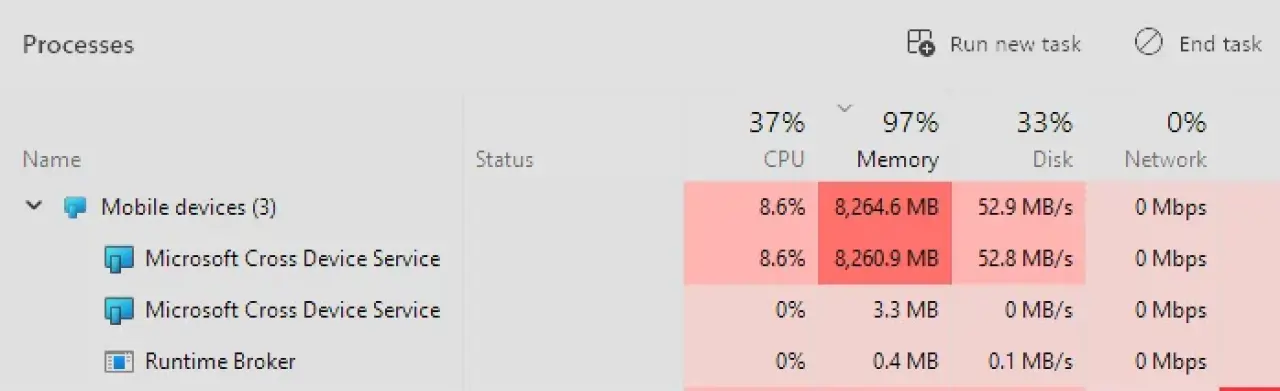
According to reports, the problem mainly points to a background component called "Cross Device Service", which is the core service that supports Phone Link and is responsible for handling cross-device experiences such as clipboard sharing, notification synchronization, remote control, and application resume between computers and mobile phones. It's designed to run silently in the background and use very few resources, but when an error occurs, the service seems to get stuck in some kind of unending loop, increasing its memory usage over time.
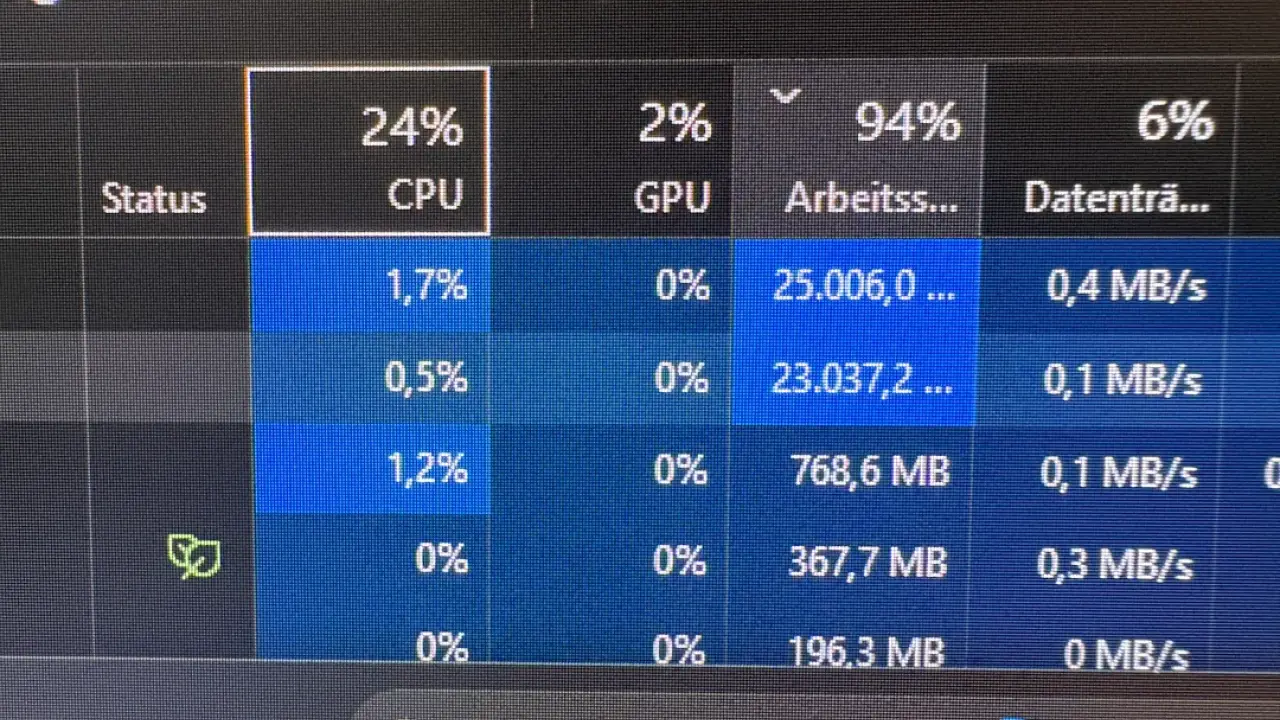
The latest complaint comes from a Reddit user, who found that the Cross Device Service alone occupied about 25 to 30GB of memory during the game. The total usage was higher after related processes were superimposed, causing the task manager to take about three minutes to be opened by the system. At the same time, network bandwidth has also been significantly affected, with download speeds plummeting from the usual about 900Mbps to about 150Mbps, and the overall experience has been severely impaired.
Similar cases are not isolated. Complaints from users date back to at least 2023, with some saying the service experienced an abnormal spike almost every day, taking up 15 to 20GB of memory, forcing them to manually end the process through Task Manager to restore system responsiveness. In the Microsoft Q&A community, a user said that the problem continues to push the memory usage of his PC to more than 90%, and has evolved from an occasional failure to a "normal phenomenon" that seriously affects daily work.
For ordinary users, if they feel that the memory usage is abnormally high when using the Phone Link function of Windows 11 to synchronize data between mobile phones and computers, this background service is most likely the reason behind it. Since this service is responsible for supporting various cross-device capabilities, it is often automatically started and runs permanently in the system, and many users may not even be aware of its existence.
It is worth noting that Microsoft has not yet publicly confirmed this issue as a known bug. The relevant information mainly comes from user spontaneous feedback and discussions in forums and communities such as Reddit. However, judging from the narratives and similar symptoms of a large number of cases, for some Windows 11 users, this is likely to have constituted an ongoing underlying problem rather than an occasional small-scale anomaly.
For users who encounter this problem, the troubleshooting path given by Microsoft technical support is still based on general suggestions, such as ensuring that the system and Phone Link application are updated to the latest version, or disabling the item named "Mobile Devices" in the "Startup" tab of the Task Manager to reduce the automatic loading of related components at boot. However, judging from multiple feedbacks, these steps do not work for everyone, and some users will still encounter the problem of soaring memory usage periodically after trying the above methods.
In this case, some users choose a more radical but simple approach: directly turn off or uninstall the Phone Link function to completely avoid the Cross Device Service from running in the background. Although this means sacrificing conveniences such as cross-device synchronization and remote control, for users who have encountered memory being "emptied" many times, this may be the most effective and direct solution at present.
In the long term, if this problem continues to not be officially confirmed and targeted by Microsoft, Phone Link's reputation and user trust may be affected, especially in productivity scenarios that are extremely sensitive to system stability and resource utilization. Currently, community users are still sharing new cases and temporary solutions through Reddit and the Microsoft Q&A platform, and they are also waiting for Microsoft to give a clearer response to this cross-device service memory leak problem.