Due to U.S. export controls, Chinese memory chip giant Changxin Memory (CXMT) faces many obstacles in acquiring the advanced equipment required to produce high-bandwidth memory (HBM), making it difficult to directly compete with international giants in the mainstream AI memory market. However, the latest industry trends show that Changxin Memory is trying to find a new way to find a breakthrough by turning to "customized DRAM".
The report pointed out that as the development focus of artificial intelligence hardware has gradually expanded from relying solely on GPU computing power to improving high-speed memory performance, Changxin Memory has shifted its strategic focus to 3D integrated circuits (3D IC) and 3D DRAM technology. This new architecture design is expected to effectively solve the performance bottleneck of data transmission without relying on traditional HBM equipment.
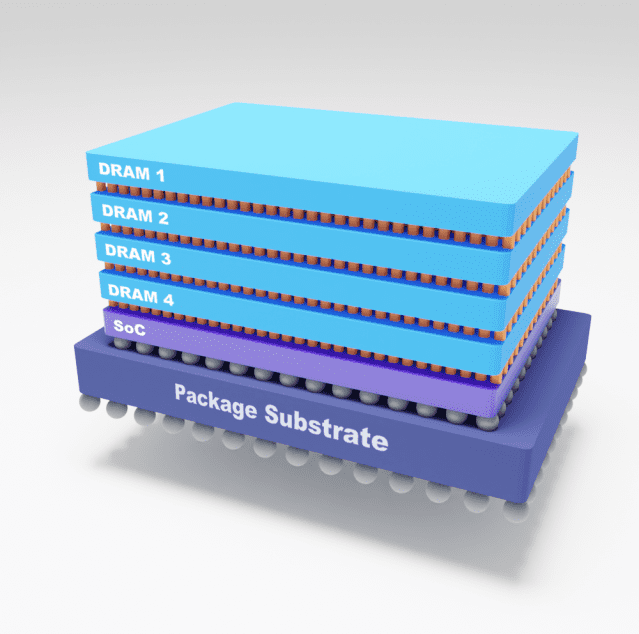
It is understood that many fabless chip design companies have expressed cooperation intentions to Korean semiconductor giants such as Samsung Electronics on this type of new customized design. However, both Samsung and SK Hynix are currently taking an extremely cautious approach. For these two Korean giants, large-scale mass production and shipment of standard DRAM modules is their current main source of profit. Blindly entering the highly customized and relatively niche 3D DRAM market not only goes against the existing mature business model, but also brings huge R&D and market risks. Although the Korean duo is also conducting cutting-edge technology research on 3D DRAM and 3D IC, there are no plans to promote large-scale commercialization in the short term.
The hedging strategy of the Korean giant has created a rare market entry window for Chinese chip manufacturers such as Changxin Memory. However, betting on customized DRAM also faces considerable challenges and uncertainties. Although Chinese semiconductor manufacturers have successfully developed a number of 3D DRAM sample chips and have begun to connect with customer projects, it is still unclear whether this architecture can provide performance equal to or even better than HBM in actual AI inference scenarios.
In addition, cost control and mass production yield are also huge problems facing Changxin Storage. After the first batch of products enters the mass production stage, a large amount of trial and error and R&D investment in the early stage may drive up costs, and it remains to be verified whether the final market size can support commercialization returns. However, for Chinese manufacturers that lack access to key HBM equipment, actively exploring new 3D memory tracks is undoubtedly a proactive move to break the existing technology blockade and market deadlock.