
Abstract:
A chemical "fingerprint" in Earth's oldest rocks suddenly disappeared from the geological record about 2.5 billion years ago. A research team from Australia's Curtin University believes that this change may mark the beginning of the formation of a plate tectonic system similar to today's, thus entering a new stage capable of large-scale movement and circulation of the earth's crust.
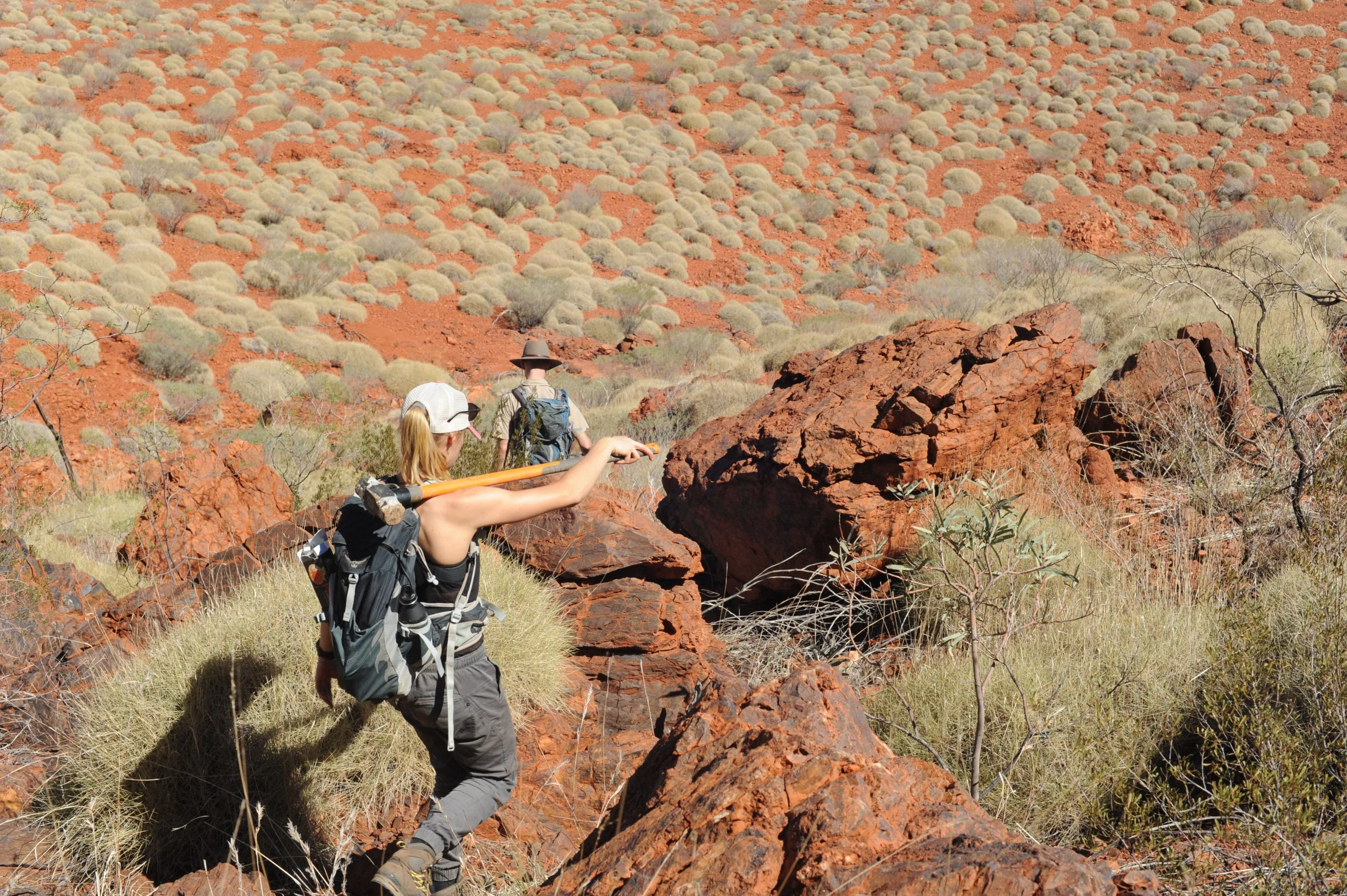
The research team analyzed thousands of rock samples from around the world, covering nearly 4 billion years of Earth's geological history. They were looking for a chemical signature that would survive as ancient crust melted and helped form new rock. This signature can help scientists determine what ancient material younger rocks originally came from.
Yanne Liebman, lead author of the study and a researcher at Curtin University, said that new crust is often formed by the melting of older rocks and leaves a unique chemical fingerprint. The study shows that such fingerprints appear consistently in rocks formed 2.5 billion years ago, suggesting they originate from an ancient crustal reservoir formed about 4 billion years ago.
However, after 2.5 billion years, this chemical signature completely disappeared from the geological record. Although the team examined thousands of rocks, no trace of it was found again. Researchers believe this means a fundamental change in the way the Earth's crust is created and transformed.
In the early Earth, ancient crust may have been repeatedly melted, transformed and reused in situ. But since then, the Earth has gradually developed systems capable of transporting the crust over long distances and recycling it back into the Earth's interior. This shift is consistent with today's active plate tectonic system: giant lithospheric plates moving slowly above the asthenosphere, shaping continents and oceans, triggering earthquakes and volcanism, forming mountain ranges, and playing an important role in regulating Earth's long-term climate.
When plate tectonics emerged has always been a major problem in earth science. As plate movements continue to bring large amounts of crust back into the Earth's interior, much of the geological evidence recording the Earth's early history has been destroyed, making it difficult for scientists to directly restore that distant process.
Chris Kirkland, a professor at the School of Earth and Planetary Sciences at Curtin University, pointed out that plate tectonics is the basis of the earth's evolution over billions of years. It continues to reshape continents and oceans, and also affects the earth's atmosphere and climate. The importance of this study is that scientists were able to see a "fingerprint" of an ancient Earth that suddenly disappeared at a specific point in time in the geological record.
Research believes that this disappearance marks the earth's transition from an early state in which the ancient crust could be repeatedly melted and transformed in situ to a system that can move and circulate the crust on a large scale. However, the researchers also emphasized that this discovery does not mean that modern plate tectonics suddenly formed completely 2.5 billion years ago, nor does it mean that all the key features of plate tectonics appeared at the same time.
The study provides one of the clearest geological evidence yet for understanding when the modern Earth's "tectonic engine" kicked in. Relevant results have been published in "Philosophical Transactions of the Royal Society A: Mathematics, Physics and Engineering Sciences", titled "The disappearance of ancient crustal reservoirs marks a transformation of the earth's geodynamic system."
Comments