
Abstract:
AMD officially released the sixth-generation EPYC 9006 series server processor based on Zen 6 architecture, providing a new generation computing platform for the growing needs of artificial intelligence, cloud computing and enterprise-level data centers. As a product family code-named "Venice", the new series further improves core size, memory bandwidth and data transmission capabilities, providing up to 256 CPU cores, making it one of AMD's most powerful general-purpose server processors.
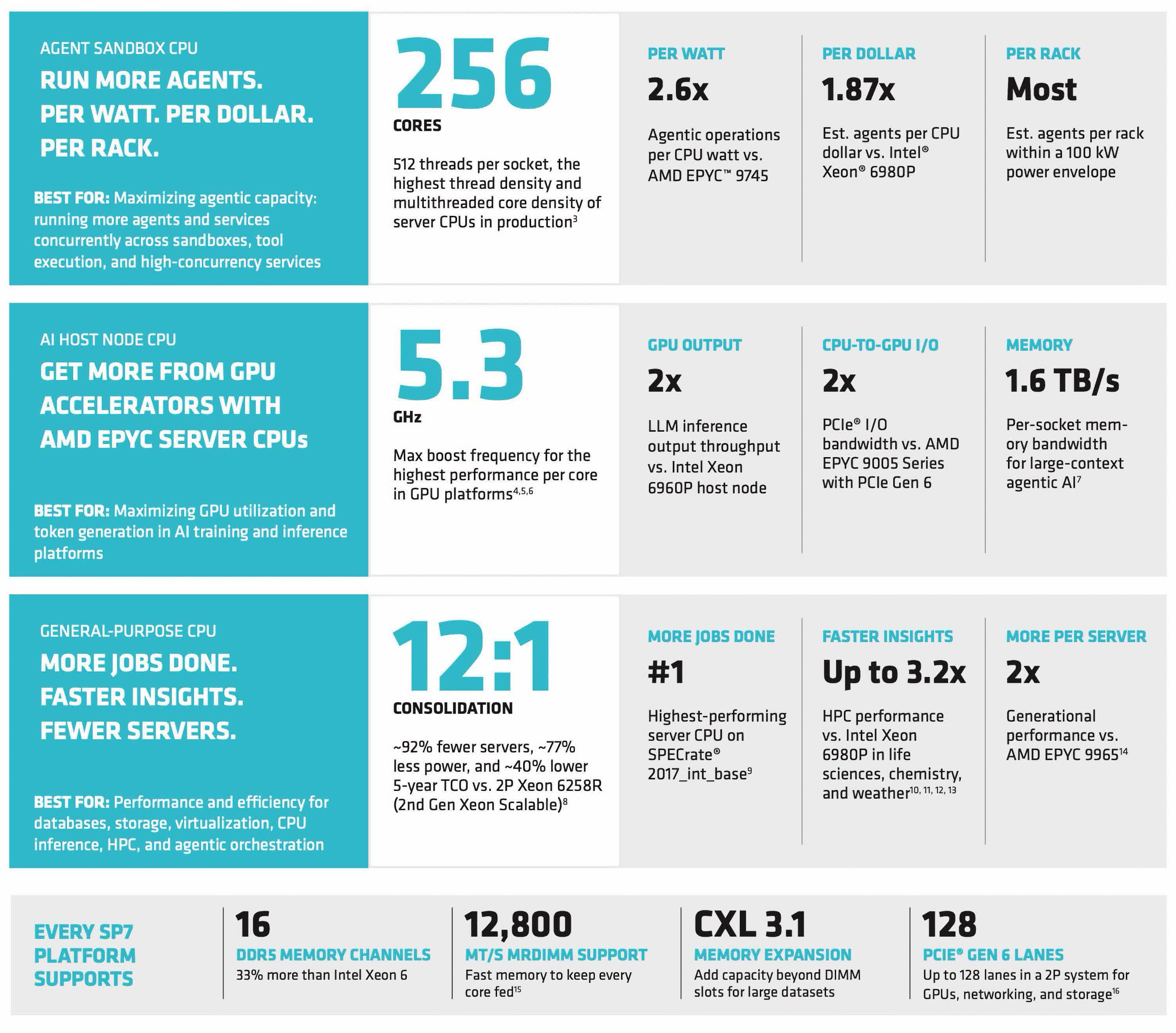
The EPYC 9006 series launched this time covers multiple segmented models, from entry-level products to flagship versions, forming a complete product matrix and can be deployed in single- and dual-channel server systems. The flagship model EPYC 9996 has 256 Zen 6 cores, and the total number of cores in the system can reach 512 in dual-channel configuration, providing powerful processing capabilities for high-density computing, artificial intelligence training, large-scale virtualization and scientific computing.
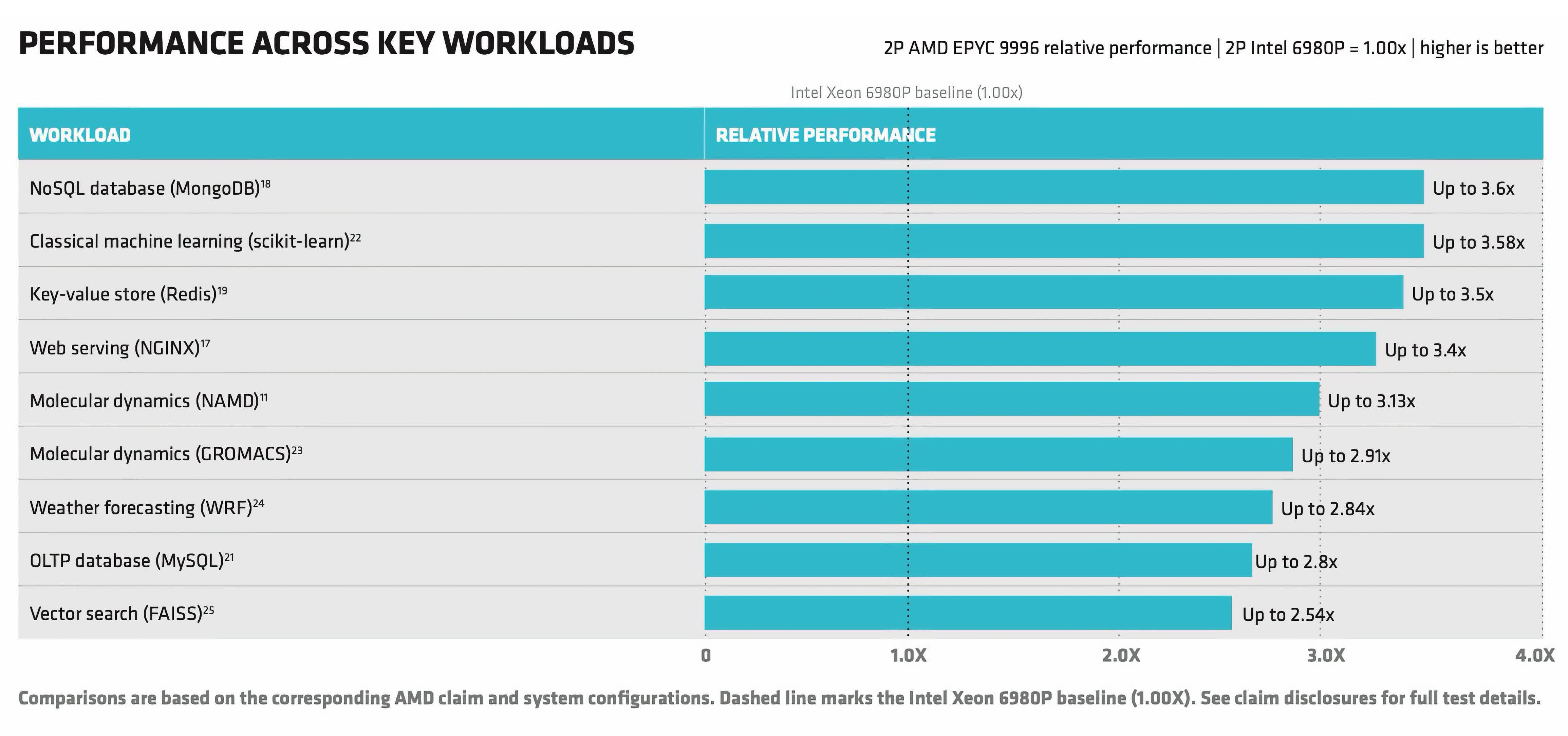
Zen 6 architecture is the core of this product upgrade. AMD said that the new architecture not only increases the number of cores, but also significantly improves execution efficiency per clock cycle and overall throughput. Official data shows that the performance improvement of the new generation products in some artificial intelligence and enterprise-level workloads can reach more than 1.7 times that of previous products.
In terms of manufacturing technology, the EPYC 9006 series uses TSMC’s 2-nanometer process technology. With the help of more advanced manufacturing processes, the processors not only improve performance but also improve energy efficiency, helping to reduce the total cost of ownership for large data centers.
In order to meet the needs of memory and data throughput in the AI era, the new platform introduces two slot solutions, SP7 and SP8. The high-end SP7 platform supports 16-channel DDR5 memory and can run with the latest MRDIMM memory technology, with a maximum memory bandwidth of 1.6TB/s. AMD said this configuration can better handle large model training, database processing and high-performance analysis tasks.
In terms of expansion capabilities, the new processor fully supports PCIe 6.0 and CXL technology. The high-end SP7 platform can provide up to 96 PCIe 6.0 lanes, while the SP8 platform has been further upgraded to 128 PCIe lanes, providing more sufficient connection resources for GPU accelerators, high-speed network equipment and large-scale NVMe storage systems.
AMD also provides differentiated designs for different application scenarios. For more frequency-focused workloads, the company introduces high-frequency models with an "F" suffix. For example, the 64-core EPYC 9586F and 96-core EPYC 9686F can accelerate to 5GHz and are more suitable for enterprise applications that rely on single-threaded performance or high frequency response.
In addition to standard data center products, AMD also simultaneously launched the EPYC Embedded 9006 embedded series processors. This series is also based on the Zen 6 architecture, with up to 256 cores and 512 threads, and is targeted at scenarios such as semiconductor automatic test equipment, enterprise-level storage controllers, network security equipment, and 400G and 800G high-speed firewalls. AMD said that the new product can achieve up to 1.8 times improvement in throughput performance compared to the previous generation embedded EPYC platform, and provides product life cycle support for up to seven years.
In terms of security, the EPYC 9006 series introduces a further enhanced security architecture, including hardware-level root of trust, secure boot mechanism and support for post-quantum cryptography signature technology to meet the long-term security needs of future enterprises and government agencies.
As artificial intelligence infrastructure construction continues to heat up, AMD is trying to further expand its influence in the server market. Through the Zen 6 EPYC 9006 series, AMD has not only improved key indicators such as core number and memory bandwidth, but also strengthened its synergy with GPU accelerators and AI systems, launching a new round of competition in the high-end field of the data center market.
Comments