
Abstract:
The third-party compatibility tool AMDLSS 5 has recently been updated to version 2.0. The developer claims that the new version has significantly improved the performance of AMD Radeon graphics cards running NVIDIA DLSS technology through a series of underlying optimizations. In some scenarios, the frame rate increase can reach up to 64%.
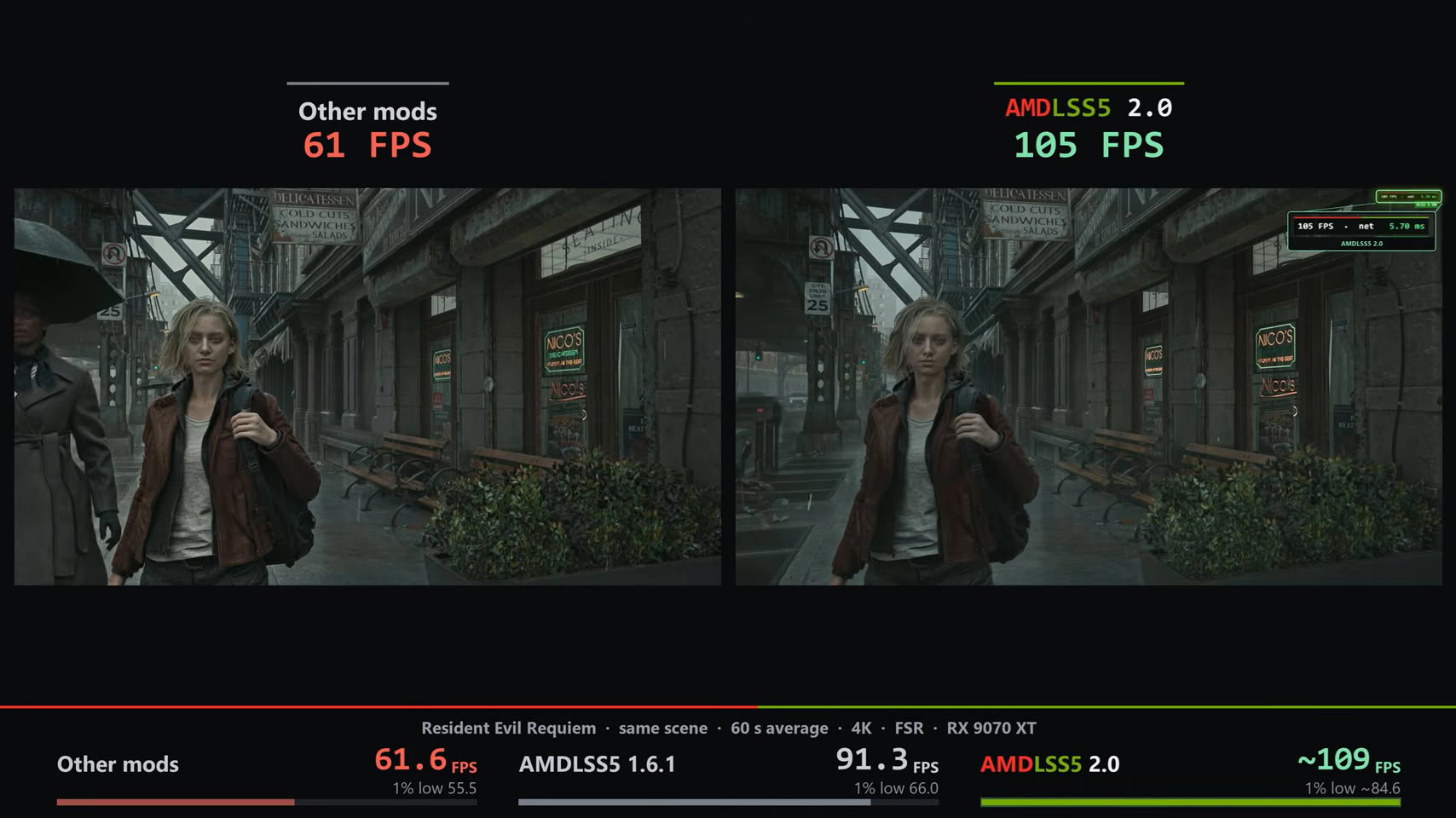
AMDLSS is a compatibility layer tool developed by the community. Its main function is to enable DLSS functions that originally relied on NVIDIA RTX graphics cards to run on AMD Radeon graphics cards. As DLSS technology continues to develop, more and more players are paying attention to how to experience related functions on non-NVIDIA hardware platforms, and AMDLSS was born around this demand.
According to information released by the developer, AMDLSS 5.0 already supports new generation functions including DLSS super-resolution, DLSS light reconstruction, and multi-frame generation. However, previous versions had certain performance overhead during operation, especially in some high-load scenarios, where the compatibility layer conversion itself would occupy additional system resources.
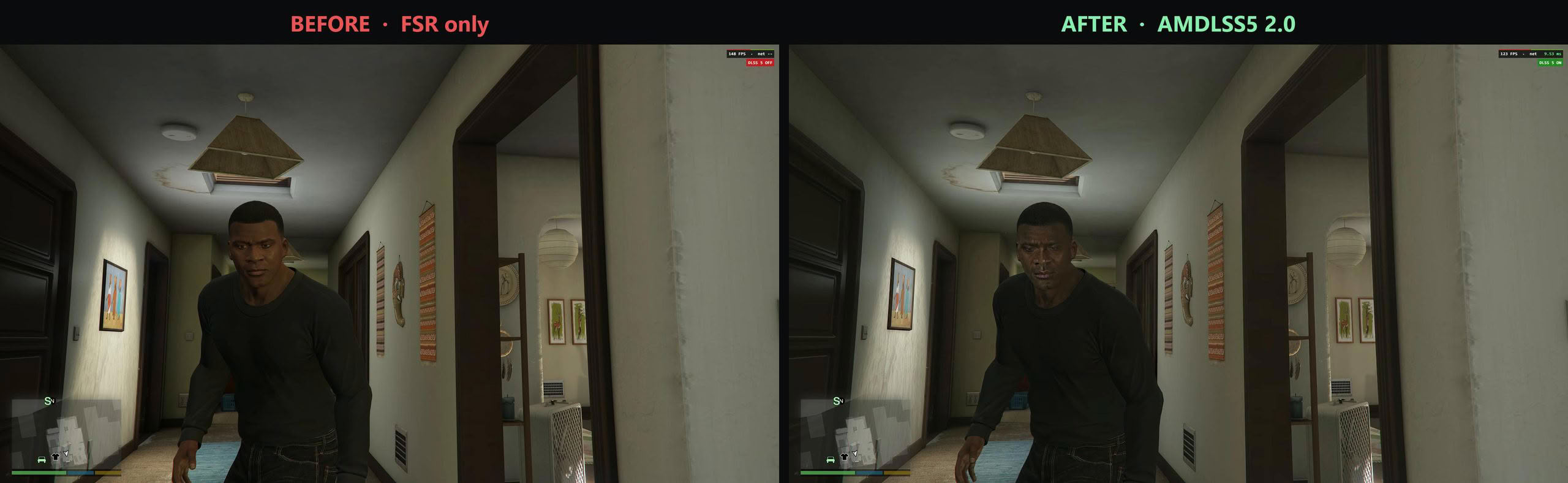
The latest AMDLSS 5 2.0 version focuses on optimizing these problems. The development team stated that the new version has reconstructed several key modules, improved the resource management mechanism, and reduced the communication overhead between the CPU and GPU, allowing more hardware performance to be directly used for game rendering.
Official test data shows that in some games that support DLSS functions, the new version can bring significant performance improvements compared to the old version of AMDLSS. In some scenarios, the frame rate increased by 64%, and most test projects also achieved double-digit percentage performance increases. At the same time, latency and additional resource consumption when running the tool are also reduced.
The developers emphasize that different performance improvements depend on the specific game, graphics card model, resolution settings, and enabled DLSS features. Especially in scenarios with high resource requirements such as enabling DLSS multi-frame generation, the optimization effect of the new version is more obvious.
In addition to performance improvements, AMDLSS 5 2.0 also enhances compatibility support. The development team stated that they have adapted more games that use the new version of the DLSS library to reduce problems such as image anomalies, program crashes, and functional failures, and improve overall stability and user experience.
As the DLSS function gradually becomes one of the important graphics technologies in the PC gaming field, compatibility solutions like AMDLSS are attracting more and more attention from players. For users who use AMD Radeon graphics cards but want to experience DLSS super-resolution and frame generation functions, the new version of AMDLSS is expected to further reduce the performance loss caused by the compatibility layer and improve the actual gaming experience.
However, the developer also reminds that since AMDLSS is not an official NVIDIA solution, the final effect will still be affected by factors such as drivers, game versions, and hardware environments. In the future, the project team also plans to continue to optimize compatibility and operating efficiency, and follow the development pace of subsequent versions of DLSS to provide support for more games.
Learn more:
https://github.com/Wehaveall/AMDLSS5/releases/tag/v2.0.0
Comments