
Abstract:
Apple is conducting a new round of underlying architecture upgrades for Face ID. According to the latest updated technical documentation, the iPhone 18 Pro series introduces an additional image data verification mechanism based on the traditional Face ID recognition process, and uses a new independent security unit called Secure Exclave to handle some authentication tasks, hoping to further optimize authentication efficiency while maintaining high security.
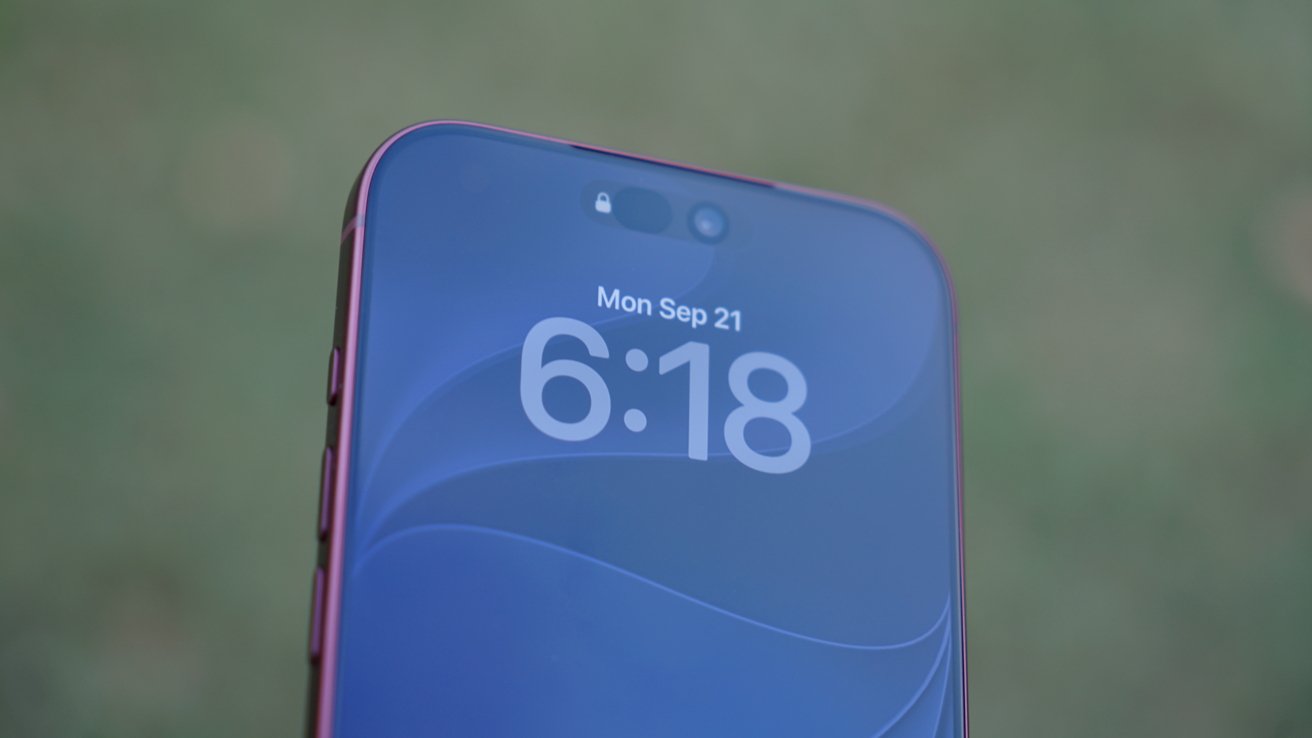
Face ID has always been one of Apple's most important biometric technologies. The system confirms the user's identity through a variety of technologies such as infrared dot matrix projection, depth mapping, facial mathematical model, and gaze sensing. Its security has long been considered to be at the leading level among consumer electronics products.
This upgrade appears on the iPhone 18 Pro series. According to Apple's latest instructions, after the device completes traditional depth and infrared data collection, it will also obtain additional supplementary image information and compare this data with the stored facial mathematical model to complete the identity verification process.
This change was first discovered by outside observers studying Apple system updates. Since Apple specifically mentioned in the documentation that the added image data is to "maintain Face ID performance," some users initially speculated that this may mean that recognition capabilities have been affected after part of the Face ID hardware was moved to the bottom of the screen, so more data is needed for assistance.
However, judging from the information disclosed so far, this concern is not supported by evidence.
On the iPhone 18 Pro, Apple has hidden some Face ID components under the display for the first time. In order to ensure that the infrared light works normally, the system will temporarily turn off the pixels in the corresponding area during authentication to allow the infrared projection and reception process to be completed smoothly. Therefore, the industry generally believes that the under-screen design has minimal impact on authentication accuracy, and what may really be affected is the authentication speed.
Analysts believe that the "maintaining performance" mentioned in Apple's documents is more likely to refer to maintaining the fast unlocking experience that users are accustomed to. Since the structure of the under-screen components is more complex than traditional solutions, the system helps shorten authentication time by introducing additional image information to assist judgment.
At the same time, Apple also introduced in detail the role of Secure Exclave in Face ID for the first time.
Secure Exclave is an independent security processing area that Apple has added to the chip architecture in recent years, and is completely isolated from the main system. Even if the main system operating environment is attacked or abnormal, this module can still maintain independent working status.
According to Apple's description, the data processed in this secure area cannot be accessed by the iOS system, third-party applications, device owners, or even Apple itself. Its main responsibility is to independently analyze and process some sensor information.
In the new Face ID process, the traditional Secure Enclave continues to be responsible for processing depth and infrared biometric data, while the new image data is analyzed by the Secure Exclave, and then the results are converted into the corresponding mathematical representation of the face. Ultimately, the system will cross-verify data from different sources to confirm the user's identity.
Apple emphasizes that relying solely on image recognition is not enough to constitute a reliable authentication system. However, if the image analysis results are combined with Face ID’s original depth recognition, infrared scanning, and gaze detection mechanisms, it can become an effective supplement in the authentication process, thus improving the overall execution efficiency without weakening the original security standards.
Currently, some iPhone 18 Pro users have reported abnormal Face ID recognition speed, authentication failure, or occasional system problems. Apple has not confirmed whether these phenomena are directly related to the new architecture, but it is expected that subsequent system updates will continue to optimize related issues.
With the iPhone 18 Pro officially adopting an under-screen Face ID design, Apple is trying to strike a new balance between a full-screen appearance and high-level biometric security. Judging from the current information, the addition of the new image verification layer and Secure Exclave means that Face ID is gradually evolving from a traditional single-layer biometric system to a more complex multi-verification security system, and its development direction is also more focused on the simultaneous improvement of speed, security and reliability.
Comments