
Abstract:
A new study finds that the sounds of young chimpanzees may gradually take on the characteristics of different groups as they grow up, similar to the regional accents that humans develop as they grow up. This finding suggests that chimpanzee vocalizations are not entirely genetically determined, but that social interactions and the environment may also play an important role in shaping the way they communicate.
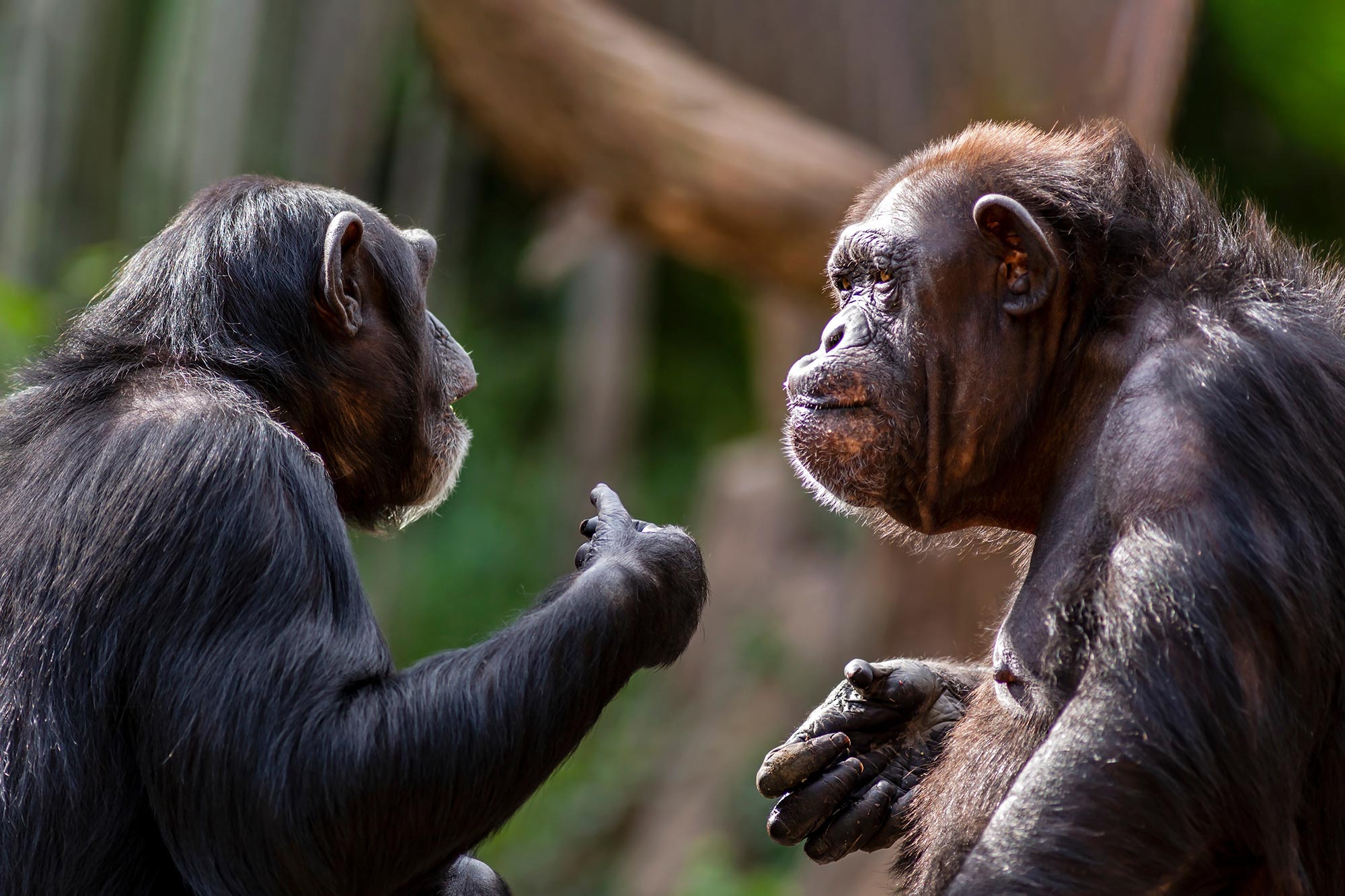
The research team, led by Kassandra Giragosian, a PhD candidate in the School of Biological and Behavioral Sciences at Queen Mary University of London, and working with the University of Portsmouth, compared the vocalizations of infants and juveniles in two geographically isolated chimpanzee populations. Researchers analyzed chimpanzee grunts, whimpers and laughter and found that vocal differences between groups became more pronounced as they grew older.
Research shows that not all vocal characteristics unique to a group emerge at the same stage. Some differences can already be detected in infancy, while others emerge gradually as the chimpanzees enter early childhood. This is the first evidence that differences in chimpanzee vocalizations become increasingly apparent during early development.
Understanding how communication develops early in life is fundamental to understanding animal behavior, Giragosian said. The findings suggest that chimpanzee vocalizations are not fixed from birth but continue to develop as young individuals interact with their social and ecological environments.
This means that social interactions, environmental conditions and other factors beyond genetics may combine to influence how young chimpanzees communicate. Although research has yet to pinpoint exactly how these factors come into play, results have shown that genetic traits alone cannot explain vocal differences between populations.
The researchers stress that this finding does not mean that chimpanzees possess language or human-like speech abilities. Human language contains a commonly agreed upon vocabulary and grammatical system, but chimpanzee vocalizations do not share these features. However, this study provides new insights into how communication develops in primates and why vocal patterns differ among different groups of animals.
Unlike previous studies that mainly compared adult individuals from different populations, this study examined the communication performance of chimpanzees at different stages of early life, thus providing a framework for exploring how communication systems arise and differentiate. The researchers believe this approach could also help further our understanding of how biological and environmental factors shape the vocal behavior of other species, and shed light on the evolution of increasingly complex communication systems.
The study is titled "Ontogeny of Dialects in Chimpanzee Vocalizations" and was jointly completed by Cassandra Giragosian, Marina Davila-Ross and Derry Taylor. It was published in "PLOS ONE" on September 2, 2026.
Comments