
Abstract:
A research team at the University of Missouri in the United States recently announced that they have successfully developed rice plants that can resist bacterial wilt (rice bacterial blight). The disease has long threatened one of the world's most important food crops and is particularly severe in parts of Asia and Africa, often leading to widespread yield losses and significant impacts on farmers' livelihoods and food security.
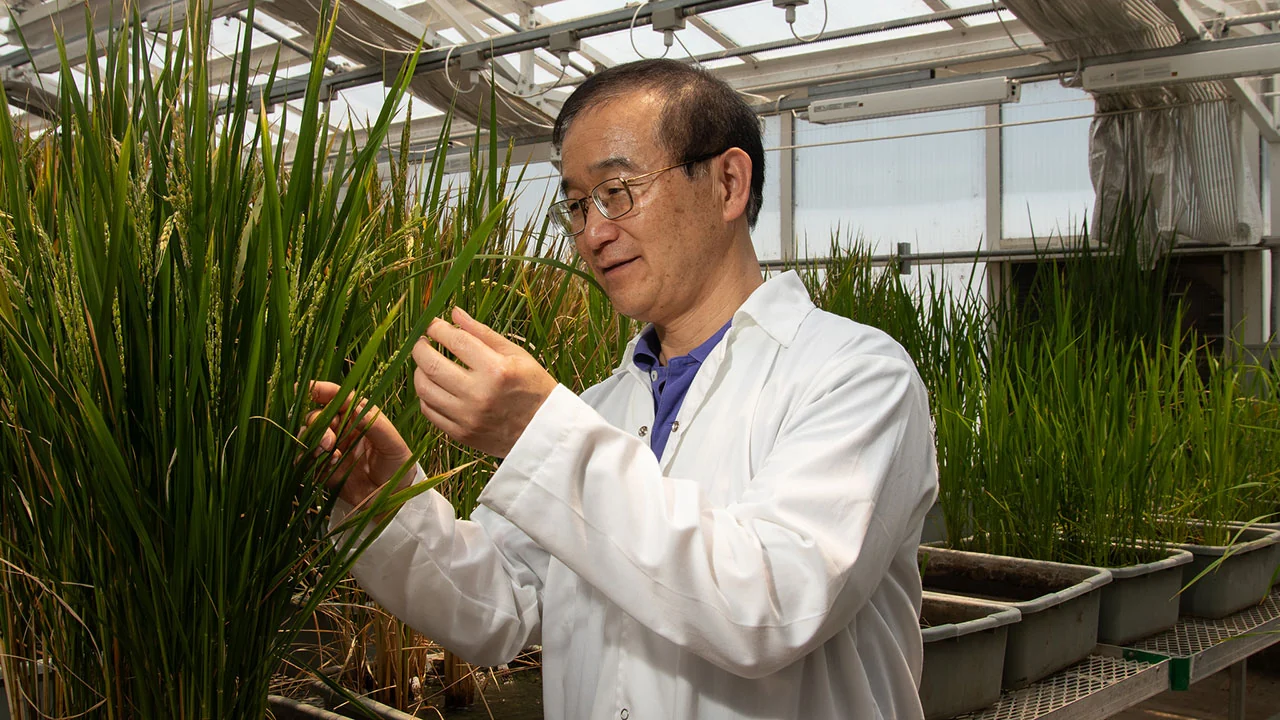
This research was led by Bing Yang, Distinguished Professor in the College of Agriculture, Food and Natural Resources at the University of Missouri. The researchers say the results are not only expected to help rice cope with devastating diseases, but also open up new paths for cultivating robust crops that can withstand other agricultural challenges.
According to reports, bacterial blight can seriously damage rice growth, reduce yield and quality, and pose a long-term threat to farmers who rely on rice cultivation to maintain their income. The research team has been working for many years to analyze the genetic interactions between pathogens and rice, hoping to find ways to enhance rice's natural defense capabilities.
At the heart of this breakthrough is a gene-editing tool called OpenCRISPR-1. The tool, designed using artificial intelligence, can make precise modifications to an organism's DNA, such as changing genes that make plants more susceptible to disease. OpenCRISPR-1 was originally developed by Profluent, a California biotechnology company, and was previously mainly verified in animal cells. The University of Missouri team successfully applied it to rice gene editing for the first time.
Researchers use this tool to carry out targeted modification of rice genes to make the plants more resistant to bacterial blight. Relevant results were published in the academic journal "aBIOTECH" with a paper titled "AI-designed OpenCRISPR-1 enables efficient targeted mutagenesis and prime editing in rice".
The research team pointed out that compared with some proprietary gene editing technologies that require commercial licensing before they can be applied, one of the biggest features of OpenCRISPR-1 is that it is open source. Research institutions and companies can use it for crop genome editing research and commercial development without paying commercial license fees. This open model is expected to lower the threshold for innovation, allowing more scientific researchers and agricultural enterprises to explore new genetic improvement solutions and cultivate crop varieties with better agronomic traits.
Experts believe that this achievement will not only help farmers reduce losses caused by diseases, but may also promote the emergence of more new crops with disease resistance and stress resistance. Because this technology is open to academia and industry, it is expected to accelerate the transformation of laboratory research results into actual agricultural production.
However, the researchers also stressed that it will still take some time before farmers can plant these disease-resistant rice on a large scale. The materials that have achieved results so far are mainly laboratory research lines. The next step is to introduce relevant traits into commercially cultivated rice varieties, and at the same time complete more field trials, regulatory approvals, and industrialization cooperation.
Nonetheless, the research team remains optimistic about future prospects. They believe that in addition to rice, the same method can be extended to other major crops such as corn and soybeans in the future to cope with increasingly severe agricultural challenges such as diseases, drought, and high temperatures. Researchers say that by developing new crops that can withstand multiple environmental stresses, farmers will be able to better secure yields, increase the resilience of agricultural systems, and prepare for a changing climate environment.
Comments