
Abstract:
A suspected Iranian plot to attack precious B-1 bombers stationed in the UK has exposed the fatal shortcomings of NATO's defense system: the alliance's air bases are far from being able to withstand drone attacks. The United States said it had obtained intelligence that Iran planned to use drones and other devices to attack the fleet, and more than a dozen B-1 bombers immediately flew away from Royal Air Force Fairford Base. Last month, five men were arrested in the woods next to the Fairford base on suspicion of planning a terrorist attack, and related concerns heightened sharply.
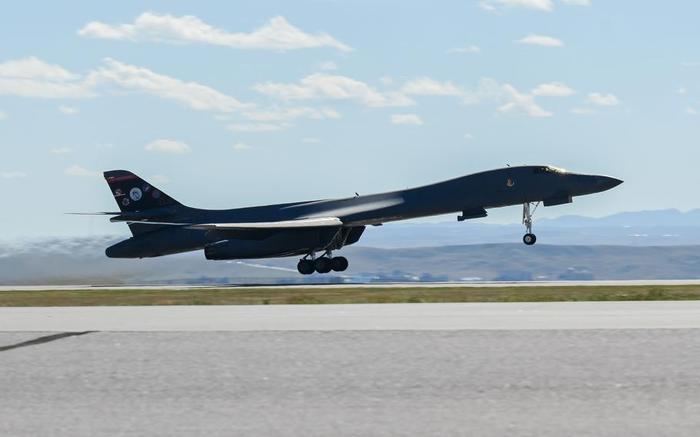
After the plane was evacuated, Trump told reporters earlier this week: "We sense there is a potential threat, so why would I leave the fighter planes where they are?"
Whether Iran has the ability to carry out such an attack is still inconclusive, but this incident fully demonstrates that technological advancement and changes in the shape of warfare are subverting long-standing combat strategies. Old British laws restrict the military from shooting down drones in public airspace, and the technological upgrades of the drones themselves mean that military aircraft that used to be placed inside barbed wire fences, far away from war zones and considered safe, are now extremely vulnerable to opportunistic attacks.
The UK is not alone in facing this problem. Military bases in many places around the world have become such weak targets. Iran previously attacked the U.S. naval base in Bahrain and also used drones and missiles to hit at least 20 U.S. facilities in the region, including military and diplomatic sites. After the incident, the Pentagon is re-evaluating its entire military presence in the Middle East. The main facilities of the Middle East Air Combat Command located in Qatar, USA, were severely damaged.
The United States also has bases in Germany, Italy, and Spain, which also have defense loopholes. This will disrupt the Pentagon's idea of using Europe as a "power projection platform" for military intervention.
The hidden danger of drone intrusion has also spread to the United States. In March, a small drone flew over Barksdale Air Force Base in Louisiana. The base deploys a large number of B-52 bombers and also houses the Global Strike Command, which is in charge of US bomber fleets and intercontinental ballistic missiles. Due to this unidentified drone intrusion, the base briefly issued a shelter-in-place order, but fortunately no attack occurred.
Aware of the continued rise in risks to bases at home and abroad, the U.S. Air Force recently stated that it will invest in new anti-drone systems and train professional operators. Air Force Chief of Staff Gen. Kenneth Welbach said last month that such defense work has now become "a core function of air and space power."
The UK faces some unique dilemmas: British law stipulates that only police and prison guards can disrupt or shoot down drones in public airspace. In other words, military personnel alone cannot intercept the drone before it enters the boundary of the military base. At the same time, today’s drones can rely on mobile phone networks or fiber optic communications to circumvent the police’s traditional radio frequency interference methods.
Mike Monik, CEO of DroneSec, a global drone threat monitoring organization, said: "Russia, and most likely Iran, have discovered this major defense gap."
The B-1 bomber parked at Fairford Base has a 146-foot-long fuselage and is an attractive target. The United States only maintains about 45 bombers of this type, and the cost of a single aircraft is hundreds of millions of dollars. Not long ago, more than ten B-1s were parked in the open air at this air force base northwest of London. Unlike fighter jets, this model is huge and difficult to store in a hangar or reinforce a bunker.
The British government claims that its bases are safe and controllable, and is pushing to amend the law to allow base guards to track, disrupt and even shoot down drones from a distance. The British side also announced that it will invest approximately 470 million pounds (equivalent to 620 million U.S. dollars) to improve the security of military bases.
The Fairford Base incident is the latest example of asymmetric warfare: a huge disparity in military strength between the two warring parties. The five hooded suspects had seemingly clumsy methods of committing the crime. When they were arrested in the woods near the base, three vans and several fuel barrels were seized at the scene, forcing the United States to withdraw its bombers thousands of miles away from the Iranian front line. If Iran is indeed behind this incident, it would be a low-cost victory for Tehran. This incident also severely damaged Britain's reputation: Since World War II, the United States has long flown heavy bombers from Fairford Base to perform missions.
The five people arrested have not yet been charged with criminal matters and are on bail, but British Prime Minister Andy Burnham said there were signs that Iran was involved.
Greg Barwell, chairman of the British Air and Space Power Association, said: "In the past, when we defended airports, the threats came either from long-range bombing or armed personnel infiltrating over the barbed wire. Now, we have encountered new threats in between."
Ukraine once claimed that it used drones with a unit price of about US$2,000 to severely damage 41 fighter jets at four Russian military bases, with a total value of US$7 billion. In this operation, codenamed "Operation Spider Web," Ukraine smuggled drones into Russia and took off remotely to attack air bases in the Russian hinterland. This attack not only caused military humiliation to the Russian army, but also brought huge public opinion results to Ukraine.
Security officials are skeptical that Iran can replicate Operation Spiderweb. Most of Iran's terrorist activities in the UK involve hiring local criminals to attack dissidents or arson attacks on Jewish-related targets. However, British Defense Minister Luke Pollard admitted at a conference forum this month that the UK has not invested enough in preventing drone attacks on military bases.
Data from the British Ministry of Defense shows that more than 250 drone incidents occurred around British military facilities in 2025, twice as many as in 2024.
In 2024, unidentified drones were discovered near Royal Air Force Base Lakenheath, Royal Air Force Mildenhall, Royal Air Force Fairford and other US military bases in the UK. Up to 20 drones fly in groups, and some fly over the runway approach airspace at low altitude. Lakenheath Base deploys fourth- and fifth-generation U.S. Air Force fighter jets; Mildenhall Base is home to the U.S. Air Force's 100th Air Refueling Wing.
The British army classified these sightings as suspicious and dispatched teams equipped with drone interference equipment to the base. The equipment included the Orcus anti-drone system, which can remotely seize control of enemy drones. A report by the International Institute for Strategic Studies concluded that these drones were most likely launched by Russia from ships in the North Sea.
Previous concerns in Europe about the safety of drones were mainly focused on the suspicion that Russia was flying drones over military bases for reconnaissance or interference with routes. But the situation escalated further this summer: Germany accused Russia of plotting to drop explosive drones at an airport in Leipzig. German investigators seized three custom-made drones in connection with the attempted attack: two were found in the wild and one was located at the border of the airport, close to a Ukrainian-owned cargo plane. Investigators said the drones supported remote launches.
Currently, defense relies heavily on intelligence agencies to intercept clues before attackers strike. Monique believes that the UK can deploy more advanced drone jamming equipment, but in the final analysis, some low-cost, simple and effective solutions are also feasible: parking fighter jets in a hangar with a closing door. For larger bombers, if indoor storage is not possible, they can be deployed to more difficult-to-reach locations.
Greenland, for example, is an alternative.
Comments