
Abstract:
Traditional computers rely on transistors and electrical signals to perform operations, but an international research team at McGill University in Canada is trying a completely different way of computing: letting living bacteria act as computing units, completing the solution of complex mathematical problems by moving, branching and multiplying in a network of micro-channels.
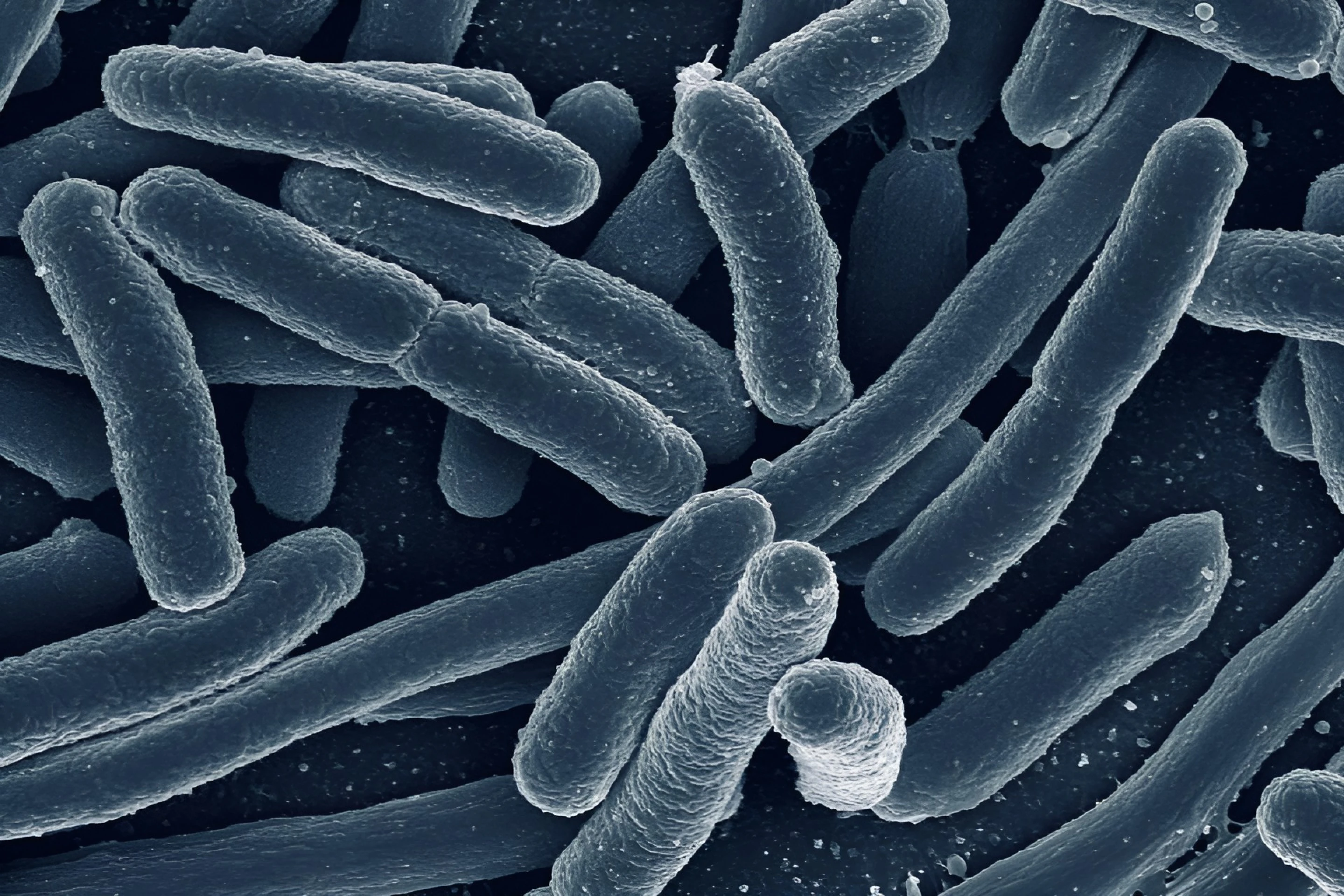
The most special thing about this system is that bacteria can not only explore a large number of different calculation paths at the same time, but also continuously reproduce during the calculation process, thus increasing the number of biological computing units participating in the calculation. Researchers believe that this method may provide new solutions to some combinatorial optimization problems that are difficult to handle with traditional electronic computers in the future, and is expected to reduce the resource consumption of some computing tasks.
This research was led by McGill University and jointly completed by researchers from Canada, Europe, the United Kingdom and Australia. The relevant paper was published in the journal "Microsystems & Nanoengineering" on August 11, 2026.
The research team chose a classic mathematical problem as the experimental object: the Subset Sum Problem. Simply put, given a set of numbers, you need to determine which combinations of numbers can add up to obtain a specified target value.
For example, given four numbers 2, 5, 9 and 11 and asked to find a combination that sums to 16, the answers include 5+11 and 2+5+9. For small numbers, this type of problem is not difficult, but as the number of numbers increases, the number of possible combinations grows exponentially, and the number of candidates that a conventional computer needs to examine increases rapidly.
Instead of using a traditional processor to calculate these combinations one by one, the researchers converted the mathematical problem directly into a physical network of microscopic channels for the bacteria to explore on their own.
Specifically, the team first created a precision-designed silicon template and then used it to create transparent microfluidic channels made of polydimethylsiloxane (PDMS). This material is able to transmit oxygen, which is beneficial to maintaining the survival of bacteria in the channel. The researchers then sealed the network of channels onto a glass substrate, creating a micro-maze for the bacteria to move around.
Each channel in the network represents a possible mathematical path, and the bifurcation and converging positions between different channels bear the function of logical judgment.
When bacteria reach a bifurcation point, they can choose to enter two different channels, respectively representing whether to include a certain number into the current calculation combination. Other connecting nodes allow bacteria to continue moving along their original path, or to join bacteria from other paths.
In this way, researchers encode different choices in mathematical problems into physical structures. Each valid path from the entrance to the exit corresponds to a number combination. Researchers only need to observe which exits the bacteria end up at, and then track their movement through automated image analysis to identify which combinations meet the target conditions.
In other words, bacteria don't need to understand math or perform addition and subtraction in the traditional sense. What really undertakes the calculation task is the channel network pre-designed by the researchers, and the movement trajectories of the bacteria become the carrier for exploring different solutions.
In the experiment, the research team used two types of bacteria: Escherichia coli and Vibrio natriegens.
Among them, Escherichia coli is mainly used as a reference object with a slow growth rate, while Vibrio fluvialis has an extremely fast reproduction ability. Under suitable conditions, its population can double approximately every 9 to 12 minutes.
This gives the entire system a feature that traditional computers do not have: the computing units can increase by themselves during the operation.
Ordinary electronic computers need to increase parallel capabilities by adding processors, cores or computing nodes, but the bacteria in this biological computing system can reproduce on their own and produce more individuals participating in calculations. As bacterial populations increase, the ability to explore different pathways has the opportunity to expand simultaneously.
In an experiment that lasted about 26 minutes, the research team observed that Vibrio fluvialis completed two rounds of population doubling. The researchers also directly recorded bacteria dividing within a microfluidic channel and found that more bacteria left the computing network than entered.
Study leader Dan Nicolau, a professor of bioengineering at McGill University, described this mechanism as a way to increase computing units through bacterial reproduction. He said that traditional electronic chips can perform a large number of operations at extremely high speeds, while bacteria, although the processing speed of a single computing unit is slow, can form a huge number of parallel computing groups through reproduction.
In actual tests, the research team has successfully solved subset sum problems containing up to 7 numbers, and the accuracy of the movement of bacteria in the channel network is quite high.
Among them, the proportion of Escherichia coli changing direction incorrectly when passing through ordinary channel nodes is about 1.3%; the proportion of Vibrio fluvialis is even lower, only 0.3%.
The researchers also tested a larger special network containing up to 200 inputs with a repeated value of 1. A network of 100 values can encode 2100 possible subsets, which correspond to 101 different sums.
However, this experiment is mainly to prove that the microfluidic network can be expanded to a larger physical scale. It does not mean that the system can already handle any complex mathematical problem containing 100 different numbers. There is a clear difference in calculation difficulty between the two.
The real innovation of this research is not the first time that living organisms have been involved in calculations. Scientists have previously tried to use DNA molecules, molecular motors, cytoskeletal fibers and other microscopic movement units for parallel computing.
What is unique about this study is that the bacteria are able to reproduce themselves while exploring computational paths, allowing the number of computing units to increase over time. The research team hopes to exploit this biological property to alleviate the difficulty of exponential growth in computational resource requirements in combinatorial problems.
The author of the paper believes that if the system can be further expanded in scale, the increase in computing resources brought about by bacterial reproduction may make it competitive with traditional electronic computers on certain specific problems. Related papers also analyze the potential performance of this biological computing architecture at different scales through mathematical models.
However, this does not mean that scientists have built a bacterial computer that can replace the CPU or GPU. The system at this stage is still an experimental proof-of-concept, and researchers have yet to prove that it can fully surpass electronic computers in actual complex tasks.
It also faces many practical difficulties. For example, bacteria can still get misdirected as they move through the channels; as their numbers increase, overcrowding can prevent normal movement; and bacteria also need constant access to nutrients and oxygen. In addition, building larger-scale microfluidic networks with more complex logical structures also requires considerable manufacturing precision.
Researchers are currently exploring further improvement options, including developing programmable channel nodes that can dynamically change logic functions, using three-dimensional microfluidic structures to reduce movement errors, and screening or modifying bacteria with more ideal movement speed and reproduction characteristics through genetic engineering.
In terms of application prospects, the research team believes that this technology may be suitable for certain mathematical optimization problems, cryptography, molecular biology and artificial intelligence-related research.
Of particular concern is the study of protein structure. Traditional computers and AI models can predict protein structures using existing data, but the research team believes that biological computing networks have the opportunity to explore complex combinatorial problems from another perspective and provide supplements for some tasks that are difficult to handle with existing computing methods.
However, bacterial biocomputers are not intended to replace existing AI systems or traditional supercomputers. It is more likely to become a specialized computing architecture designed for specific problems, using the movement and reproduction capabilities of organisms to handle certain tasks with massive combinatorial possibilities.
From a longer-term perspective, this research proposes a rather special computing concept: future computing resources may not all come from shrinking transistors, but may also come from biological systems that can replicate themselves.
If researchers can eventually solve the problems of computational accuracy, bacterial crowding, and system scaling, then living bacteria could become an entirely new computing medium. They will not run at GHz frequencies like CPUs, but they may rely on a large number of parallel individuals and continuously growing computing units to play a role in specific fields that is difficult to replace with traditional electronic devices.
Comments