
Abstract:
Microsoft Research recently officially released an artificial intelligence research system called Quine, defining it as a "biological world model" for the field of life sciences. The system is designed to help scientists understand complex biological mechanisms, accelerate the drug discovery process, and promote breakthroughs in research on major diseases such as cancer.
Microsoft stated that over the past few decades, the company has continued to invest in research in the field of computational biology, covering immunology, virology, genomics, biomedical imaging, cell biology, and protein engineering. As life science research becomes increasingly complex, traditional models can often only handle data in a single field, while real biological systems involve interactions at multiple levels such as genes, proteins, cells and tissues. Therefore, the research team wanted to build a system that could perform inference across different scales and data types.
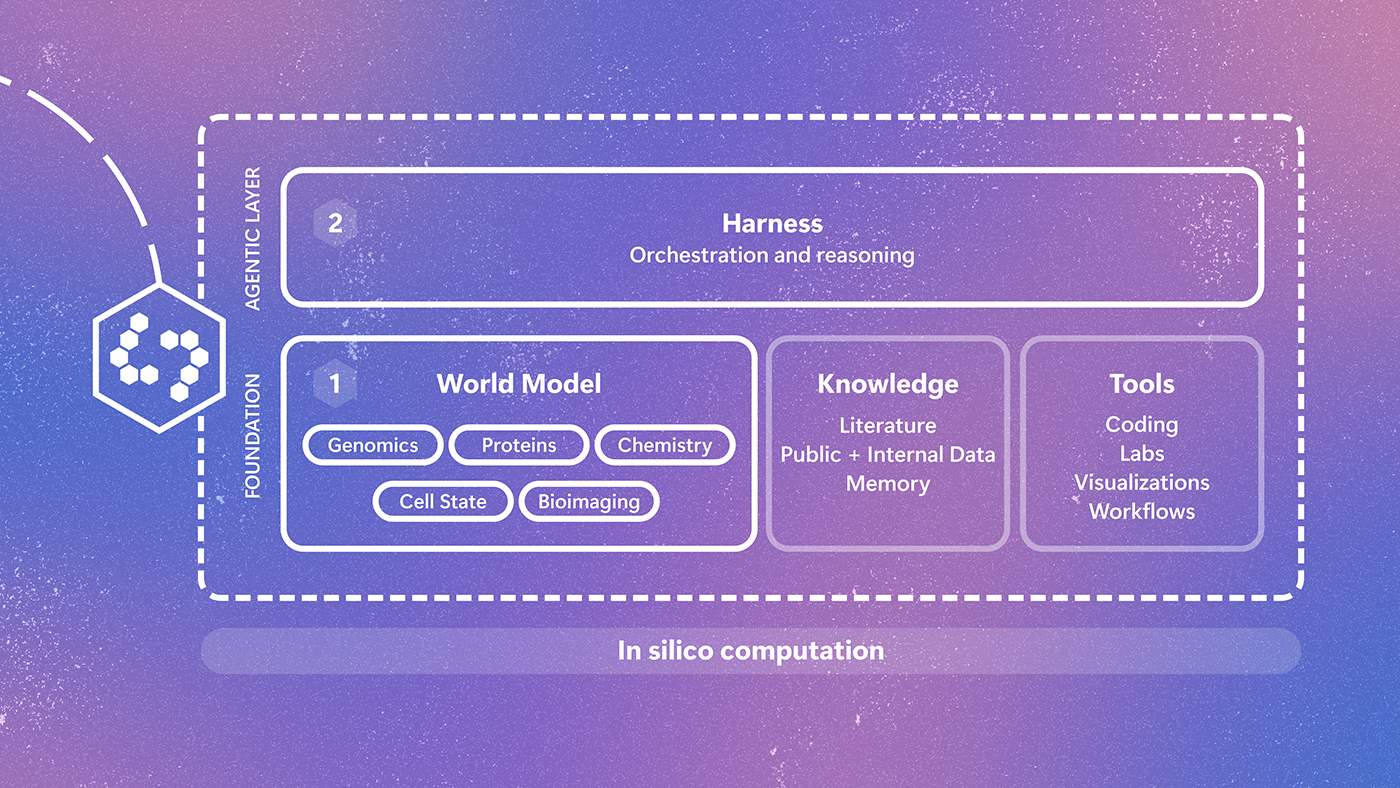
Quine consists of two core parts. One is the biological world model, which can be jointly trained on multiple data types such as genomes, proteins, chemical molecules, RNA, cell states, and biological images to establish a unified knowledge representation framework. The second is an interactive research platform that connects scientific literature, experimental tools, reasoning models, laboratories and scientific researchers themselves to form a complete closed scientific research loop.
Microsoft believes that Quine is not used to replace experiments, but to help scientists screen and prioritize potential research directions before investing expensive and time-consuming experimental resources. The system can predict the likely impact of an intervention based on existing knowledge, thereby improving the efficiency of experimental design.
Quine is being used to study pancreatic ductal adenocarcinoma in a collaborative study with the Broad Institute of Harvard University and MIT. The research team sought to test a long-held hypothesis that tumor behavior and drug response are influenced not only by genetic factors but also by changes in cellular states.
Using Quine, researchers analyzed and ranked thousands of candidate compounds to find those most likely to push tumor cells into a more favorable therapeutic state. Subsequent laboratory validation showed that the high-priority candidate compounds selected by the system indeed produced the most significant expected effects.
Microsoft revealed that compound screening and verification work that may have taken months to complete in the past was completed in just one weekend with the assistance of Quine, from screening to experimental verification, significantly shortening the research cycle and reducing R&D costs.
An unexpected discovery also emerged during the research process. In addition to testing existing hypotheses, Quine predicted that some of the compounds would guide cancer cells into a third cellular state that had not previously been focused on, and subsequent experimental results confirmed this prediction. Researchers believe that this shows that artificial intelligence can not only speed up the experimental process, but also potentially help scientists discover new biological laws.
At the same time, Microsoft launched the Quine Fellows researcher program, inviting researchers in the fields of life sciences and medicine to participate in using this system and provide feedback to the Microsoft team. The company hopes to continue to improve model capabilities through real scientific research scenarios and explore more practical application directions.
Microsoft emphasizes that Quine is still an experimental scientific research technology and is for research purposes only and is not suitable for clinical diagnosis or medical decision-making. The conclusions generated by the system must be reviewed by professional researchers and verified through real experiments before they can be adopted. As the technology matures in the future, Microsoft plans to gradually expand the scope of use of related technologies through platforms such as Microsoft Discovery.
As artificial intelligence becomes more and more deeply involved in scientific research, Microsoft believes that systems like Quine are expected to become an important part of future scientific research infrastructure. By closely integrating computational reasoning with experimental verification, scientists may be able to complete the entire process from asking questions to making discoveries more quickly, thereby accelerating new drug development and life science innovation.
Learn more:
https://www.microsoft.com/en-us/research/blog/introducing-quine-an-ai-research-system-designed-for-the-complexity-of-biology/
Comments