
Abstract:
Artificial intelligence has been placed on more and more expectations, and some even believe that future AI technology will be powerful enough to cure cancer, so that today's health risks are no longer worth worrying about. Shyam Sankar, chief technology officer of the American data analytics company Palantir, recently claimed that some artificial intelligence researchers have started smoking to express their firm confidence in AI's future medical breakthroughs. This statement quickly attracted attention, and also brought Silicon Valley's enthusiastic expectations for artificial intelligence, as well as the risks that technological optimism may bring, to the public again.
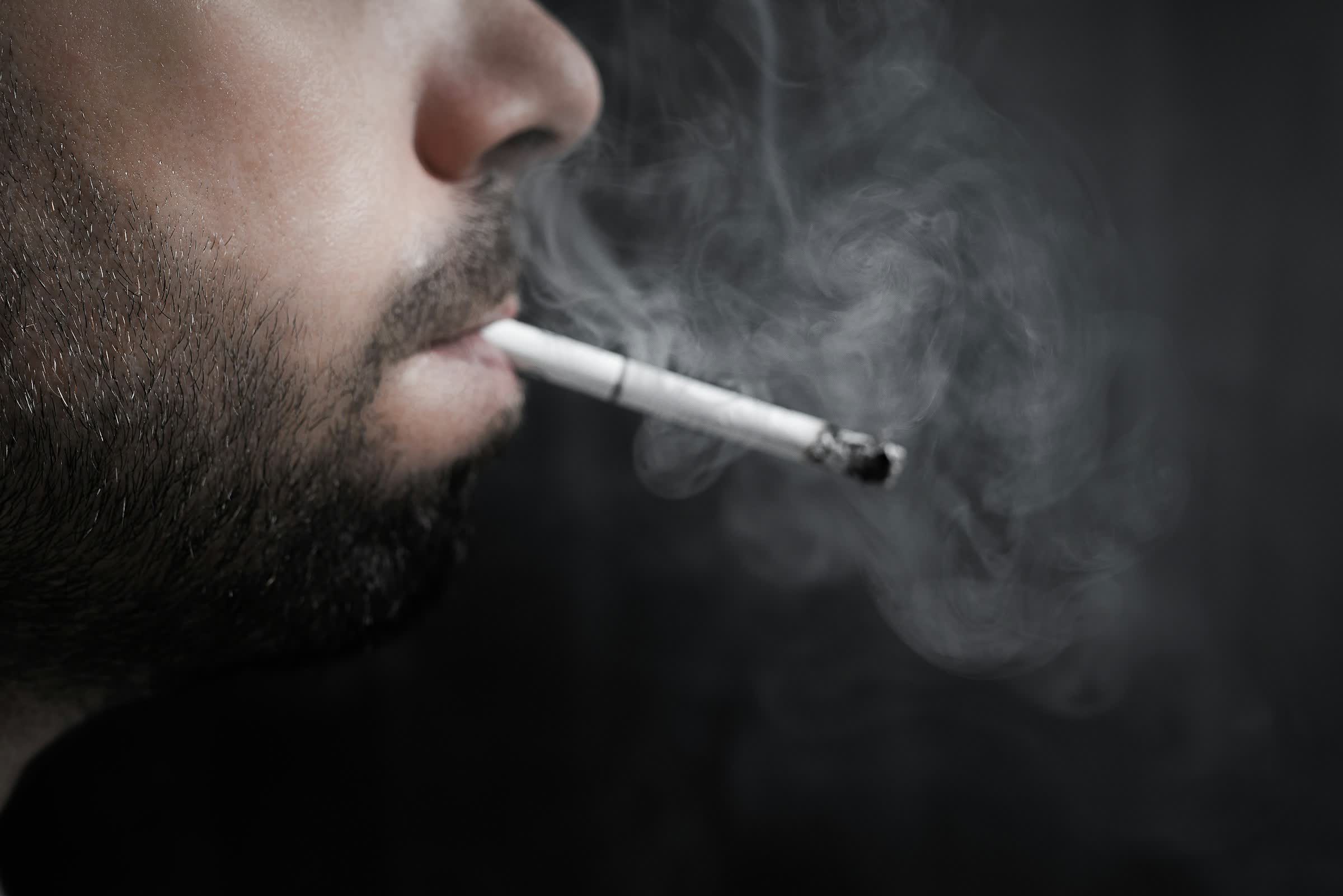
Sankar spoke about the incident in an interview on the CBS News program "Face the Nation." He said some AI researchers believe that artificial intelligence will eventually be able to cure cancer and start smoking to show those around them how much they trust the technology.
Sankar relayed the thoughts of these people: "I believe in AI so much and believe that it can eventually cure cancer, so I am willing to put all my chips on it." In his view, smoking has become a symbolic behavior, as if to show his peers that their confidence in the future capabilities of artificial intelligence has reached the point of leaving no room for retreat.
However, Sankar did not reveal the specific identities of these researchers, nor did he provide evidence to prove how common this phenomenon is. Therefore, it is still unclear whether this is a real trend in a small circle in Silicon Valley or an individual case that has been exaggerated.
Sankar made this statement not to praise the actions of these researchers, but to criticize the almost religious belief of some people in Silicon Valley in artificial intelligence. He believes that some technology practitioners’ expectations for general artificial intelligence (AGI) have gone beyond the normal optimism for a new technology and have begun to exhibit some kind of irrational social psychological phenomenon.
In the interview, Sankar quoted French philosopher Blaise Pascal’s idea that there is a “God-shaped void” in the human heart. He believes that some people in Silicon Valley have filled this spiritual void with their belief in artificial intelligence, and regard future AGI as a force that can solve fundamental human problems.
He described this phenomenon as the "god of the machine." According to Sankar, some people not only believe that artificial intelligence can significantly improve productivity and scientific research, but also begin to see it as the ultimate means to solve disease, aging, and even other major social problems. This belief can lead them to underestimate real-world risks and create unrealistic expectations about what the technology can really achieve.
Sankar further described it as a "collective insanity" and "social delusion." His criticism is not limited to AI optimists, but also involves some people who are extremely pessimistic about the potential dangers of artificial intelligence. In his view, whether he believes that AGI will solve all problems or that it will inevitably lead to disasters, he may push his judgments about the future to extremes without sufficient evidence.
As for the smoking phenomenon itself, there have been some reports in recent years that some entrepreneurs, engineers and investors in Silicon Valley are re-accepting this lifestyle that was considered unhealthy by many in the technology industry.
This is in sharp contrast to the health optimization culture that has prevailed in Silicon Valley in recent years. Previously, some technology company founders were keen on tracking sleep, monitoring blood indicators, taking cold baths, and trying various lifestyle and interventions aimed at extending healthy lifespan. Nowadays, some people in the technology circle have begun to regard cigarettes as a social tool, and even use them to create a more casual and less refined personal image.
For some of these people, smoking may simply be an opportunity to create connections in the office or social settings. Compared to a formal meeting, smoking outside together can make it easier to have an informal conversation and sometimes help build relationships. Others believe that smoking makes them look less like the typical tech entrepreneur.
But believing that artificial intelligence can cure cancer may also be a reason for some people to accept smoking.
Avi Schiffmann, founder of the artificial intelligence wearable device startup Friend, has expressed similar views before. He has said that by the time people actually develop lung cancer, AI robots should already be able to cure the disease.
This thinking reflects a controversial futuristic logic: If artificial intelligence will revolutionize medicine in the coming years or decades, then the long-term consequences of certain harmful actions today seem likely to be offset by future technological advances.
However, there are obvious problems with this reasoning. Even if artificial intelligence can help scientists develop more effective cancer treatments in the future, it does not mean that the health risks caused by smoking will disappear. Smoking is not only linked to lung cancer but also increases the risk of many other cancers and can lead to cardiovascular disease, stroke and chronic lung disease.
In addition, there is often a long process of research and clinical trials from discovering a potential treatment, to proving it is safe and effective, to finally being approved and widely used. AI can help researchers analyze data, find drug candidates, or design experiments, but these capabilities are not a direct substitute for medical validation.
Even if AI technology emerges in the future that can significantly improve the treatment effects of some cancers, there is no guarantee that all cancers can be cured, let alone that treatment will be available to everyone in time when they need it. Different cancers have huge differences in biological mechanisms, disease progression, and treatment responses. Medical breakthroughs usually require long-term accumulation, rather than being achieved immediately by improvements in computing power.
More importantly, the health damage caused by smoking is not limited to cancer. Long-term smoking increases the risk of coronary heart disease, stroke, chronic obstructive pulmonary disease and other diseases, which will not automatically be solved by future advances in cancer treatment.
Therefore, there is no reliable scientific basis for using confidence in future AI medical breakthroughs as a reason to ignore current health risks.
The debate surrounding artificial intelligence is also becoming increasingly polarized. Some people believe that advanced AI will greatly accelerate the speed of scientific discovery and promote breakthroughs in drug research and development, disease diagnosis and personalized treatment; others worry that as the capabilities of AI systems continue to increase, humans may lose control of certain key technologies and even face serious social and security risks.
This divide is particularly acute in Silicon Valley. Some researchers and business executives have high expectations for AGI, believing that it may solve problems that humans have long been unable to overcome in the future; others warn that AI systems with rapidly increasing capabilities may bring unpredictable dangers.
Interestingly, these two seemingly opposite views sometimes lead to similar behavioral logic. If one person firmly believes that AI will quickly solve problems such as cancer and aging, he may think that there is no need to worry too much about today's health risks; if another person believes that advanced AI may eventually destroy mankind, he may also think that long-term health planning has lost its meaning.
Either way of thinking may make people ignore the choices and responsibilities that still exist in real life.
However, the potential of artificial intelligence in medicine is not entirely based on fantasy. Researchers are already exploring the use of AI to analyze biological data, identify potential drug targets, design candidate molecules, and speed up some research processes. Drug candidates generated by AI have also begun to enter the experimental verification stage.
But there is still a long way to go from discovering candidate molecules to developing truly effective drugs. Preliminary results in the laboratory do not equate to treatment effects in humans, and changes in certain biomarkers do not necessarily mean patients will live longer or improve their health.
Therefore, the scientific community’s reasonable expectations for AI medical applications should be based on reproducible experimental results, rigorous clinical trials and reliable safety assessments, rather than predetermining that future technologies will be able to eliminate today’s risks.
Sankar’s remarks also reveal a deeper problem currently facing the artificial intelligence industry: when a technology is given too many expectations beyond its current capabilities, people may no longer evaluate it based on actual evidence, but start to build an entire belief system around it.
In this case, technological progress itself may become an excuse to ignore real problems. People no longer ask whether a treatment has been proven, but believe that a solution will be available in the future. Instead of seriously weighing today's risks, people believe that future technologies will be enough to compensate for today's choices.
Artificial intelligence does have the potential to transform medical research and help scientists develop more effective treatments. However, there is still huge uncertainty between this possibility and "cancer will eventually be cured", let alone the basis for rationalizing smoking.
As of now, there is still a lack of independent evidence on how many AI researchers are involved in the smoking phenomenon described by Sankar. What is certain is that the discussion around artificial intelligence is no longer limited to model performance, business value and technical safety. It has also begun to touch on how people understand the future, how to face uncertainty, and whether excessive trust in technology will change real-life behaviors.
Artificial intelligence may be able to help humans conquer more diseases in the future, but before relevant breakthroughs are truly verified, relying on unfulfilled medical promises to bear known health risks is obviously not a scientifically based option.
Comments