
Abstract:
OpenAI released a series of new features at the recent Dev Day developer conference. Individually, these functions involve plug-ins, AI agents, application integration, identity authentication, and the enterprise software market, but when viewed together, we can see that OpenAI is promoting a software distribution model that is completely different from the traditional App Store: users no longer look for applications first, and then open the applications to complete tasks, but directly tell ChatGPT what they want to do, and AI decides which application should be called and completes the work within the conversation interface.
The traditional software model is "application driven". If users want to design pictures, they open Photoshop or Figma; if they want to manage projects, they open the corresponding project management software; if they want to schedule meetings, they need to enter the calendar or conferencing application. Apple and Google's app stores are built on this model, where users first discover, download and install apps, and then use the functions provided by the apps.
OpenAI is trying to reverse this process.
According to the plan announced by OpenAI, ChatGPT will become the main entrance for application discovery and operation. When a user asks for a task in a conversation and the system determines that a third-party application can help complete the task, ChatGPT can directly recommend related applications. Once the user confirms the connection, they can use the app from within ChatGPT without leaving the current conversation.
One of the core changes of this time is the expansion of the ChatGPT plug-in system. Developers can now create more complete application experiences rather than just having ChatGPT call an API. Third-party applications can have their own entrances in the ChatGPT sidebar, and can also provide interactive panels, allowing users to directly operate functions that originally require independent websites or independent apps during the chat process.
For example, design software can directly provide a design modification interface in ChatGPT. Users can let AI understand their requirements and then complete specific edits through the application; development tools can also become background tools called when AI agents perform tasks.
The cases displayed by OpenAI include design tools such as Figma and Adobe. Users can work on existing projects during a ChatGPT conversation, or directly invoke a feature that previously had to be opened in a standalone software.
OpenAI itself also demonstrated how to use a conferencing application. Users can ask the app to read upcoming meetings in the calendar and use AI to automatically record the meeting content and generate a summary and follow-up action items after the meeting. The entire process no longer requires users to switch back and forth between multiple applications.
This means that ChatGPT is gradually changing from a "chat window" to a software operation layer. Traditional Apps still exist, but the way users interact with them may change: Apps are responsible for providing specific capabilities, while ChatGPT is responsible for understanding user intentions, selecting tools, and coordinating work between different applications.
OpenAI also launched the "Sign in with ChatGPT" identity system. Users can use their ChatGPT identity to log in to third-party applications that support this function, and at the same time bring their existing AI usage quota to these applications.
The first batch of partners includes Cognition's Devin, Notion, Vercel, T3, OpenClaw and Dactyl, etc. A total of 16 companies participated in the initial plan, and OpenAI stated that it will continue to expand the scope of cooperation in the future.
This identity system actually solves an important problem in the AI application ecosystem. In the past, when users used third-party AI applications, they often needed to create separate accounts, configure models, and purchase quotas. Now, OpenAI hopes to make ChatGPT a common identity and AI capability portal for these AI applications.
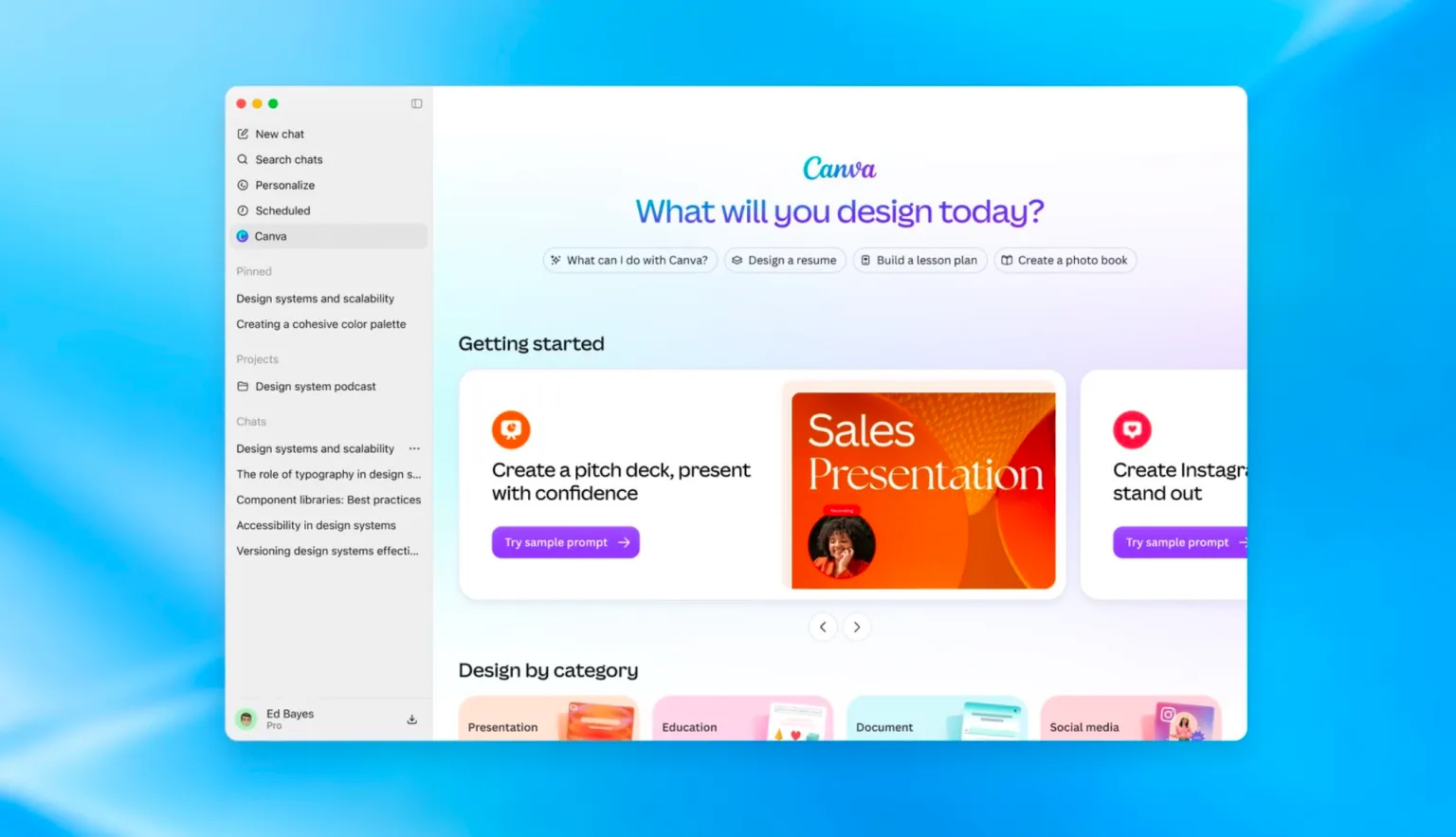
OpenAI has also further expanded the role of ChatGPT Sites. Lightweight websites created by users using ChatGPT can host these third-party applications and allow others to access them. When colleagues open such a page, they can use their own accounts, data, and permissions rather than those of the sharing creator.
This makes the websites generated by ChatGPT gradually transform from "AI-generated one-time web pages" to small software platforms that can be used by multiple people.
At the same time, OpenAI is establishing its own application review system. After developers submit a plug-in, they can track the review progress, view issues that need to be modified, and request manual review if necessary. Developers can also update the tools in the plug-in without having to resubmit the entire application from scratch each time.
This mechanism is actually very similar to the review process of Apple's App Store, except that the review object has changed from traditional mobile apps to AI native applications that can run in ChatGPT.
OpenAI also announced the launch of an enterprise application market. There are already more than 30 partners in the first batch of markets, including Adobe, Figma, Sierra, Decagon, HubSpot, Salesforce, ServiceNow, Harvey, Legora, Palo Alto Networks, CrowdStrike and Baseten, etc.
Eligible enterprise customers can use a portion of their budget already committed to OpenAI to purchase approved partner software. In this way, OpenAI not only hopes to become a provider of AI tools, but also begins to try to become a distribution platform for enterprise software.
But the part that may really change the traditional app store model is the AI agent that OpenAI is promoting at the same time.
Dots, the autonomous AI intelligent agent launched by OpenAI this time, can have its own cloud computer and browser, and can access applications connected by users. The user does not need to first judge "Which App should I use?" but directly tells the AI what task he wants to complete, and the agent then decides which tools should be called.
For example, in the past, if a user wanted to build a website, he might first open the code editor, then use the design tool, then enter GitHub, and finally use the deployment platform. In the agent mode, the user only needs to tell the AI what it wants to accomplish, and the agent can decide on its own which applications need to be called.
OpenAI stated that Dots has been able to connect more than 4,000 applications in its ecosystem.
This actually transfers the "application selection" part of the traditional App Store to AI.
In the past, Apple and Google's app stores helped users find apps through search, classification, rankings, and recommendations; but in the AI agent mode, users may not even know which app was ultimately used. The user only proposes a goal, and the AI decides the tool based on the task.
OpenAI also hopes to give Dots a certain degree of initiative. For example, an agent could spot problems in a project without the user explicitly requesting it, or remind the user to complete a previously forgotten task. However, such proactive operations still require user authorization.
OpenAI said Dots can use connected applications in the background to conduct so-called "active research", but at this stage it mainly uses a read-only method. When it comes to actually modifying, sending, or other operations with real impact, the user still has control.
If this model matures, the economic structure of the traditional App Store may also be affected.
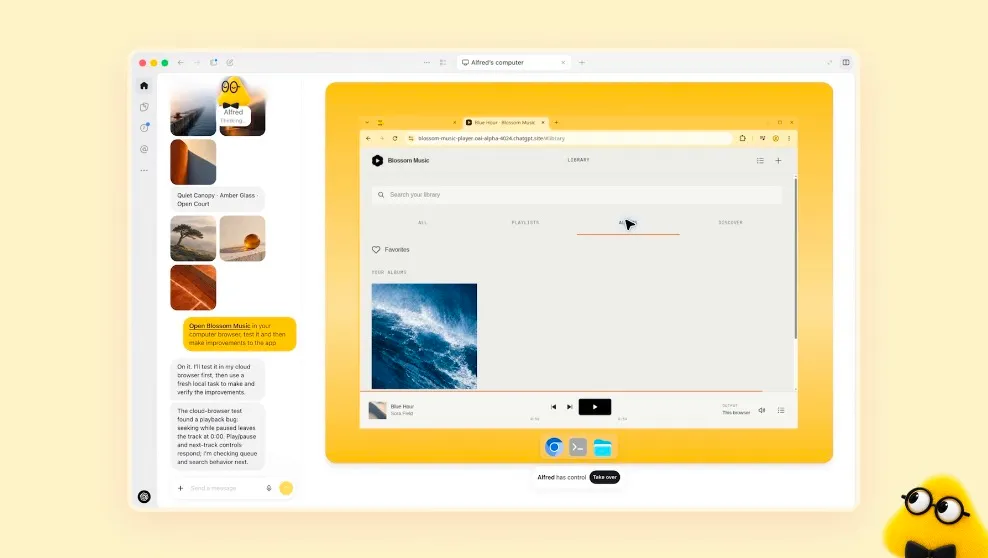
In the past, software developers had to work hard to get users to enter the App Store, search for their apps, download the apps and use them for a long time. In the future, developers may first ensure that their software can be recognized and called by AI agents. Users may not even realize which specific app they are using.
For example, a company can continue to sell subscription services on its website. After the user completes the purchase, it can then connect the account to ChatGPT or Codex and let the AI agent use the service on the user's behalf.
However, OpenAI has not yet announced a complete payment and sharing system similar to Apple’s App Store. In other words, at this stage, OpenAI mainly solves the problems of application discovery, distribution, identity authentication and invocation. It has not clearly announced that OpenAI will charge third-party software fees uniformly, and then share them with developers according to a model similar to the App Store.
This is also an important difference between the current new ecosystem and traditional app stores.
From a technical perspective, what OpenAI is really trying to change is not "where the App is placed", but the interaction between software and people.
The traditional model is "Human→App→Function", and users must know what software they need; while the AI agent model gradually becomes "Human→AI→Multiple Apps→Task Results". In the latter model, the software itself becomes more and more like a tool that the AI can call upon, rather than a destination that the user must physically operate.
This may explain why OpenAI is simultaneously promoting application plug-ins, ChatGPT identities, enterprise application markets, and Dots agents this time. They are not completely independent products, but are jointly building a new software ecosystem: ChatGPT is responsible for understanding requirements, agents are responsible for executing tasks, third-party applications provide professional capabilities, and developers obtain users through this new AI portal.
If this model eventually becomes mainstream, when users turn on their computers or mobile phones in the future, the first thing they open may no longer be a specific application, but an AI portal. As for which software completes the task, it may become a problem that users do not need to care about at all.
This is also the most noteworthy change behind OpenAI's many product updates on Dev Day: it is not simply adding a few plug-ins to ChatGPT, but is trying to further transform ChatGPT from a "tool for using applications" into a "platform that determines which applications users use." Once the software distribution entrance gradually shifts from the App Store to AI agents, the application ecological model established by Apple and Google for a long time will also face a new way of competition.
Comments