
Abstract:
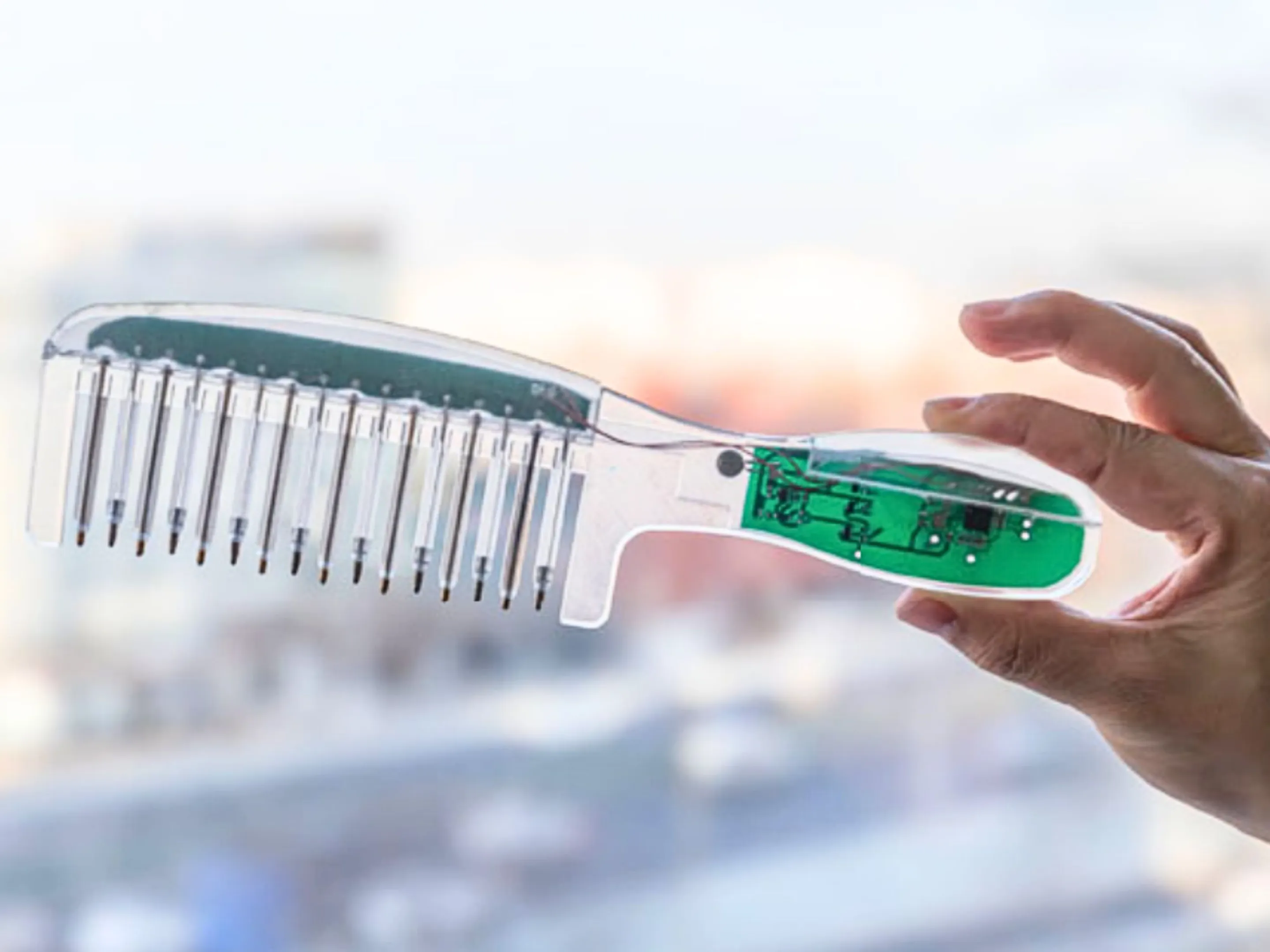
A rather innovative research result has emerged in the field of hair loss treatment. Researchers from Beijing University of Aeronautics and Astronautics in China and other institutions have developed an electrical stimulation hair growth comb called Detangle, which uses weak electrical pulses to transport specific genetic material deep into the hair follicles while stimulating biological pathways related to hair growth. In experiments on mice, the device only had to be used once every three days, and the hair coverage in the experimental area returned to nearly normal after 28 days. The effect was even better than minoxidil used every day in the experiment.
The study looked at Androgenetic Alopecia, the most common forms of male and female pattern hair loss. This type of hair loss is usually progressive, with hair follicles gradually shrinking through repeated growth cycles, eventually producing thinner, shorter hair.
One of the important triggers is dihydrotestosterone (DHT). This hormone, converted from testosterone, acts on susceptible hair follicles, causing them to gradually shrink, resulting in a loss of hair density. Although existing topical drugs can slow down this process to a certain extent, how the drugs can penetrate the skin barrier and effectively reach the depths of the hair follicles has always been a problem faced by treatment technology. Oral medications can bypass the skin barrier but may expose other tissues in the body to unnecessary drug effects.
The research team therefore designed Detangle, hoping to use electrical stimulation to improve local drug delivery efficiency. It looks like a special comb and integrates electrodes arranged at different heights, as well as micro-liquid storage structures for storing and releasing therapeutic substances.
When the device contacts the scalp, electrodes of different heights cause tiny deformations in the skin and release specific electrical pulses. These pulses help the charged molecules pass through the surface layer of the skin, into deeper tissues, and even into the cells of the hair follicle. The researchers also found that electrical stimulation itself can also activate some biological signaling pathways related to hair growth.
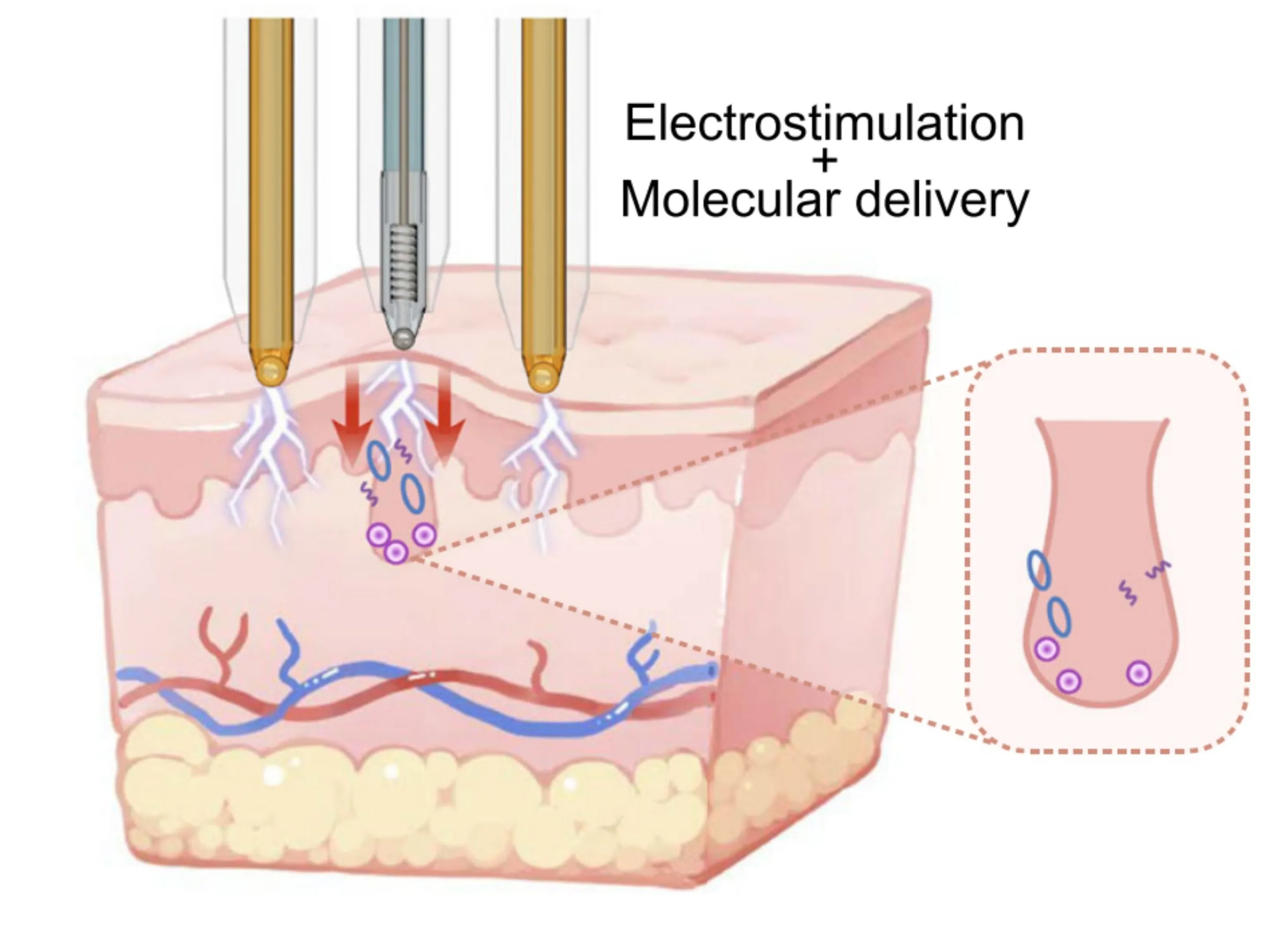
What really sets this technology apart from ordinary electrical stimulation hair growth equipment is that it uses two methods of gene regulation at the same time.
The first therapeutic substance is a circular DNA molecule that carries protein-coding information that promotes angiogenesis. The researchers hope that by increasing local blood vessel formation, they will improve the blood supply around hair follicles and create a more favorable environment for hair growth.
The second is a short strand of RNA that interferes with the expression of an enzyme involved in the production of dihydrotestosterone. By reducing the production of related enzymes, researchers are trying to reduce local DHT production and mitigate its impact on hair follicles from the source.
The two genetic materials are respectively responsible for improving local blood supply and inhibiting the production of hormones related to hair loss. They are combined with electrical stimulation to promote the entry of drugs into hair follicle cells, thus forming a combined treatment plan.
In the experiment, the researchers established an animal model of androgen-related alopecia by applying testosterone to the skin of male mice every day, and removed part of the hair on their backs to observe the treatment effect.
Mice treated with Detangle used the device every three days. After 28 days, the hair coverage in the experimental area has nearly returned to its original level. In comparison, mice treated daily with topical minoxidil had about 70% hair recovery.
Histological analysis further showed that hair follicle activity in mice treated with Detangle was significantly improved, and local blood circulation was also enhanced. This shows that the treatment effect is not just more hair on the surface, but also positive changes in the biological activity of the hair follicles themselves.
However, this result is still in the animal experiment stage. The subjects were mice, not humans. There are differences in physiological structure, growth cycle and hormonal response between mouse back hair follicles and human scalp hair follicles. Therefore, the experimental results cannot be directly interpreted to mean that humans can restore hair after 28 days of use.
Researchers also need to further confirm the tolerability of this device in humans, its long-term efficacy and whether repeated treatments will cause side effects. Particularly when delivering genetic material into skin and hair follicle cells, issues such as local inflammation, tissue damage, and duration of gene regulation must be fully assessed.
Meanwhile, there are other noteworthy developments in hair loss research. Earlier this year, Japanese researchers experimentally grew fully functional hair follicles in the laboratory for the first time. These hair follicles are not only capable of forming hair, but can also undergo normal growth cycles, providing a new experimental tool for future research on hair loss treatments.
The innovation of Detangle is that it attempts to combine traditional topical drugs, local electrical stimulation and gene regulation into a portable device. If subsequent human studies can prove its safety and effectiveness, this technology may provide an alternative treatment for androgenetic alopecia that is different from traditional drugs.
But until human clinical trials are completed, it is still only an experimental technology with potential, and there is still a long way to go before it can truly become a hair growth product that consumers can buy and use.
Comments