
Abstract:
A study on eukaryotes pushes up the upper limit of heat resistance of complex life. On the 22nd, "Cell" magazine officially published the results of a joint team including Syracuse University in the United States: the "Cascade Fire Amoeba" isolated from the hot springs of Lassen Volcanic National Park in California can complete mitosis at 63°C, form a protective outer layer at 70°C, and recover after cooling, breaking the previous growth limit of about 60°C for eukaryotic organisms.
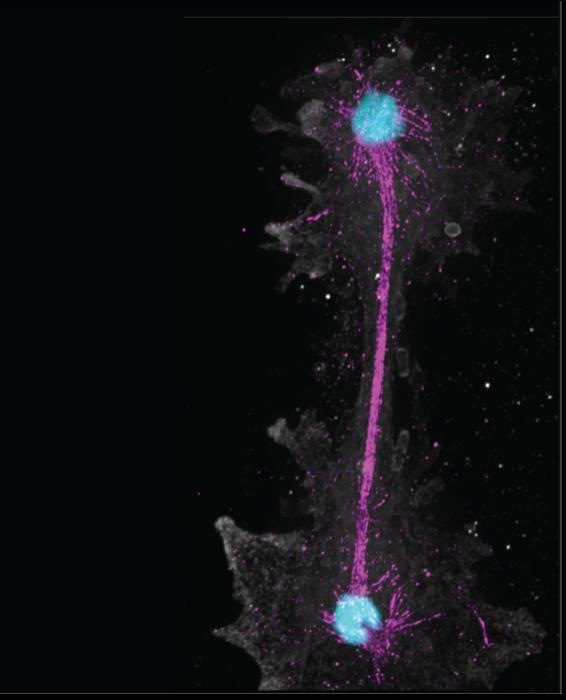
Amoeba in 63℃ environment. Image source: Syracuse University, USA
The research team collected geothermal stream samples in Lassen Volcanic National Park in the Cascade Mountains from 2023 to 2025. The water temperature is about 47℃-64℃. After the team returned to the laboratory, they first cultured the geothermal amoeba at 57°C, which was already higher than the previously known maximum value for amoeba growth. Then they gradually raised the temperature to 63°C and directly observed mitosis, proving that it not only survived, but could also reproduce under conditions beyond the tolerance limits of old eukaryotes. After exceeding 63°C, the insect body changes shape and forms a protective outer layer; after being exposed to 70°C and then returned to a lower temperature, it can still recover.
Eukaryotes have a nucleus and internal organelles, including animals, plants, fungi and some single-celled microorganisms. In the past few decades, researchers have generally estimated the growth limit of eukaryotic organisms to be around 60°C, and only a few species are close to this value.
The new species is named after "fire amoeba from the Cascade Mountains" and is positioned as a hot spring thermophilic eukaryotic protozoa. It not only sets the highest absolute temperature record for the survival of eukaryotes, but also keeps complex cellular structures from being destroyed by high temperatures. As a comparison, the record for the most heat-resistant microorganism is held by the archaea "Methanothermophilus Candlerii", which is found in deep-sea hydrothermal environments at about 122°C; however, this group does not have a eukaryotic structure and cannot be directly ranked with animals and plants.
Genome sequencing shows that the number of genes related to protein maintenance and DNA repair in Fire Amoeba is greater than that of its temperate amoeba relatives, corresponding to pressures such as protein denaturation and DNA damage at high temperatures. The team also found that the protein surface has a higher proportion of positively charged amino acids, a feature also found in some heat-resistant bacteria and archaea, which helps reduce unfolding and aggregation caused by high temperatures.
The study was published on a preprint platform late last year but was not peer-reviewed. At present, the team has used laboratory gradients to prove that complex single-cell life that can mitose at 63°C, form a protective outer layer and recover at 70°C already exists, but this does not mean that life can also exist in the same extraterrestrial environment. They stated that there is still room for actual measurement of the thermal limits of eukaryotes.
Comments