
Abstract:
According to Bloomberg, from camera lenses to pens to running shoes, some Chinese brands are changing overseas consumers’ perceptions of “Made in China.” Enthusiasts who once had doubts about Chinese brands and were particularly picky about product quality are now actively buying, discussing and recommending these products. In some enthusiast circles, owning certain Chinese brand products has gradually become a sign of knowledge and foresight.
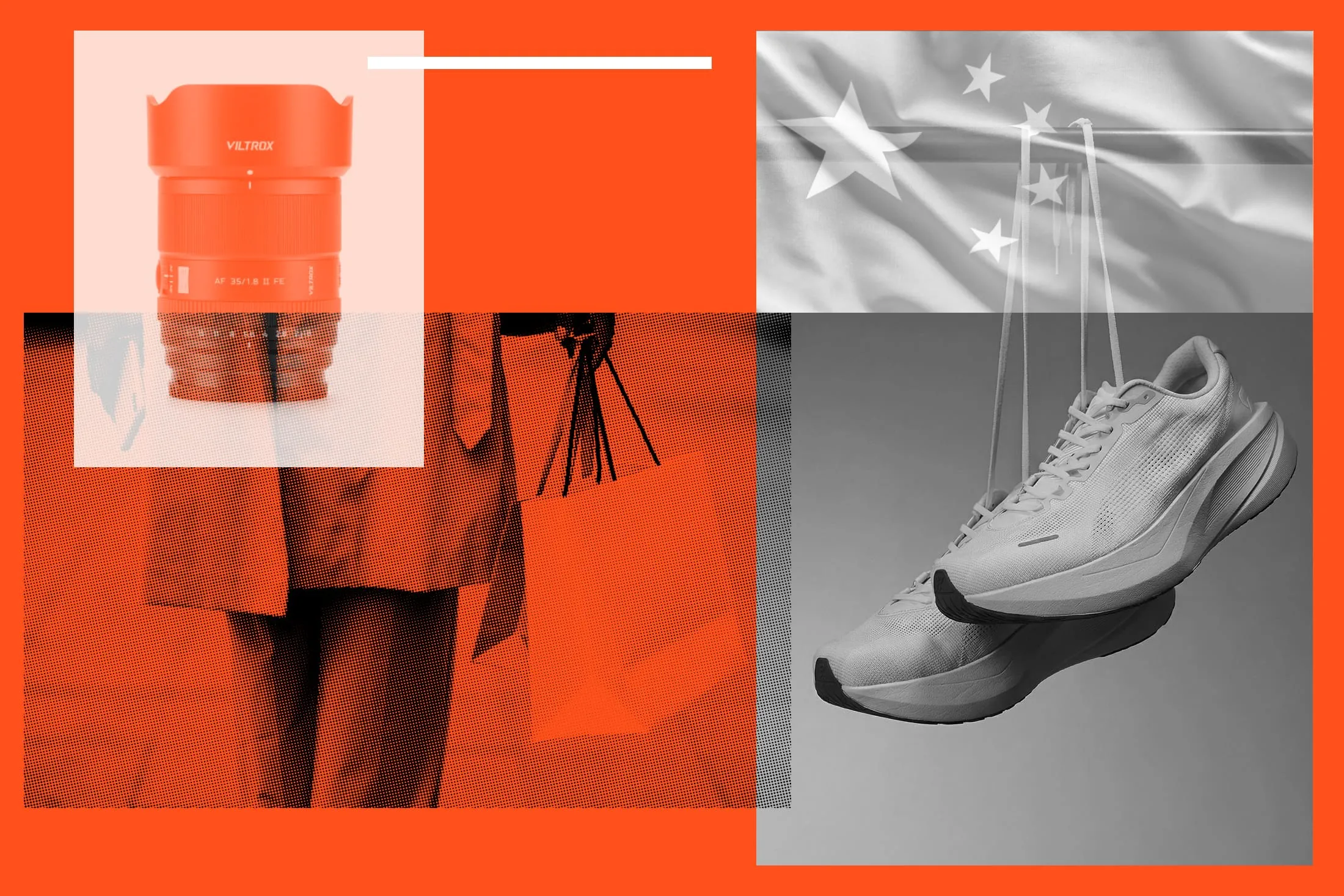
The report takes Chinese lens brand Viltrox as an example. Camera lenses are consumer products that are difficult to manufacture. The internal optical components need to be kept clean and precisely aligned, and the operation of the autofocus motor and aperture blades does not allow for too much error. Photography enthusiasts who are willing to spend $1,000 or more on a single lens are equally demanding about image quality and quality control.
Viltrox mainly played the role of a lower-priced Chinese alternative brand in the early days. Its lenses are compatible with many major camera brands, attracting users who are unwilling to spend hundreds of dollars more on products from established Japanese manufacturers.
Viltrox's product quality reportedly began to improve about four years ago as it invested in materials and manufacturing. Products including the 75mm portrait lens and 13mm wide-angle lens have exceeded expectations, gradually gaining recognition for their quality beyond their price advantage. On photography YouTube channels and DPReview forums, Viltrox has become a brand familiar to those in the know.
Chris Lee, a photography equipment reviewer who runs the YouTube channel pal2tech, said that users' suspicion of third-party lens manufacturers has significantly weakened, and he hardly hears such doubts nowadays.
Similar changes have occurred in other product areas. Chinese pen brands such as Asvine and Hongdian have won praises from collectors for their appearance design and writing performance, and their prices are only a fraction of those of some European, American and Japanese brands. WE Knife and Reate Knives, which have been OEMs for other brands, have gained recognition for their independent designs. Their assembly accuracy and surface treatment technology are considered to be comparable to or even better than some expensive European and American products.
Bloomberg pointed out that just a few years ago, some enthusiasts who were keen to discuss the angle of the blade and the ink supply structure of the pen would easily dismiss Chinese brands due to parts and quality control issues. Today, these brands have become the objects of daily discussion and comparison.
Respond to users faster and find needs that big brands ignore
Glyn Atwal, associate professor at Burgundy Business School in France, believes that young European and American consumers are not as attached to Western brands as the previous generation, especially since many European and American brands themselves also produce products in overseas factories.
He said that Chinese brands that can quickly respond to trend changes are increasingly likely to gain recognition from Generation Z consumers. Young buyers are also more willing to think that Chinese brands are “cool” from the perspective of innovation and technology.
However, Chinese companies still need to make more efforts to win over the most discerning international consumers.
According to the report, Viltrox continues to be active on social platforms for discussion of photographic equipment, asking users what features they would like to obtain that are not yet provided by major manufacturers, and how existing products can be improved. Frank Fang, its head of US marketing, said that users may like a certain type of existing product, but want it to be smaller, more affordable, or more suitable for their actual use. These needs are often opportunities for the company.
Viltrox will also provide pre-market lens samples to reviewers and content creators to gain online discussion and exposure.
Chris Lee recalled that when he reviewed the first Vitrox lens in 2019, he criticized it for being too large and bulky. But he was impressed by how quickly the company responded to feedback.
“I mention a problem on the channel, and two weeks later, there will be a lens firmware update that solves it,” he said.
As quality improves, Viltrox begins to introduce lenses that are lighter, have wider apertures, or use focal lengths that are not yet covered by mainstream brands. For photography enthusiasts who may use one lens for years or even decades, these improvements can have a direct impact on purchasing decisions.
How a pair of Chinese running shoes became popular in overseas communities
The report also pointed out that Chinese brands are still relatively lagging behind in some consumer markets in the United States, and running shoes are one of them.
In February this year, Anta opened a retail store in Beverly Hills; in June, Li Ning signed a long-term endorsement agreement with NBA star Stephen Curry to further expand the US market. The companies have also begun letting content creators in the running space try out the products, sparking consumer interest in their training and racing shoes.
These products feature the fine design and high-rebound foam used in some high-end running shoes from Adidas, ASICS and Nike, while at a lower price. Runners who used to have to buy products through Chinese e-commerce platforms can now buy Li Ning and Anta running shoes on Amazon.
Matt Klein, a physical therapist and founder of the running shoe review website and YouTube channel Doctors of Running, said that the price of some Chinese running shoes is significantly lower than similar products in the U.S. market, but the quality is equally good or even better. As a clinician who treats running injuries, he also recognizes the emphasis on basic biomechanical details in some Chinese running shoes.
Klein believes that some small Chinese brands are willing to carry out experiments that are rarely attempted by large enterprises, and accumulate experience by launching products and observing market feedback.
This spring, a training shoe called "Little Catfish" from the Chinese brand Dynafish attracted attention among overseas running shoe enthusiasts. The shoe, which sells for about $130, focuses on lightness and speed, and uses a high-performance foam midsole typically found on higher-priced products.
At that time, the company had not yet established a presence in the United States and its website was relatively rudimentary. The popularity originally came from Reddit's r/runningshoegeeks community, where some runners who bought the shoes through Chinese websites posted reviews. Subsequently, dozens of related comments appeared on YouTube, and the comment area was filled with messages asking how to purchase.
Chen Zhu, co-founder of Tianjin-based Dynafish, said that such attention surprised the team and was beyond expectations.
According to him, he founded the company more than a year and a half ago with another partner who also loves running. The team only has 15 employees and no marketing budget.
“We put all the money into the product and did not spend money on other aspects.” He said that the team will pay close attention to the evaluation of runners and welcome any feedback.
Mike Ko, a running shoe reviewer who goes by the name Kofuzi on YouTube, finds it exciting that a new shoe without the support of a marketing machine can become popular. He also recognized the performance of some Chinese running shoes, but has not yet evaluated Dynafish, partly because it is difficult for viewers to easily buy the products.
He is also cautious about whether the new brand can continue to operate. He said that many start-ups have invited him to review products over the years, and he usually lets them operate for two years before discussing.
Dynafish is currently updating its website and online store and expanding production to meet the needs of the US market. According to Chen Zhu, the company sold about 200,000 pairs of shoes in the first year, 70% of which were sold in China; he expects sales to reach 800,000 pairs next year, with domestic and overseas markets accounting for half.
For the convenience of overseas consumers, Dynafish has also adjusted its product names. "Little Catfish" was renamed Dyna Super in the US market.
Simon Tse, its North American distributor, said the team had discussed whether it was necessary to change the name, but ultimately decided to make the adjustment after seeing that many English speakers had difficulty pronouncing the original name. He believes that brands can retain the core of China, but also need to adapt to local consumers in terms of visual and linguistic expression.
Comments